Pigeon Pea
Cajanus cajan · Also known as Arhar, Tuar, Red Gram, Tur Dal
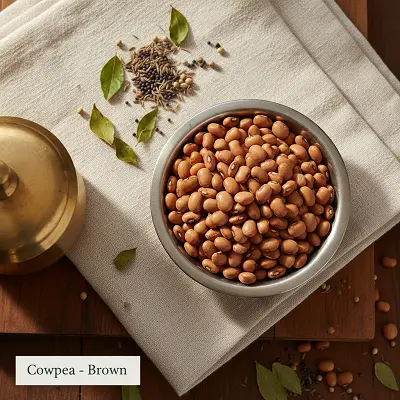
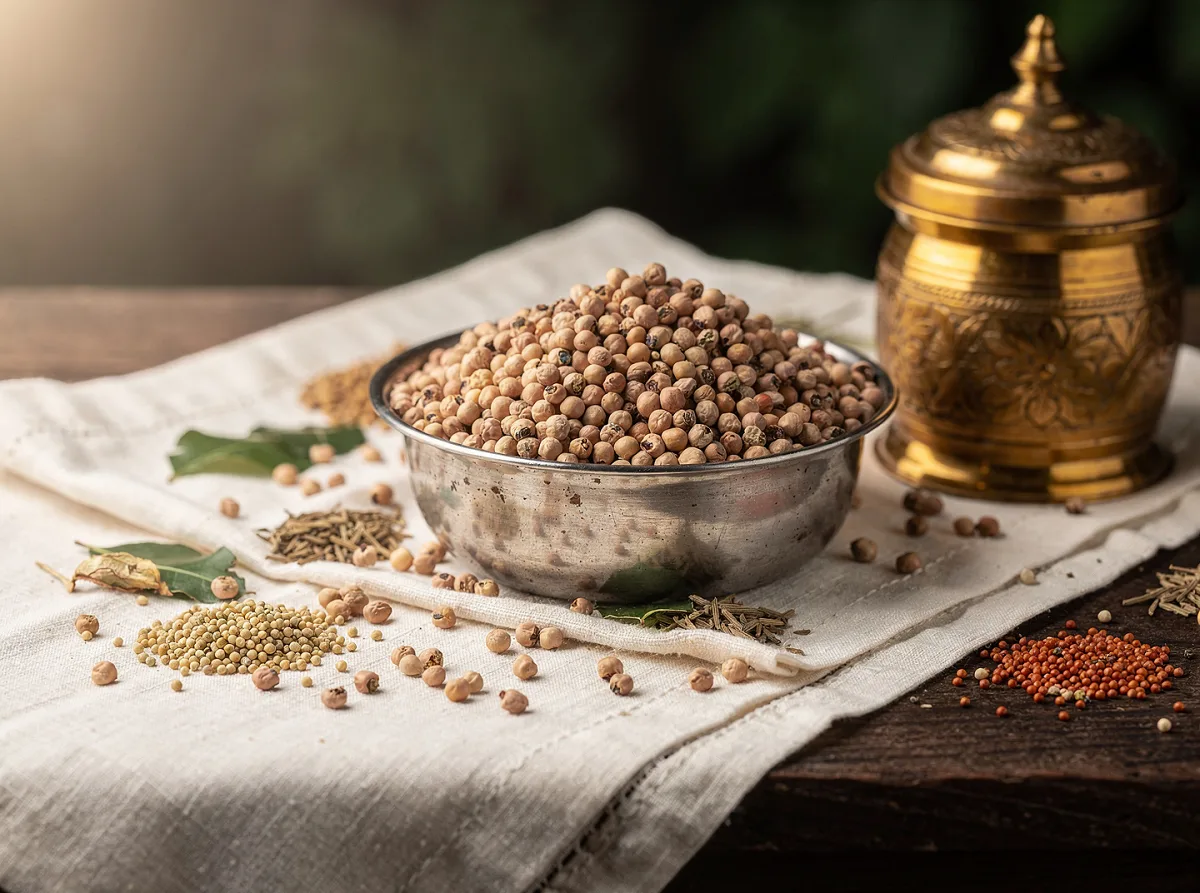
Pigeon pea (अरहर, arhar) is a golden-yellow legume with a slightly flattened, oval shape and earthy, mild flavour. Sold whole or split as dal, it is a cornerstone of Indian kitchens - especially in the South and West - where it stars in sambar, rasam, and everyday dal curries. Qu...
Nutrition per 100 g
Mean values ± IFCT published SD (edible portion).
More macros
Classification
About Pigeon Pea
What it is
Pigeon pea (अरहर, arhar; तूअर, tuar in Marathi) is a warm-season legume with small, round, golden-yellow seeds that sit inside a slender pod. When dried and split, it becomes the familiar arhar dal - a staple in Indian homes from Maharashtra to Tamil Nadu. The whole seed has a thin skin; the split dal is pale yellow inside with a mild, slightly nutty taste. It cooks faster than most dals and absorbs flavours readily, making it ideal for both everyday meals and festival dishes. (IFCT 2017, Ref #B022)
Use in Indian Kitchen
Arhar dal is the soul of South Indian sambar - cooked soft and tempered with mustard, curry leaves, and dried chilli. In the North and West, it appears in simple tadka dal, khichdi, and mixed-dal preparations. Tamil cooks use it in rasam and kootu; Maharashtian kitchens favour it in usal and puran poli filling. A practical tip: arhar dal cooks in 20-25 minutes without soaking, but rinsing it well removes dust and surface starch. Pairing it with tamarind, jaggery, or coconut balances its earthy note and deepens flavour.
Key Nutrients
Pigeon pea is rich in plant-based protein (around 20-22% by dry weight), dietary fibre, and carbohydrates. It contains B vitamins (especially folate and thiamine), iron, phosphorus, and magnesium. The presence of polyphenols and other phytochemicals adds antioxidant value. Exact nutrient composition varies slightly by variety and growing conditions; refer to IFCT 2017 (Ref #B022) for standardised Indian food tables.
Health Benefits (Evidence-based)
- High protein content supports muscle maintenance and repair, especially valuable in vegetarian diets.
- Dietary fibre aids digestive health and may help maintain steady blood sugar levels.
- Folate and iron content support red blood cell formation and energy metabolism.
- Polyphenols and other plant compounds have antioxidant properties linked to general wellness.
- Low glycaemic index makes it suitable for balanced meal planning.
- Traditionally used in Indian home cooking as a nourishing, easily digestible protein source for all ages.
Culinary Uses (Vegetarian)
- Sambar - the iconic South Indian vegetable and dal stew, soured with tamarind.
- Rasam - a light, spiced dal broth, often served as a soup or poured over rice.
- Tadka dal - simple everyday dal tempered with ghee, cumin, and dried chilli.
- Khichdi - a one-pot comfort dish of dal, rice, and ghee, often made for the unwell or young children.
- Puran poli - a sweet flatbread with arhar dal and jaggery filling (Maharashtrian).
- Dal fry and mixed-dal curries with onion, tomato, and spices.
- Kootu - a South Indian dry curry of dal and vegetables.
Caution
- Arhar dal contains compounds that may reduce mineral absorption in very high quantities; soaking and cooking help reduce these naturally.
- Those with a history of gout or uric acid concerns should consume in moderation, as all legumes contain purines.
- Rarely, individuals sensitive to legumes may experience bloating or digestive discomfort; cooking thoroughly and pairing with digestive spices (ginger, asafoetida) can help.
References
- Indian Council of Medical Research - National Institute of Nutrition (ICMR-NIN). Indian Food Composition Tables 2017 (IFCT 2017). Reference code B022 - Pigeon Pea (Cajanus cajan), dried, whole and split.
- Saxena, R., Vaya, P., & Sharma, S. (2016). Nutritional composition and health benefits of pigeon pea (Cajanus cajan L. Millsp.). Journal of Food Science and Technology, 53(8), 3013-3024.
Health Benefits
- Supports Digestion
- Supports Heart Health
- Helps Blood Sugar Control
- Provides Iron
- Provides Satiety
Sourcing & Storage
Storage
Store dried arhar dal in an airtight container - a glass jar with a tight lid or a sealed plastic container works well. Keep it in a cool, dry place away from direct sunlight and moisture. In Indian kitchens, a cupboard or pantry shelf away from the stove is ideal. Avoid damp areas or open shelves in humid climates; moisture can cause the dal to soften prematurely or develop mould. If you live in a very humid region, store in the refrigerator or freezer in an airtight container for extra protection.
Shelf Life
Well-stored dried arhar dal keeps for 6-8 months at room temperature in a cool, dry place. In the refrigerator, it lasts up to 1 year; in the freezer, up to 18 months. Once cooked, dal should be refrigerated in an airtight container and consumed within 3-4 days. Cooked dal can also be frozen for up to 2-3 months. Older dal may take slightly longer to cook but remains safe to eat if stored properly and shows no signs of insect damage or off-odour.
Check Before You Buy
When buying arhar dal from a mandi or kirana shop, look for a bright, uniform golden-yellow colour - dull or greyish dal may be old or poorly stored. The dal should feel dry and free-flowing; avoid any that feels damp or clumpy. Smell it gently - fresh dal has a mild, earthy aroma with no musty or rancid notes. Check for small stones, debris, or insect damage by spreading a handful on a plate. Packaged dal should have a clear date and be sealed properly; avoid torn or open packets. If buying in bulk, buy from a shop with good turnover to ensure freshness.
In Ayurveda
In classical Ayurveda, pigeon pea (arhar dal) is valued for its balancing effect on Vata and Pitta doshas. Its rasa (taste) is sweet (madhura), and its vipaka (post-digestive effect) is also sweet, making it easily digestible and nourishing. The guna (qualities) are light (laghu) and dry (ruksha), which help reduce Kapha. Traditionally, it has been recommended as a restorative food after illness or during convalescence to rebuild strength and vitality.