Phalsa
Grewia asiatica · Also known as Pharaskol, Falsa, Phalsa hannu, Soh broi rit, Palisa, Mirgichara, Falsa pandu
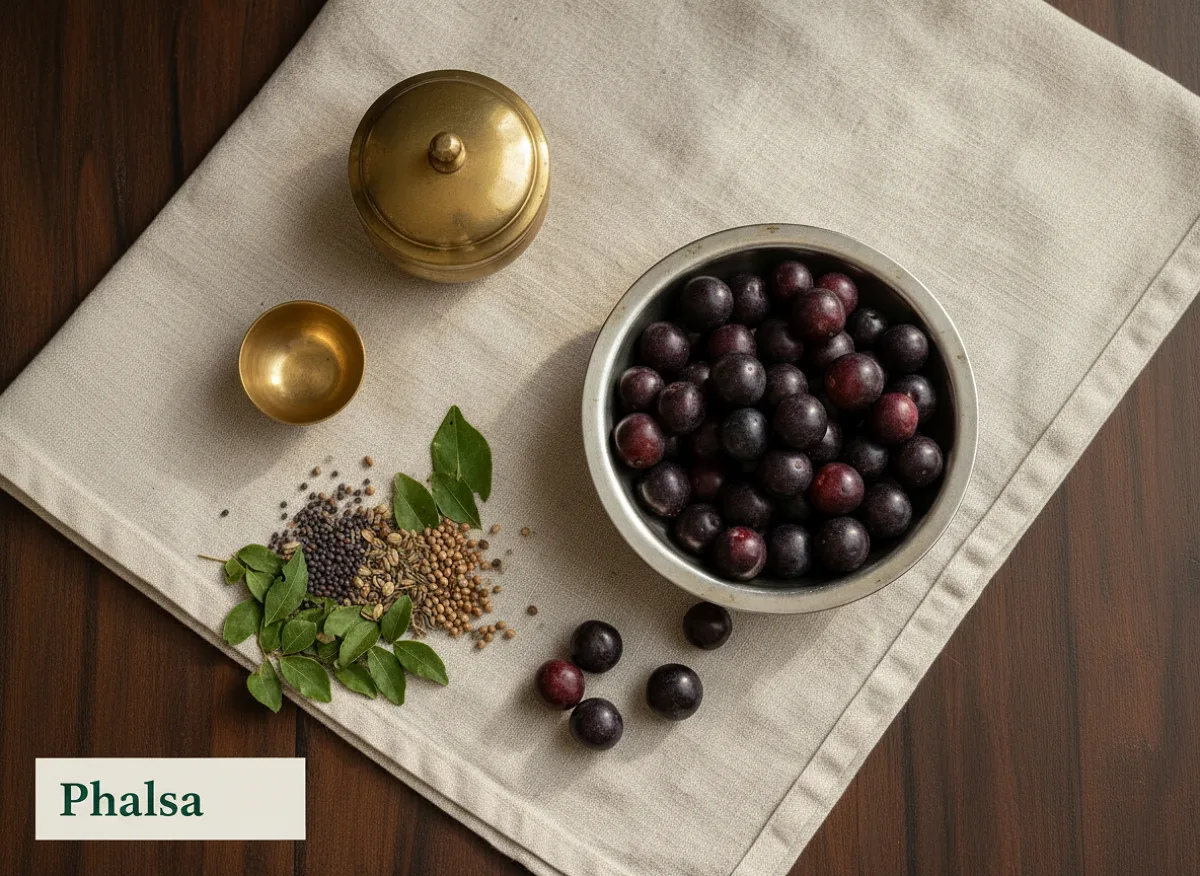
Phalsa is a small, dark purple berry native to the Indian subcontinent, prized for its sweet-tart flavour and cooling properties. Commonly enjoyed fresh, in drinks, or as a seasonal preserve, it is a beloved summer fruit across India (IFCT 2017, Ref #E052).
Nutrition per 100 g
Edible portion values from the master catalog.
More macros
Classification
About Phalsa
What it is
Phalsa (Grewia asiatica) is a small, round berry with thin dark purple or black skin and juicy, pale pink flesh. Native to the Indian subcontinent, it grows wild and cultivated across the plains and foothills, ripening in late spring and early summer. The fruit is delicate and highly perishable, which is why it remains largely a seasonal, regional treasure rather than a year-round supermarket staple (IFCT 2017, Ref #E052).
Use in Indian Kitchen
Phalsa is quintessentially a summer fruit, especially beloved in North India - Delhi, Punjab, and the Gangetic plains - where it appears in markets from May to July. The fruit is eaten fresh, chilled, and often sprinkled with a pinch of salt and chaat masala to heighten its natural tartness. It is also pressed into cooling drinks (phalsa sherbet or phalsa juice), made into jams, or dried for off-season use. In some regions, the leaves are used in traditional herbal preparations. The fruit's cooling nature makes it a natural choice for hot summer months, and many Indian households have childhood memories of buying fresh phalsa from street vendors or local mandis during the season.
Key Nutrients
Phalsa is a good source of vitamin C, dietary fibre, and minerals including iron and calcium. It also contains natural sugars and antioxidants. Exact nutrient composition per 100 g is documented in IFCT 2017 (Ref #E052); for precise figures, refer to the full food composition table.
Health Benefits (Evidence-based)
- High in vitamin C, which may support immune function and skin health.
- Contains antioxidants that may help protect cells from oxidative stress.
- Traditionally valued for its cooling and refreshing properties, especially in Ayurvedic and folk medicine during hot seasons.
- Dietary fibre content may support digestive health.
- Low in calories, making it a light, hydrating summer snack.
Culinary Uses (Vegetarian)
- Eaten fresh, chilled, often with a sprinkle of salt and chaat masala.
- Pressed into fresh juice or blended into cooling summer drinks and sherbets.
- Made into jams, preserves, and chutneys.
- Dried for use in off-season drinks and traditional remedies.
- Occasionally added to fruit salads or desserts.
Caution
Phalsa is delicate and highly perishable; consume within 1-2 days of purchase. Those with sensitive digestion may find the tartness or high fibre content challenging in large quantities. Always wash thoroughly before eating. If you are on blood-thinning medications or have specific health concerns, consult a healthcare provider before making phalsa a regular part of your diet.
References
- Indian Council of Medical Research - National Institute of Nutrition (ICMR-NIN). Indian Food Composition Tables 2017 (IFCT 2017). Reference #E052.
- National Institute of Nutrition, ICMR. Nutritive Value of Indian Foods. Hyderabad: NIN Publications.
Sourcing & Storage
Storage
Store phalsa in a shallow container lined with paper towels in the coldest part of your refrigerator (ideally 2-4°C). Keep the berries in a single layer to avoid crushing. Do not wash until just before eating, as moisture accelerates spoilage. In hot, humid Indian climates, use an airtight container with a desiccant packet if available, or store in the vegetable crisper drawer where air circulation is controlled.
Shelf Life
Fresh phalsa keeps for 1-2 days in the refrigerator under ideal conditions. Once washed or cut, consume immediately. If you wish to preserve phalsa longer, make jam, juice, or dry the berries - these methods can extend shelf life to several weeks or months depending on the preservation technique and storage conditions.
Check Before You Buy
Choose phalsa that is plump, firm, and uniformly dark purple or black in colour. Avoid berries that are soft, mushy, or have visible mould or blemishes. The fruit should have a faint, sweet aroma - a sign of ripeness. Buy from trusted vendors at your local mandi or kirana shop during peak season (May-July) for the best flavour and freshness. Reject any berries that feel sticky or show signs of fermentation, as phalsa spoils very quickly.