Peas, dry
Pisum sativum · Also known as Gota motor, Matar, Sukha vatana, Sukhi Matar, Batani, Kaza, Shana mator, Pattani, Matara, Sukhe hare matar dal, Kara, Hawai mangal
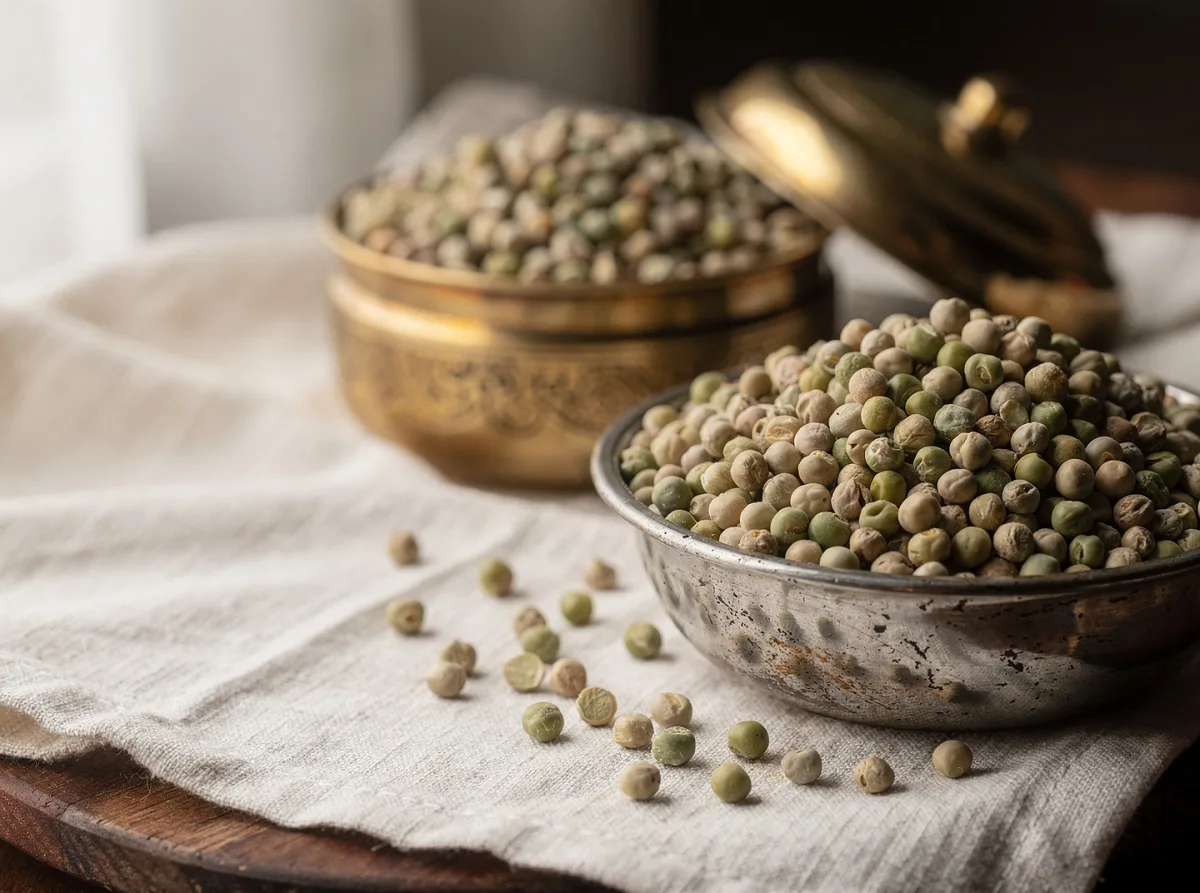
Dry peas (मटर, matar) are whole dried green peas, pale yellow-green and round, with a slightly sweet, starchy flavour. They are a staple grain legume across Indian kitchens, used whole in curries, soups, and dal preparations, or split into matar dal. A practical tip: soak overnig...
Nutrition per 100 g
Mean values ± IFCT published SD (edible portion).
More macros
Classification
About Peas, dry
What it is
Dry peas (मटर, matar) are whole dried green peas - small, round, and pale yellow-green in colour. They retain a gentle sweetness and firm texture even after drying, making them distinct from other legumes. Commonly used whole or split into matar dal, they are a foundational grain legume across North, South, and East Indian home cooking. (IFCT 2017, Ref #B017)
Use in Indian Kitchen
Dry peas feature in sambar, rasam, and vegetable curries across South India; in North Indian khichdi, dal makhani variations, and pea-and-potato sabzi; and in East Indian khichuri and mixed dal preparations. They are often soaked overnight and cooked until tender, then tempered with mustard seeds, curry leaves, and asafoetida. A practical tip: soak peas for 6-8 hours or overnight to halve cooking time and reduce bloating. Pairing with turmeric, ginger, and a pinch of asafoetida aids digestion.
Key Nutrients
Dry peas are rich in plant-based protein, dietary fibre, and carbohydrates. They also contain iron, phosphorus, and B vitamins (thiamine, folate). Exact nutrient composition is documented in IFCT 2017, Ref #B017.
Health Benefits (Evidence-based)
- High in plant protein and fibre, supporting sustained energy and digestive health.
- May help maintain steady blood sugar levels due to their low glycaemic index.
- Iron and folate content supports blood health and energy metabolism.
- Fibre content linked to improved cholesterol and heart health.
- Traditionally used in Ayurvedic cooking to build strength and stamina.
Culinary Uses (Vegetarian)
- Whole peas in sambar, rasam, and vegetable curries.
- Split matar dal in khichdi, dal preparations, and mixed dal soups.
- Pea and potato sabzi, pea pulao, and rice-based one-pot meals.
- Sprouted peas in salads and light breakfast dishes.
- Ground into flour for traditional sweets and savoury snacks.
Caution
- Raw or undercooked peas may cause digestive discomfort; always cook thoroughly.
- Those with gout or uric acid sensitivity should consume in moderation, as peas contain purines.
- Soaking and discarding the water reduces oligosaccharides, which can cause bloating in sensitive individuals.
References
- Indian Council of Medical Research - National Institute of Nutrition (ICMR-NIN). Indian Food Composition Tables (IFCT 2017). Hyderabad: NIN; 2017. Ref #B017 (Grain Legumes - Peas, dry).
- Gopalan C, Rama Sastri BV, Balasubramanian SC. Nutritive Value of Indian Foods. National Institute of Nutrition, ICMR. Hyderabad; 2011.
Sourcing & Storage
Storage
Store dry peas in an airtight container (glass jar, metal tin, or food-grade plastic) in a cool, dry place away from direct sunlight and moisture. Keep away from strong-smelling spices and foods. In humid climates, store in the refrigerator or freezer to prevent moisture absorption and pest infestation. Ensure the container is sealed tightly after each use.
Shelf Life
Properly stored dry peas remain good for 1-2 years in a cool, dry pantry. In the refrigerator, they last up to 3 years; in the freezer, up to 4 years. Once cooked, peas should be refrigerated in an airtight container and consumed within 3-4 days, or frozen for up to 3 months.
Check Before You Buy
Look for whole, unblemished peas with a uniform pale yellow-green colour. Avoid peas with cracks, discolouration, or a musty smell, which indicate age or poor storage. Check the packaging for the harvest date and ensure no moisture or insect damage is visible. Buy from reputable kirana shops or mandi vendors with good turnover to ensure freshness. Whole peas should feel firm and dry to the touch.
In Ayurveda
In classical Ayurvedic texts, dry peas (मटर) are recognized as a nutritious legume with balancing properties. They are considered to have a sweet (madhura) taste and are believed to support digestive strength when properly cooked with warming spices such as ginger, cumin, and asafoetida. Soaking and cooking with these spices is traditionally recommended to enhance digestibility and reduce the tendency toward gas or bloating. Dry peas are often used in Ayurvedic kitchens as a grounding, nourishing food suitable for maintaining overall wellness.