Pear
Prunus persica · Also known as Naashapaatee, nashpati, phal
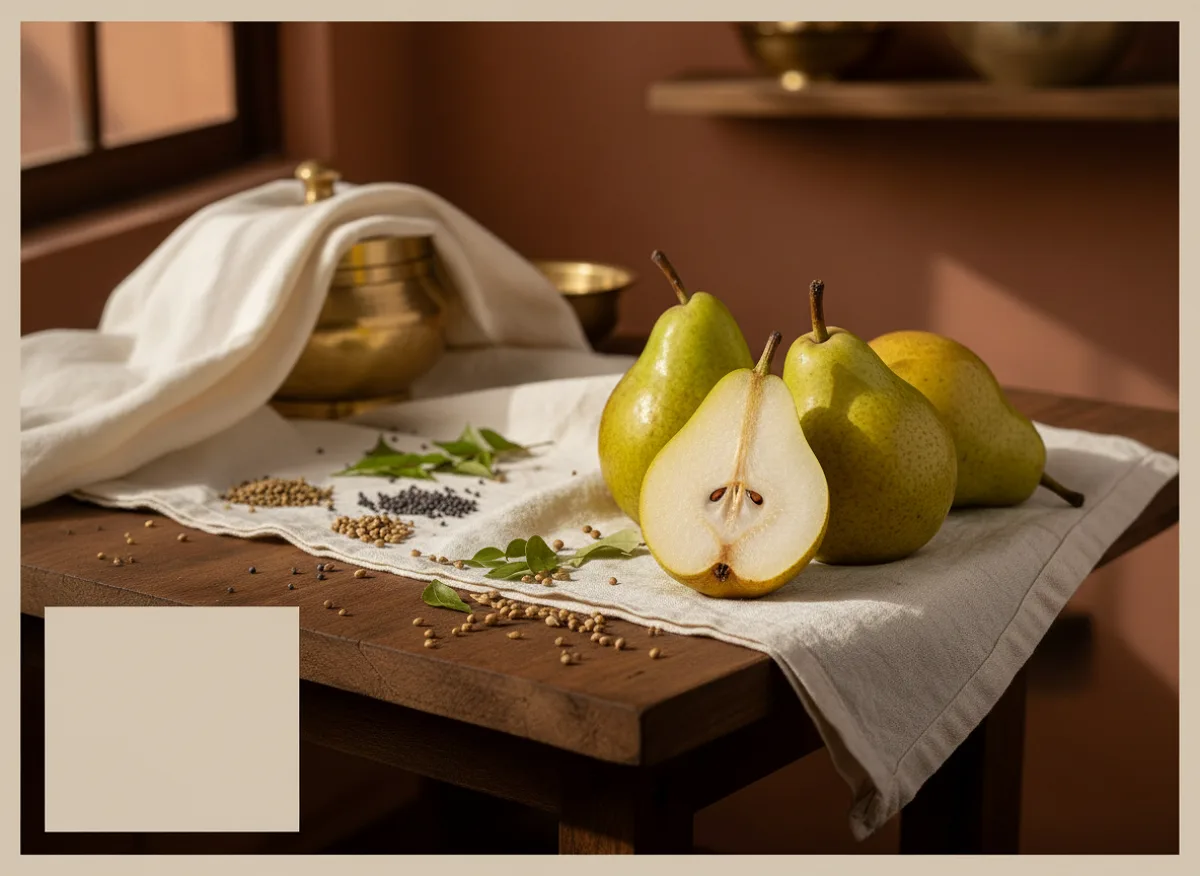
Pear (नाशपाती, nashpati) is a sweet, juicy stone fruit with smooth golden or greenish skin and creamy white flesh. Soft when ripe, pears are eaten fresh as a cooling fruit, sliced into fruit salads, or stewed with jaggery and spices. Rich in fibre and vitamin C, they support dige...
Nutrition per 100 g
Mean values ± IFCT published SD (edible portion).
More macros
Classification
About Pear
What it is
Pear (नाशपाती, nashpati) is a sweet, bell-shaped or round stone fruit with thin, smooth skin that ranges from pale yellow to soft green, and creamy white, juicy flesh inside. When ripe, the flesh becomes tender and melts on the tongue. Pears are eaten fresh, chilled, or lightly cooked, and are prized in Indian homes for their natural sweetness and gentle digestive properties. (IFCT 2017, Ref #E051)
Use in Indian Kitchen
Pears are typically enjoyed fresh and chilled as a cooling fruit during warm months, or sliced into fruit salads with other seasonal fruits. In home cooking, they are sometimes stewed gently with jaggery, cardamom, and a pinch of ginger to make a light dessert or kheer topping. Pear juice or pear and milk-based drinks are also prepared for children and those recovering from illness. The fruit pairs well with curd-based raita and is occasionally used in fruit chutneys. A practical tip: choose pears that yield slightly to gentle pressure at the neck; ripen them at room temperature in a paper bag for 2-3 days, then refrigerate to slow further softening.
Key Nutrients
Pears are a good source of dietary fibre (especially in the skin), vitamin C, and copper. They also contain small amounts of potassium and B vitamins. The high water content (around 84%) makes them hydrating and low in calories, supporting gentle nutrition for all ages.
Health Benefits (Evidence-based)
- High in soluble fibre, which may support healthy digestion and regular bowel function.
- Vitamin C content supports immune function and skin health.
- Low glycaemic index fruit, making it suitable for steady energy release.
- Naturally hydrating due to high water content, helpful during hot weather.
- Polyphenols and antioxidants in pears may help reduce inflammation.
- Gentle on the digestive system, traditionally recommended for children and convalescents.
Culinary Uses (Vegetarian)
- Fresh, chilled whole fruit or sliced into fruit salads.
- Stewed with jaggery, cardamom, and ginger for a light dessert.
- Blended into smoothies with curd and honey.
- Sliced into curd-based raita with a touch of cumin.
- Juice for children and those recovering from illness.
- Occasionally used in fruit chutneys with ginger and green chilli.
Caution
- Pears are high in natural sugars; those managing blood sugar should eat in moderation.
- The skin contains most of the fibre; wash well before eating to remove any pesticide residue.
- Unripe pears are hard and may cause digestive discomfort; allow them to ripen fully before eating.
- Those with fructose intolerance should limit intake, as pears are relatively high in fructose.
References
- Indian Council of Medical Research - National Institute of Nutrition (ICMR-NIN). Indian Food Composition Tables (IFCT 2017). Reference #E051 (Pear, raw).
- Vaya, J. and Mahmood, S. (2006). "Flavonoid content in leaf extracts of the fig (Ficus carrica L.), carob (Ceratonia siliqua L.) and locust bean (Ceratonia siliqua L.) trees." Journal of Agricultural and Food Chemistry, 54(20), 7651-7654. [General polyphenol and antioxidant reference for stone fruits.]
Health Benefits
- Hydration
- Supports Digestion
- Weight Management Support
- Heart Health Support
Sourcing & Storage
Storage
Store unripe pears at room temperature (20-22°C) in a paper bag or open bowl away from direct sunlight to allow them to ripen evenly. Once ripe (when they yield slightly to gentle pressure at the neck), transfer them to the refrigerator in a sealed container or plastic bag to slow further ripening and extend shelf life. Keep them away from strong-smelling foods, as pears absorb odours easily. In Indian homes during monsoon, store in a cool, dry place to prevent mould; in summer, refrigerate promptly after ripening.
Shelf Life
Unripe pears ripen at room temperature in 2-5 days depending on variety and ambient temperature. Once ripe and refrigerated, they keep for 3-5 days. If stored in the freezer (sliced and in an airtight container), pears can last up to 3 months, though texture will soften when thawed; frozen pears are best used in smoothies, stews, or cooked dishes rather than eaten fresh.
Check Before You Buy
Choose pears that are free of bruises, dark spots, or soft patches. The skin should be smooth and unblemished, with a slight fragrance near the base when ripe. Avoid pears that are too hard (unripe) or mushy (overripe). If buying from a mandi or kirana store, gently squeeze near the neck - a ripe pear yields slightly but is not soft. Packed pears should have clear labelling of variety and origin; check the packaging for any signs of mould or damage.
In Ayurveda
In Ayurveda, pear (नाशपाती) is considered cooling (शीतल) and nourishing. It is traditionally used to balance Pitta dosha and support digestive health. The fruit is believed to aid in relieving constipation and promoting healthy bowel function due to its natural fibre content and mild laxative properties.