Peach
Prunus communis · Also known as Aadoo, Aaroo, Peach fruit
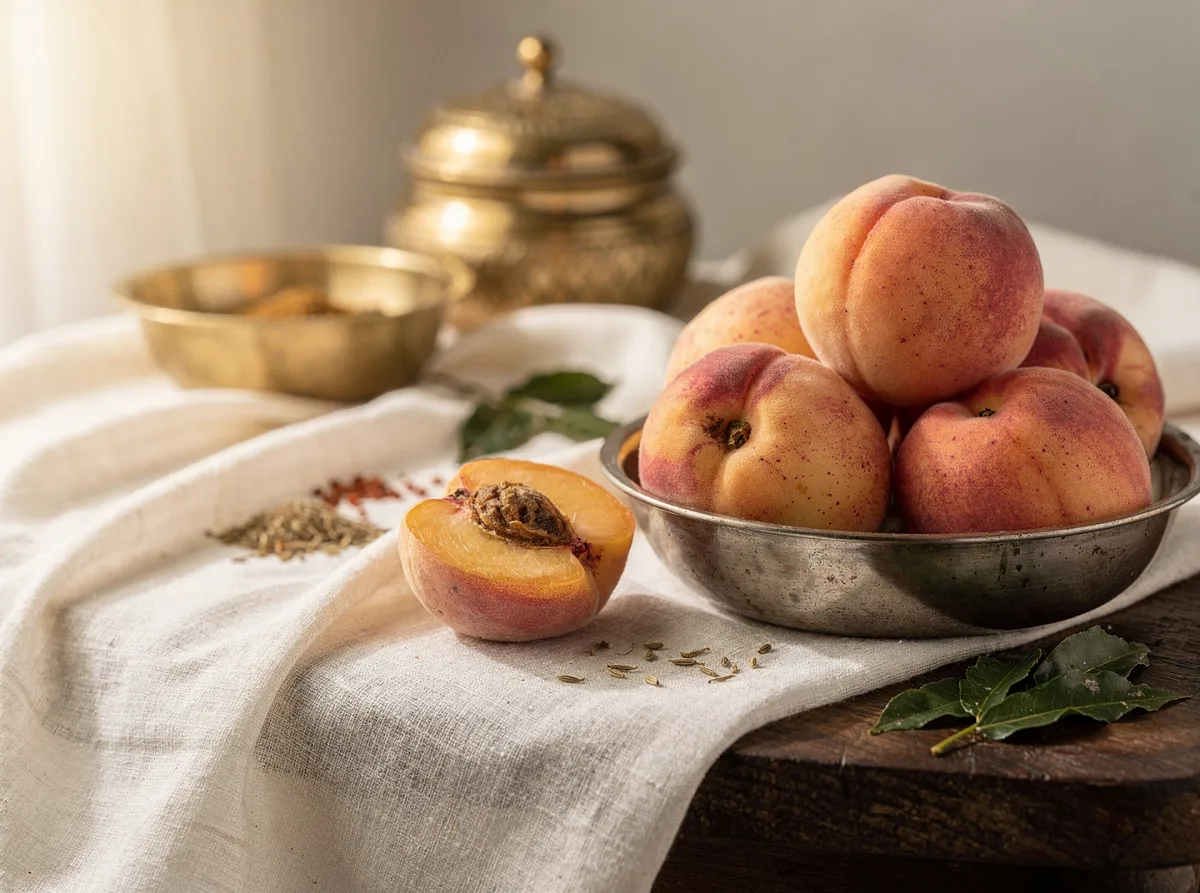
Peach (आडू, aadoo) is a soft, fuzzy-skinned stone fruit with golden-yellow to rosy flesh, sweet and juicy when ripe. Common in North Indian hill stations and summer markets, peaches are eaten fresh, sliced into yoghurt or custard, or stewed into compotes and jams. Choose firm fru...
Nutrition per 100 g
Edible portion values from the master catalog.
More macros
Classification
About Peach
What it is
Peach (आडू, aadoo) is a round to oval stone fruit with velvety fuzzy skin ranging from pale yellow to deep rose-red. The flesh inside is soft, juicy, and pale yellow to orange, with a large central pit. Peaches are at their peak in summer (May to August) and are prized for their natural sweetness and delicate fragrance. They are eaten fresh, chilled, or cooked into desserts and preserves. (IFCT 2017, Ref #E050)
Use in Indian Kitchen
Peaches are most popular in North India, especially in Himachal Pradesh and Kashmir, where they are enjoyed fresh during summer. They are sliced and added to yoghurt or custard for a cooling dessert, stewed with a little sugar and cardamom for compotes, or made into jams and chutneys. In some households, peaches are also dried for winter use or candied as a sweet treat. A practical tip: ripe peaches bruise easily, so handle gently and store in a cool place; if you have firm peaches, leave them at room temperature for a day or two to soften and develop flavour before eating.
Key Nutrients
Peaches are a good source of vitamin C, dietary fibre, and potassium. They also contain small amounts of vitamin A, niacin, and antioxidants such as chlorogenic acid and catechins. Exact nutrient composition varies with ripeness and variety; refer to IFCT 2017 for detailed micronutrient profiles.
Health Benefits (Evidence-based)
- High in vitamin C, which supports immune function and skin health.
- Dietary fibre aids digestion and may help maintain healthy cholesterol levels.
- Potassium content supports heart health and blood pressure regulation.
- Antioxidants in peaches may help reduce oxidative stress and inflammation.
- Low in calories and naturally sweet, making them a good choice for weight-conscious diets.
- The skin contains most of the fibre and antioxidants, so eating whole (washed) peaches maximises nutritional benefit.
Culinary Uses (Vegetarian)
- Fresh sliced peaches with yoghurt, custard, or ice cream.
- Stewed peaches with cardamom, cinnamon, or a touch of honey for a simple dessert.
- Peach jam, chutney, or preserve for breakfast or gifting.
- Dried peaches as a snack or added to trail mixes.
- Peach compote served with pancakes, halwa, or kheer.
Caution
- The pit contains amygdalin, which can release cyanide if crushed and consumed in large quantities; always discard the pit.
- Some people may have oral allergy syndrome (itching or swelling of the mouth and throat) if allergic to birch pollen; cooking the fruit often reduces this reaction.
- Peaches are relatively high in natural sugars; those managing blood sugar should eat in moderation.
References
- Indian Council of Medical Research - National Institute of Nutrition (ICMR-NIN). Indian Food Composition Tables (IFCT 2017). Hyderabad: NIN; 2017. [Ref #E050]
- Vaya J, Mahmood S. Flavonoid content in leaf extracts of the fig (Ficus carrica), carob (Ceratonia siliqua), and pistachio (Pistacia lentiscus) trees. Journal of Agricultural and Food Chemistry. 2006;54(20):7651-7654. [General antioxidant reference for stone fruits]
Health Benefits
- Hydration
- Supports Digestion
- Boosts Immunity
- Improves Skin Health
Sourcing & Storage
Storage
Store ripe peaches in the refrigerator in a perforated plastic bag or paper bag to allow air circulation and prevent moisture buildup. Keep them away from strong-smelling foods as they absorb odours easily. If peaches are still firm, leave them at room temperature (away from direct sunlight) for 1-2 days to ripen. Once ripe, refrigerate immediately to slow ripening and extend shelf life.
Shelf Life
Ripe peaches keep for 3-5 days in the refrigerator. Firm, slightly underripe peaches last 5-7 days. Once cut, store peach halves or slices in an airtight container in the fridge and use within 1-2 days to prevent browning and loss of flavour. Peach jam or preserve, when properly sealed, keeps for several months in a cool, dark cupboard; once opened, refrigerate and use within 2-3 weeks.
Check Before You Buy
Choose peaches that are fragrant, with skin that yields slightly to gentle pressure - they should not be rock-hard or mushy. Look for a golden or rosy blush; avoid fruits with large bruises, cracks, or soft dark spots, which indicate overripeness or decay. The skin should be smooth and fuzzy, not wrinkled. If buying from a mandi or kirana shop, ask the vendor when the fruit arrived; locally grown peaches in season (May-August) are usually fresher and more flavourful than imported or cold-stored fruit.
In Ayurveda
In classical Ayurvedic texts, peach is recognized as a cooling fruit with a sweet (madhura) rasa and a naturally balancing quality. It is traditionally considered beneficial for pacifying Pitta dosha due to its cooling nature and high water content, making it particularly suitable for consumption during hot seasons.
Peach is valued in Ayurvedic home remedies for its gentle digestive support and its role in promoting skin health. The fruit's natural sweetness and soft texture make it easy to digest, and it is often recommended as a nourishing food for those recovering from illness or seeking to maintain overall wellness.