Parsley
Petroselinum crispum · Also known as Ajamod, garden parsley, curly parsley, flat-leaf parsley, Italian parsley
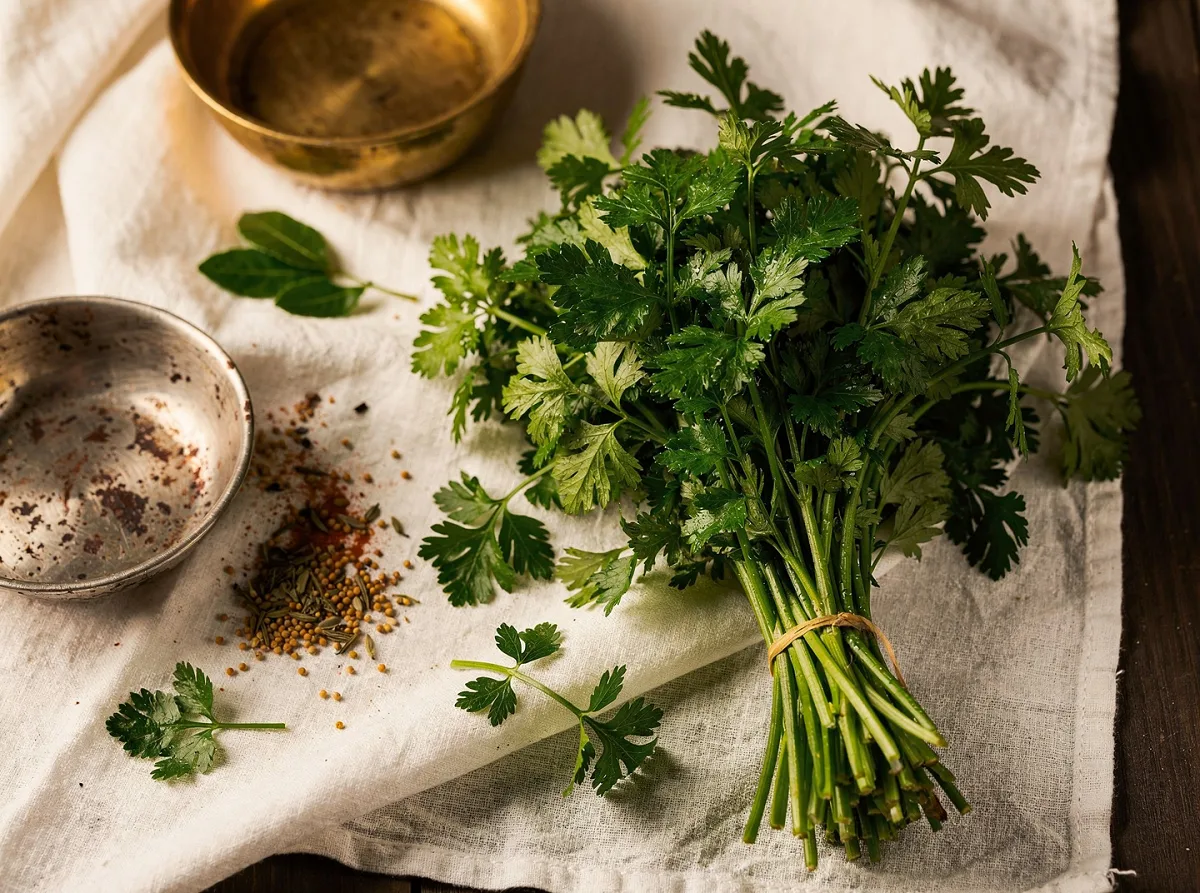
Parsley (ajamod) is a bright green, feathery herb with delicate, finely divided leaves and a fresh, slightly peppery taste. Used fresh or dried, it brings a clean, herbaceous note to Indian vegetarian cooking - from tadka in dal and sambar to garnish on chaat, raita, and vegetabl...
Nutrition per 100 g
Mean values ± IFCT published SD (edible portion).
More macros
Classification
About Parsley
What it is
Parsley (ajamod) is a leafy green herb with finely divided, feathery leaves that range from bright to deep green. The two common forms are curly parsley, with tightly crimped foliage, and flat-leaf (Italian) parsley, with broader, smoother leaves and a slightly stronger flavour. Fresh parsley has a clean, mildly peppery taste and is used as both a flavouring herb and a garnish in Indian vegetarian kitchens. (IFCT 2017, Ref #C028)
Use in Indian Kitchen
Parsley is not a traditional Indian spice, but has become a familiar herb in modern Indian home cooking and restaurant kitchens. Fresh leaves are chopped and added to tadka (tempering) for dal, sambar, and vegetable curries just before serving to brighten the flavour. It is commonly used as a garnish on chaat, raita, and mixed vegetable dishes, and occasionally folded into paratha dough or sprinkled over paneer preparations. The leaves pair well with lemon juice, cumin, and coriander. A practical tip: add parsley at the very end of cooking to preserve its fresh, delicate taste; prolonged heat dulls its character.
Key Nutrients
Parsley is rich in vitamin C, vitamin K, and folate. It also contains iron, calcium, and antioxidants including flavonoids and carotenoids. Exact nutrient composition varies by form (fresh vs. dried) and growing conditions; refer to IFCT 2017 for detailed micronutrient profiles.
Health Benefits (Evidence-based)
- High in vitamin K, which supports bone health and blood clotting.
- Good source of vitamin C, linked to immune function and collagen formation.
- Contains folate, important for cell division and DNA synthesis.
- Antioxidants in parsley may help reduce oxidative stress in the body.
- Traditionally used in herbal infusions to support digestive comfort.
- May have mild diuretic properties, though evidence in humans is limited.
Culinary Uses (Vegetarian)
- Fresh chopped leaves as a tadka (tempering) in dal, sambar, and vegetable curries.
- Garnish on chaat, raita, mixed vegetable salads, and paneer dishes.
- Mixed into paratha dough or sprinkled over khichdi.
- Infused in curd-based dressings and chutneys.
- Dried parsley as a shelf-stable seasoning for soups and stews.
Caution
- Pregnant women should avoid large medicinal doses of parsley, as it may stimulate uterine contractions; culinary amounts are safe.
- People on blood-thinning medications should consult a healthcare provider before consuming large quantities, due to parsley's vitamin K content.
- Parsley seeds and essential oil are more potent than leaves and should not be used without professional guidance.
References
- Indian Council of Medical Research - National Institute of Nutrition (ICMR-NIN). Indian Food Composition Tables (IFCT 2017). Hyderabad: ICMR-NIN; 2017. Reference #C028.
- National Institute of Nutrition, ICMR. Nutritive Value of Indian Foods. Hyderabad: NIN; regularly updated. Available at https://www.nin.res.in/
Health Benefits
- Antioxidant
- Supports Kidney Health
- Supports Digestion
- Boosts Immunity
- Freshens Breath
Sourcing & Storage
Storage
Store fresh parsley in the refrigerator wrapped loosely in a damp paper towel or cloth, placed in a sealed plastic bag or container. Keep away from direct moisture to prevent wilting and decay. Alternatively, stand the stems upright in a glass of water (like a small bouquet), cover loosely with a plastic bag, and refrigerate. Dried parsley should be kept in an airtight container away from heat, light, and humidity.
Shelf Life
Fresh parsley lasts 1 to 2 weeks in the refrigerator when stored properly. Dried parsley retains flavour for 1 to 2 years in a cool, dark cupboard. Once opened, dried parsley gradually loses potency; use within 6 months for best flavour.
Check Before You Buy
When buying fresh parsley, look for bright green, crisp leaves with no yellowing, browning, or wilting. The stems should be firm and fresh-looking, not slimy or blackened. Avoid bunches with a musty or fermented smell. If buying packaged fresh parsley, check the date and ensure the leaves are not compressed or discoloured inside the pack. Dried parsley should be vibrant green, not dull or grey, and free of dust or debris.
In Ayurveda
Parsley is not extensively documented in classical Ayurvedic texts as a primary therapeutic herb. However, it is traditionally used in Indian home remedies to support digestion and reduce bloating. Its warm, pungent taste (tikta rasa) and light, dry qualities (laghu and ruksha guna) align with Ayurvedic principles of stimulating digestive fire (agni) and promoting healthy elimination.