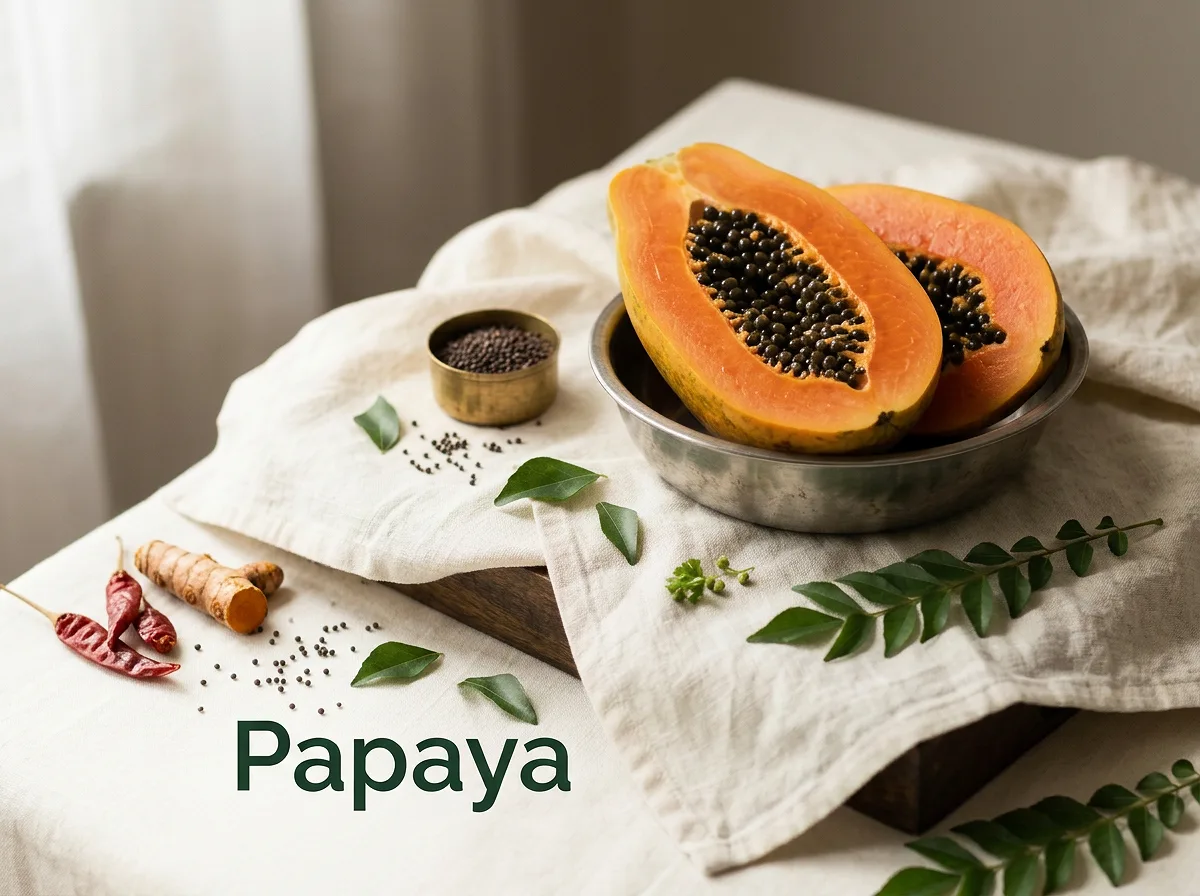
Papaya
Carcia papaya · Also known as पपीता, papeeta
Papaya (पपीता, papeeta) is a tropical fruit rich in vitamin C, fibre, and the enzyme papain. Commonly eaten fresh, as juice, or in salads across Indian kitchens, it is valued for its natural sweetness and digestive properties (IFCT 2017, Ref #E049).
Nutrition per 100 g
Mean values ± IFCT published SD (edible portion).
More macros
Classification
About Papaya
What it is
Papaya is a soft, orange-fleshed tropical fruit native to Central America but now widely grown across India, especially in southern and eastern regions. The fruit contains papain, a natural enzyme with mild digestive properties, and is eaten ripe or semi-ripe depending on regional preference and use. Composition data are documented in IFCT 2017, Ref #E049.
Use in Indian Kitchen
In South India, ripe papaya is a breakfast staple, often served fresh with a squeeze of lime and a pinch of salt. In the North, semi-ripe papaya is cooked as a sabzi (vegetable curry) with spices, or pickled for long storage. East Indian kitchens favour papaya in chutneys and as a cooling summer drink blended with curd and jaggery. The fruit is also used in fruit salads, halwas, and as a natural meat tenderiser in marinades. Its mild, slightly musky sweetness makes it a comfort food across seasons, and it is especially valued during summer for its cooling, hydrating nature.
Key Nutrients
Papaya is a good source of vitamin C (ascorbic acid), dietary fibre, and the enzyme papain. It also contains small amounts of vitamin A (as carotenoids), potassium, and folate. Exact nutrient composition per 100 g is documented in IFCT 2017, Ref #E049.
Health Benefits (Evidence-based)
- May support digestive health through the natural enzyme papain, which helps break down proteins.
- High in vitamin C, linked to immune function and collagen formation.
- Good source of dietary fibre, which may help maintain healthy digestion and bowel regularity.
- Contains carotenoids and other antioxidants, traditionally associated with eye health and general wellness.
- Low in calories and high in water content, making it a hydrating choice in warm climates.
Culinary Uses (Vegetarian)
- Fresh ripe fruit: eaten as is, in fruit salads, or blended into smoothies and lassi.
- Semi-ripe papaya: cooked as a mild, slightly sweet sabzi with onion, tomato, and spices (turmeric, cumin, coriander).
- Papaya pickle: preserved with mustard seeds, fenugreek, and chilli for long-term storage.
- Chutneys and relishes: blended with coconut, green chilli, and jaggery for a sweet-spicy condiment.
- Halwa and desserts: cooked down with ghee and jaggery for a traditional sweet.
- Papain paste: used as a natural tenderiser in marinades for paneer and vegetable dishes.
Caution
- Unripe papaya contains higher levels of papain and latex, which may cause stomach upset or allergic reactions in sensitive individuals; ripe fruit is gentler.
- Pregnant women are traditionally advised to avoid unripe papaya, as papain may stimulate uterine contractions.
- Those with latex allergies may react to papaya; cross-reactivity is documented in some cases.
- Papaya seeds are sometimes used as a folk remedy but are not recommended for regular consumption without medical guidance.
References
- Indian Council of Medical Research - National Institute of Nutrition (ICMR-NIN). Indian Food Composition Tables (IFCT) 2017. Hyderabad: NIN; 2017. [Ref #E049 - Papaya, ripe]
- Srivastava KC, Bordia A. Curcumin, a major component of food spice turmeric (Curcuma longa) inhibits aggregation and alters eicosanoid metabolism in human blood platelets. Prostaglandins Leukot Essent Fatty Acids. 1995;52(4):223-227. [General antioxidant and digestive enzyme reference for tropical fruits]
Health Benefits
- Supports Digestion
- Boosts Immunity
- Weight Management Support
- Improves Gut Health
Sourcing & Storage
Storage
Store ripe papaya in the refrigerator (4-8°C) in a perforated plastic bag or paper wrap to allow air circulation and prevent moisture buildup. Keep away from direct sunlight and strong-smelling foods, as papaya absorbs odours easily. Semi-ripe papaya can be left at room temperature (20-25°C) in a cool, dry place away from direct heat until it ripens fully, then move to the fridge.
Shelf Life
Ripe papaya keeps for 5-7 days in the refrigerator when stored properly. Semi-ripe fruit lasts 2-3 days at room temperature before ripening; once ripe, use within a week. Cut papaya should be wrapped tightly and consumed within 2-3 days. Papaya does not freeze well whole, but flesh can be cubed and frozen for up to 3 months for use in smoothies or cooked dishes.
Check Before You Buy
Choose papaya that yields slightly to gentle pressure at the stem end - a sign of ripeness without being mushy. The skin should be mostly yellow or orange with no large green patches (unless you want semi-ripe for cooking). Avoid fruit with soft spots, bruises, or dark blemishes. A faint, sweet aroma near the stem indicates good flavour. If buying from a mandi or kirana, check that the fruit is not overly hard (unripe) or leaking juice (overripe). Packaged or pre-cut papaya should show no browning or fermentation smell; always check the date on packed fruit.
In Ayurveda
0