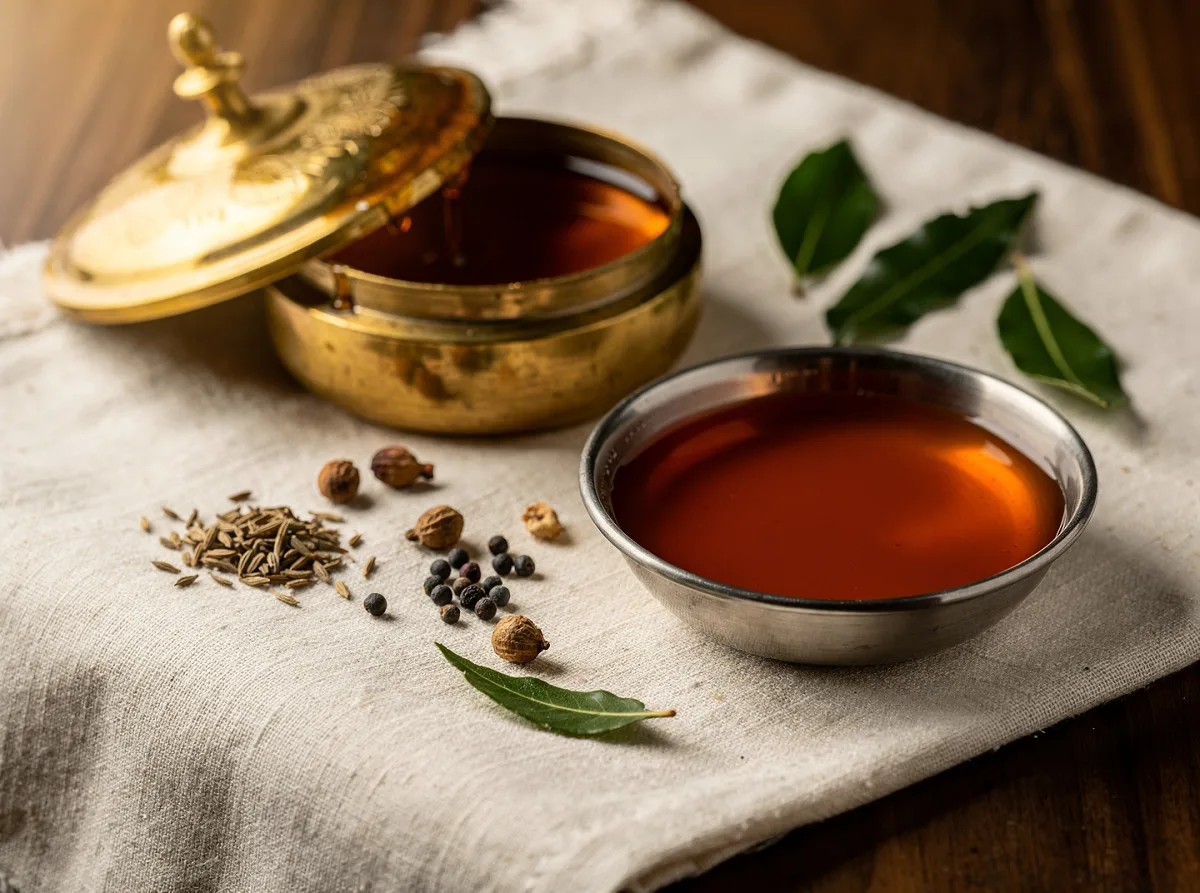
Palm oil
Also known as Palmyra oil, red palm oil, palm fat, तेल (tel), खजूर का तेल (khajur ka tel)
Palm oil is a tropical vegetable fat extracted from the fruit of the oil palm tree, prized in Indian kitchens for its high smoke point and rich golden-red hue when unrefined. Used sparingly in South Indian curries, traditional sweets, and some regional pickles, it brings a distin...
Nutrition per 100 g
Edible portion values from the master catalog.
More macros
Classification
About Palm oil
What it is
Palm oil is a semi-solid fat extracted from the mesocarp of oil palm fruit, appearing golden-red when unrefined and pale when bleached and deodorised. It is solid at room temperature in most Indian climates and has a relatively high melting point, making it stable for cooking and storage. Traditionally used in South Indian and some regional Indian kitchens, it is valued for its neutral flavour when refined and its ability to withstand high heat without breaking down. (IFCT 2017, Ref #T007)
Use in Indian Kitchen
Palm oil appears in select South Indian preparations, particularly in traditional payasams (rice or semolina puddings), coconut-based curries, and some regional sweets where its texture and heat stability are prized. It is occasionally used in certain pickle recipes and in some temple or festival preparations where it has been part of the culinary tradition for generations. A small quantity is often preferred over ghee or coconut oil in dishes where a lighter, less assertive fat is desired. Home cooks typically use it in measured amounts rather than as an everyday cooking medium, and it pairs well with coconut, jaggery, and spices like cardamom and cinnamon.
Key Nutrients
Palm oil is primarily composed of saturated and unsaturated fatty acids. It contains vitamin E (tocopherols) and carotenoids (beta-carotene and lycopene) when unrefined, which give it its characteristic red colour. The exact nutrient profile varies with the degree of processing and refining.
Health Benefits (Evidence-based)
- May support heart health when used in moderation as part of a balanced diet, though saturated fat intake should be monitored.
- Unrefined red palm oil contains carotenoids and vitamin E, which are linked to antioxidant activity and may help protect cells from oxidative stress.
- High smoke point makes it suitable for cooking methods that require stable fats at elevated temperatures.
- Traditionally used in small quantities in Indian sweets and ceremonial foods, suggesting cultural acceptance when consumed in measured amounts.
Culinary Uses (Vegetarian)
- South Indian payasams and rice puddings.
- Coconut-based curries and gravies in regional South Indian cuisine.
- Traditional pickles and preserves.
- Festival sweets and temple offerings.
- Baking and confectionery where a stable fat with high melting point is needed.
Caution
Palm oil is high in saturated fat and should be used sparingly, especially by those monitoring cholesterol or managing heart health. Those with a history of cardiovascular concerns should consult a healthcare provider about portion sizes. Unrefined palm oil may have a stronger flavour and aroma that not all palates prefer; refined versions are milder. Sustainability concerns around palm oil production are worth considering when choosing brands.
References
- Indian Council of Medical Research - National Institute of Nutrition (ICMR-NIN). Indian Food Composition Tables (IFCT 2017). Reference code T007.
- Food Safety and Standards Authority of India (FSSAI). Labelling and display standards for edible oils and fats.
Sourcing & Storage
Storage
Store palm oil in a cool, dark place away from direct sunlight and heat sources, ideally between 15-25°C. Use an airtight, opaque container (glass or food-grade plastic) to prevent oxidation and rancidity. In warm Indian climates, refrigeration may be necessary to keep it solid and prevent spoilage. Keep away from moisture and strong odours, as palm oil can absorb flavours from its surroundings.
Shelf Life
When stored properly in a cool, dark place, refined palm oil can last 1-2 years unopened. Once opened, use within 6-12 months. Unrefined red palm oil has a shorter shelf life of 6-12 months due to its higher carotenoid content, which is more prone to oxidation. Refrigeration can extend shelf life by several months. Discard if the oil develops a rancid smell or off-colour.
Check Before You Buy
When buying palm oil, check the label for the degree of refinement (refined, bleached and deodorised, or unrefined red palm oil) and the country of origin. Unrefined red palm oil should have a deep golden-red colour; if it appears pale or brownish, it may be oxidised or of poor quality. Ensure the container is sealed and undamaged, and check the manufacturing and expiry dates. Avoid oils with a rancid or off smell. If buying from a kirana or bulk supplier, ask about storage conditions and how long the stock has been held.
In Ayurveda
In classical Ayurvedic texts, palm oil (ताड़ का तेल) is not extensively documented as a primary therapeutic oil. However, it has been traditionally used in South Indian Ayurvedic and folk medicine practices for its warming properties and as a cooking medium in regional preparations. Its high vitamin E content aligns with Ayurvedic concepts of nourishing tissues (dhatu poshana).