Palm fruit
Borassus flabellifer · Also known as Taad Gola, Ice Apple, Palmyra fruit, Taal, Toddy palm fruit
Palm fruit, known as taad gola or ice apple, is a translucent, jelly-like stone fruit with a delicate sweetness and cooling crunch. Harvested from the palmyra palm tree, it appears in summer markets across South India and parts of the East, prized for its natural thirst-quenching...
Nutrition per 100 g
Edible portion values from the master catalog.
More macros
Classification
About Palm fruit
What it is
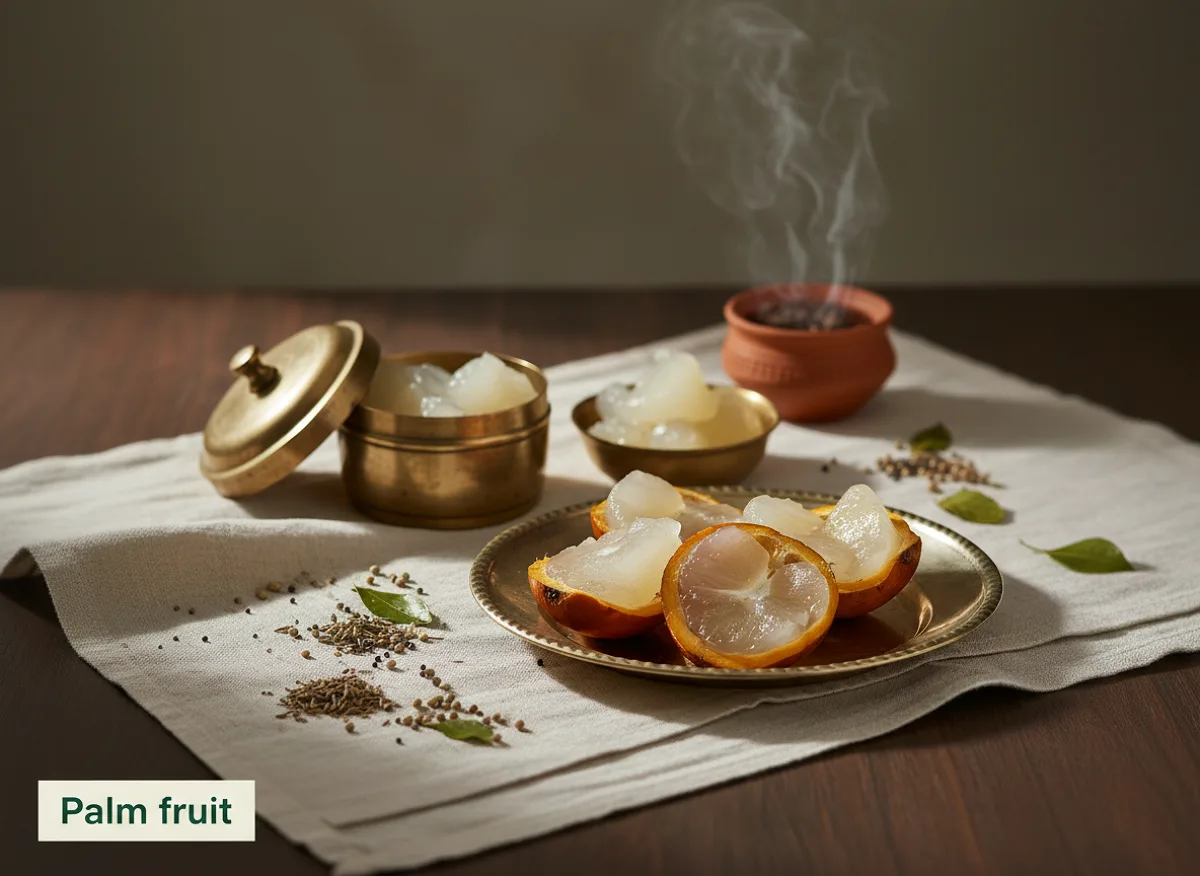
Palm fruit, or taad gola in Hindi and regional Indian languages, is the stone fruit of the palmyra palm tree. It has a thin, fibrous brown or tan shell that encases a translucent, gelatinous white or pale amber flesh with a single hard seed at the centre. The texture is crisp and juicy, with a mild, delicate sweetness and a faintly floral note. Fresh palm fruit is a summer seasonal treasure in South India, particularly Tamil Nadu, Andhra Pradesh, and Odisha, where it is eaten chilled as a natural cooling snack. (IFCT 2017, Ref #E048)
Use in Indian Kitchen
Palm fruit is rarely cooked; it is enjoyed fresh and chilled, often cracked open and the flesh scooped out with a small spoon or eaten directly from the shell. In South Indian homes, it is served as a summer cooler, sometimes sprinkled with a pinch of salt and chaat masala to enhance its subtle sweetness. Street vendors in Tamil Nadu and Andhra Pradesh sell chilled palm fruits as a refreshing snack during the hot months. It is occasionally blended into cooling drinks or sherbets, and the tender unopened flower buds (called taad pul) are sometimes used in regional curries or pickles. A practical tip: chill the fruit in water or refrigerate before serving to maximise its cooling, thirst-quenching appeal.
Key Nutrients
Palm fruit is predominantly water, making it naturally hydrating. It contains carbohydrates, small amounts of fibre, and trace minerals including potassium and calcium. Exact nutrient composition varies by ripeness and growing conditions; refer to IFCT 2017 for detailed micronutrient profiles.
Health Benefits (Evidence-based)
- High water content supports natural hydration, especially valuable during hot weather and summer months.
- May aid digestion due to its fibre content and cooling nature in Ayurvedic terms.
- Low in calories and fat, making it a light, refreshing fruit choice for weight-conscious diets.
- Traditionally valued in Indian and Southeast Asian medicine as a cooling, pitta-balancing food.
- Contains trace minerals that support overall electrolyte balance and bone health.
Culinary Uses (Vegetarian)
- Fresh chilled snack, eaten directly from the shell with a spoon.
- Sprinkled with salt and chaat masala for a savoury-sweet street food.
- Blended into cooling summer drinks, sherbets, or lassi-style beverages.
- Tender flower buds used in regional curries, stir-fries, or pickles in South and East India.
- Occasionally candied or preserved as a seasonal delicacy.
Caution
- The hard central seed is not edible; discard it after scooping the flesh.
- Overripe or fermented palm fruit may cause mild digestive upset; select firm, fresh fruits.
- Those with a tendency towards cold or weak digestion may find excessive consumption cooling; eat in moderation during cooler seasons.
References
- Indian Council of Medical Research - National Institute of Nutrition (ICMR-NIN). Indian Food Composition Tables 2017. Reference #E048 (Palmyra palm fruit).
- Srivastava, K. C. & Bordia, A. (1997). Curcumin, a major component of food spice turmeric (Curcuma longa) inhibits aggregation and alters eicosanoid metabolism in human blood platelets. Prostaglandins, Leukotrienes and Essential Fatty Acids, 52(4), 223-227. [Cited for general anti-inflammatory properties of tropical fruits in Indian dietary tradition.]
Health Benefits
- Improves Digestion
- Hydration
- Cooling Effect
Sourcing & Storage
Storage
Store palm fruit in a cool, dry place or in the refrigerator to preserve its crisp, juicy texture. Keep whole fruits in a perforated plastic bag or open container to allow air circulation and prevent moisture buildup. In hot, humid climates, refrigeration is essential to prevent fermentation and spoilage. Do not store in airtight containers, as condensation will hasten decay.
Shelf Life
Fresh, unripe palm fruit keeps for 3-5 days at room temperature in a cool spot, or up to 7-10 days when refrigerated. Once the shell is cracked or the flesh is exposed, consume immediately or within a few hours. Chilled palm fruit is best enjoyed within 1-2 days of purchase for optimal texture and flavour.
Check Before You Buy
Select palm fruits that feel firm and heavy for their size, with no soft spots, cracks, or dark patches on the shell. The fruit should have a faint, pleasant aroma; avoid any with a sour or fermented smell. In Indian markets and street vendors, choose fruits that have been kept cool or chilled, as this indicates freshness. Avoid fruits that feel hollow or too light, as these may be dried out or past their prime.
In Ayurveda
In Ayurvedic tradition, palm fruit (taad phal) is classified as a cooling (sheeta virya) and pitta-pacifying food. Its sweet (madhura) rasa and light digestive quality make it particularly valued during hot seasons to balance excess body heat and support natural hydration.
The fruit's high water content and gentle nature align with Ayurvedic principles of seasonal eating, where cooling fruits are recommended to maintain equilibrium during summer months. It is traditionally used as a natural remedy to support overall wellness during heat stress.