Pak Choi leaves
Brassica rapa var. Chinensis · Also known as Bok choy, Chinese celery cabbage, White mustard cabbage, Pak choi na pan, Horse's ear
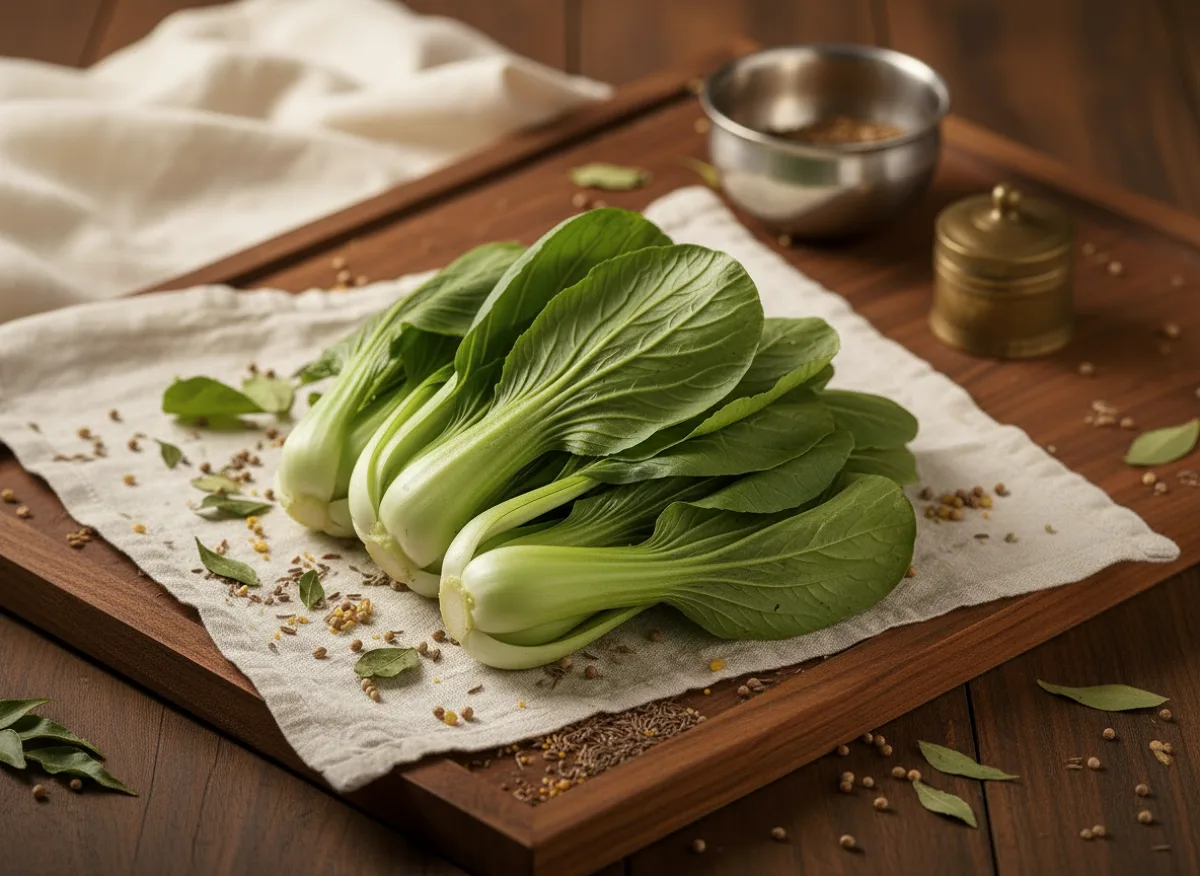
Pak choi (bok choy) is a tender Chinese brassica with smooth, spoon-shaped pale green leaves and crisp white stalks. Fresh and mild, it cooks down quickly and pairs beautifully with garlic, ginger, and soy in stir-fries, soups, and curries. A versatile green leafy vegetable incre...
Nutrition per 100 g
Edible portion values from the master catalog.
More macros
Classification
About Pak Choi leaves
What it is
Pak choi, also called bok choy or Chinese celery cabbage, is a tender leafy brassica with smooth, spoon-shaped pale green leaves clustered around crisp white stalks. Unlike cabbage, the leaves remain separate and delicate, with a mild, slightly sweet taste and no bitterness. Sold fresh in bunches, it is now commonly found in Indian markets and home gardens, prized for its quick cooking and tender texture. (IFCT 2017, Ref #C027)
Use in Indian Kitchen
Pak choi adapts well to Indian stir-fry and curry styles. Chop the leaves and stalks separately - stalks take slightly longer to cook. Toss into garlic-ginger tadka with mustard seeds and curry leaves for a simple sabzi; add to vegetable curries, dal-based gravies, or clear broths in the last few minutes to retain crunch. In East India and urban kitchens, it appears in quick pan-fried preparations with turmeric and green chilli, or mixed into vegetable fried rice. A practical tip: blanch or stir-fry briefly over high heat to keep the leaves tender and the stalks crisp; overcooking turns them mushy and dull.
Key Nutrients
Pak choi is rich in vitamin C, vitamin K, and calcium. It also contains folate, potassium, and dietary fibre. The leaves are a good source of beta-carotene (vitamin A precursor). Exact nutrient composition per 100 g is available in IFCT 2017, Ref #C027.
Health Benefits (Evidence-based)
- High in vitamin K, which supports bone health and blood clotting.
- Good source of vitamin C, linked to immune function and collagen formation.
- Contains calcium and other minerals that may support bone strength, especially when consumed regularly as part of a balanced diet.
- Dietary fibre supports digestive health and regular bowel function.
- Low in calories and high in water content, making it a filling, nutrient-dense choice for weight-conscious meals.
- Traditionally used in Asian cuisines as a cooling, easily digestible green vegetable.
Culinary Uses (Vegetarian)
- Stir-fried with garlic, ginger, green chilli, and mustard seeds.
- Added to vegetable curries, dal preparations, and clear broths in the final minutes of cooking.
- Pan-fried as a simple sabzi with turmeric and onion.
- Mixed into vegetable fried rice or noodle dishes.
- Blanched and served with a light sesame or peanut dressing.
- Included in mixed vegetable soups and sambar.
Caution
- Pak choi contains oxalates; those with a history of kidney stones or on a restricted oxalate diet should consume in moderation.
- Individuals on blood-thinning medications (e.g. warfarin) should maintain consistent intake of vitamin K-rich greens and consult their healthcare provider.
- Wash thoroughly before use to remove soil and any pesticide residue.
References
- Indian Council of Medical Research - National Institute of Nutrition (ICMR-NIN). Indian Food Composition Tables (IFCT) 2017. Reference #C027 (Green Leafy Vegetables - Pak Choi).
- Nutritive Value of Indian Foods, NIN, Hyderabad. Standard reference for Indian vegetable nutrient profiles.
Sourcing & Storage
Storage
Store pak choi in the refrigerator in a perforated plastic bag or wrapped loosely in damp kitchen paper to retain moisture without trapping excess water. Keep in the crisper drawer or the coldest part of the fridge (2-4°C). Do not store near ethylene-producing fruits (apples, bananas) as they will cause the leaves to yellow and wilt faster. In Indian summer, use within 2-3 days; in cooler months, it may last slightly longer.
Shelf Life
Fresh pak choi keeps for 3-5 days when stored properly in the refrigerator. Once cooked, consume within 1-2 days when refrigerated in an airtight container. Freezing is not recommended for whole leaves as they become mushy upon thawing, though blanched and drained pak choi can be frozen for up to 2 months for use in cooked dishes only.
Check Before You Buy
Choose bunches with firm, crisp white stalks and bright, unblemished pale green leaves. Avoid any with yellowing, wilting, or slimy patches, which indicate age or poor storage. The leaves should snap cleanly when bent. Smell should be fresh and mild, with no sour or musty odour. At the mandi or kirana, check that the bunch is not overly damp or packed too tightly, as this traps moisture and speeds decay. Packed supermarket bunches should have a clear, dry pack with no condensation inside.
In Ayurveda
Pak choi is not extensively documented in classical Ayurvedic texts, as it is a relatively modern introduction to Indian kitchens. However, as a member of the Brassica family (cruciferous vegetables), it shares some properties with traditional leafy greens. In Ayurvedic terms, leafy greens are generally considered to have a cooling (sheet) virya and are believed to support digestion and detoxification when prepared with warming spices like ginger and turmeric.