Oyster Mushroom
Pleurotus sp. · Also known as oyster fungus
Oyster mushroom is a delicate, fan-shaped fungus with a mild, slightly sweet flavour and tender texture. Increasingly popular in Indian home kitchens, it works beautifully in curries, stir-fries, and as a vegetable side dish. Composition typically described under IFCT 2017 catego...
Nutrition per 100 g
Edible portion values from the master catalog.
More macros
Classification
About Oyster Mushroom
What it is
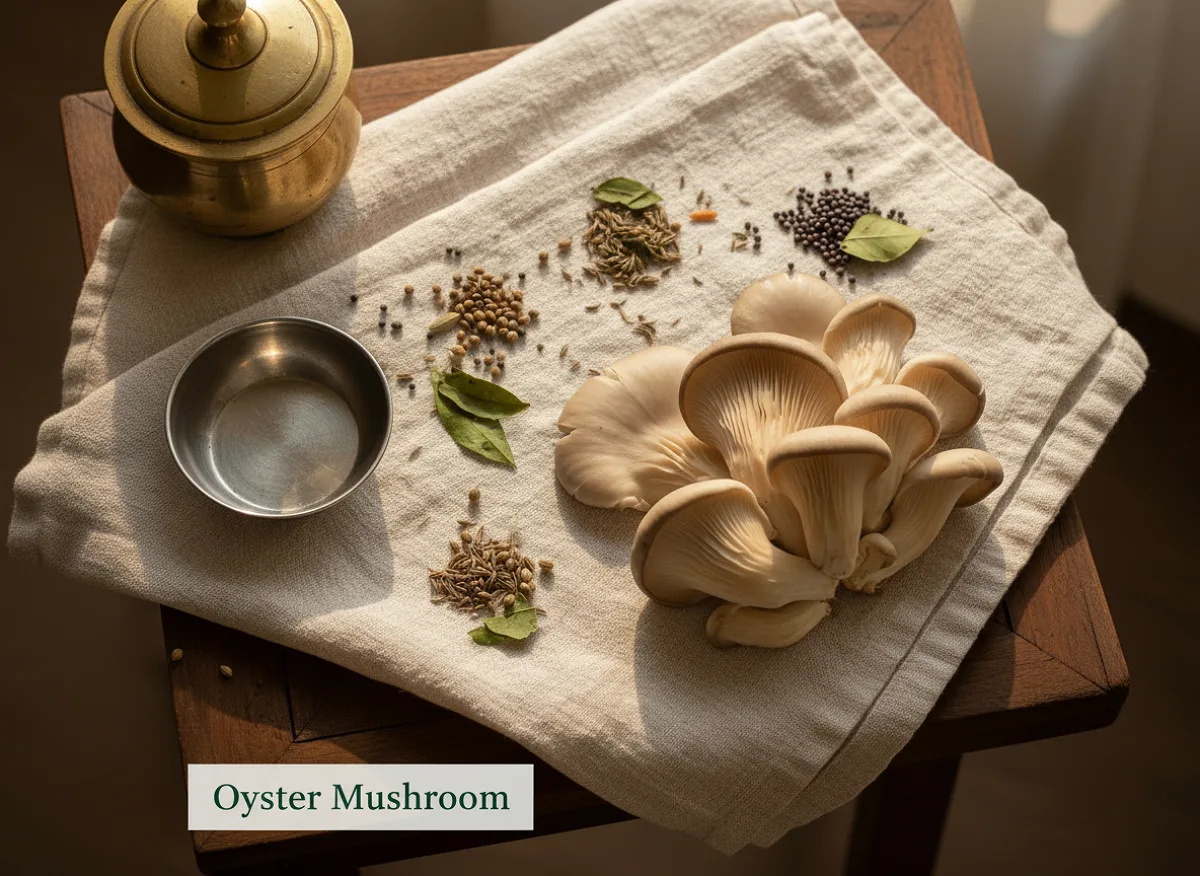
Oyster mushroom (oyster fungus) is a cultivated fungus with a soft, fan or funnel-shaped cap ranging from pale cream to grey or brown. Native to temperate forests, it is now widely grown in controlled environments across India. Unlike wild mushrooms, oyster varieties are safe, reliable, and increasingly available in urban markets and supermarkets. Composition is documented in IFCT 2017, Ref #J004.
Use in Indian Kitchen
Oyster mushrooms have found a quiet place in modern Indian home cooking, especially in urban kitchens and among vegetarian families seeking protein-rich vegetables. They absorb flavours beautifully in curries, work well in dry sabzi preparations with onion and tomato, and pair naturally with ginger-garlic tempering. In South Indian homes, they feature in sambar and stir-fried vegetable dishes; in the North, they shine in dry mushroom fry or mixed vegetable curries. Their tender texture makes them ideal for quick weeknight meals, and their mild taste appeals to children and those new to mushrooms. Seasonal availability has improved with year-round cultivation, making them a reliable choice for monsoon and winter cooking.
Key Nutrients
Oyster mushrooms contain protein, dietary fibre, B vitamins (including B12 in small amounts), potassium, and selenium. They are low in fat and calories, making them a light, nutrient-dense vegetable choice. Exact nutrient composition is documented in IFCT 2017, Ref #J004.
Health Benefits (Evidence-based)
- May support heart health through their fibre and potassium content, linked to healthy blood pressure.
- Traditionally valued as a source of plant-based protein, useful in vegetarian and vegan diets.
- Selenium and antioxidants present may help support immune function and reduce oxidative stress.
- Low glycaemic index and low calorie density make them suitable for weight management and blood sugar balance.
- Fibre content supports digestive health and regular bowel function.
Culinary Uses (Vegetarian)
- Dry mushroom fry (mushroom sabzi) with onion, tomato, ginger-garlic, and green chilli.
- Mushroom curry in coconut milk or tomato-based gravy, paired with rice or roti.
- Sambar and rasam (South Indian), where mushrooms add body and umami.
- Stir-fried with other vegetables, paneer, or as a filling for parathas and dosas.
- Mushroom biryani or pulao, layered with rice and aromatic spices.
- Grilled or roasted as a side dish, seasoned with chaat masala or simple salt and pepper.
Caution
Oyster mushrooms are generally safe for most people. Those with mushroom allergies or mould sensitivities should avoid them. Always source from reputable vendors or supermarkets to ensure proper cultivation and hygiene. Raw or undercooked mushrooms may cause mild digestive upset in sensitive individuals; light cooking is recommended. If you are on blood-thinning medication, consume in moderation and consult your doctor, as some mushroom compounds may have mild anticoagulant properties.
References
- Indian Council of Medical Research - National Institute of Nutrition (ICMR-NIN). Indian Food Composition Tables (IFCT) 2017. Reference #J004 - Other Vegetables category.
- Valverde, M. E., Hernández-Pérez, T., & Paredes-López, O. (2015). Edible mushrooms: improving human health and promoting quality life. International Journal of Microbiology, 2015, 376387.
Health Benefits
- Antioxidant
- Supports Digestion
- Boosts Immunity
- Weight Management Support
- Heart Health Support
Sourcing & Storage
Storage
Store oyster mushrooms in a paper bag or breathable container in the refrigerator at 2-4°C. Avoid plastic bags, which trap moisture and encourage spoilage. Keep them away from direct light and strong-smelling foods. In Indian summer heat, use the coldest part of your fridge (usually the back of the lower shelf). Do not wash them before storage; wipe gently with a damp cloth only when ready to cook.
Shelf Life
Fresh oyster mushrooms keep for 5-7 days in the refrigerator when stored properly in a paper bag. Once cooked, they last 3-4 days in an airtight container. For longer storage, you can freeze cooked mushroom curry for up to 2-3 months, or blanch and freeze raw mushrooms for up to 1 month, though texture will soften slightly upon thawing.
Check Before You Buy
Choose oyster mushrooms with firm, unblemished caps and a fresh, earthy aroma. Avoid any with dark spots, slime, or a sour smell, which indicate age or spoilage. The gills underneath should be pale and intact, not darkened or mushy. If buying from a mandi or kirana shop, ask when they arrived; freshly stocked mushrooms are best. Packaged varieties from supermarkets should have a clear date and no condensation inside the pack. Avoid mushrooms that feel spongy or have begun to collapse.