Orange
Citrus aurantium · Also known as Santara, Citrus aurantium, sweet orange, Mandarin orange
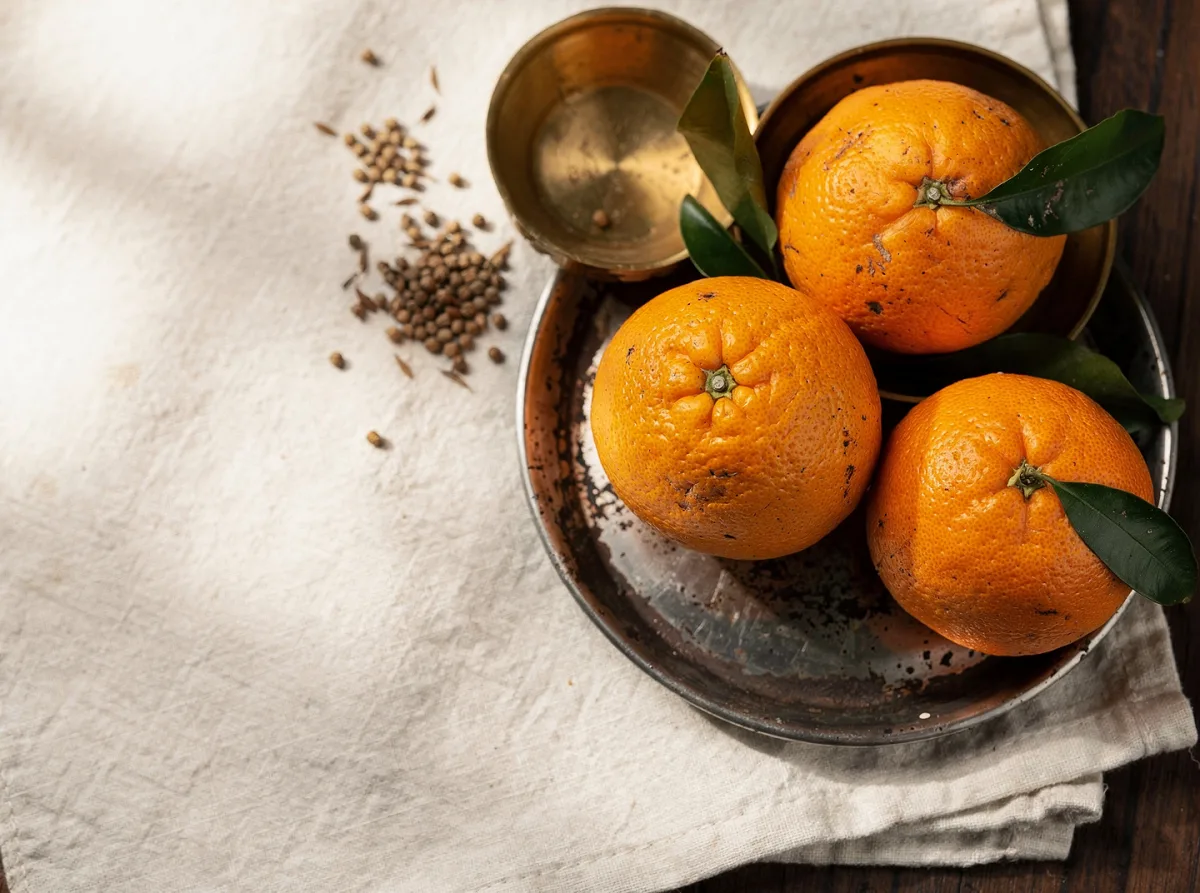
Orange (संतरा, santara) is a bright, round citrus fruit with thick dimpled skin and juicy, segmented flesh inside. Sweet, tangy, and refreshing, it is eaten fresh, juiced, or used in chutneys and pickles across Indian kitchens. The peel is often candied or dried for flavour in de...
Nutrition per 100 g
Mean values ± IFCT published SD (edible portion).
More macros
Classification
About Orange
What it is
Orange is a round citrus fruit with a thick, dimpled rind that ranges from deep orange to golden yellow when ripe. Inside, the flesh is divided into segments filled with sweet, tangy juice and small seeds. Fresh, fragrant, and naturally sweet, oranges are a staple winter fruit across India, prized for their vitamin C content and refreshing juice. (IFCT 2017, Ref #E047)
Use in Indian Kitchen
Oranges are eaten fresh as a snack or squeezed into fresh juice (santara ka ras). In South India, orange segments are added to fruit salads and sometimes to rice dishes for a bright, citrusy note. The peel is candied or dried to flavour cakes, kheer, and traditional sweets. Orange juice is also used in chutneys and marinades for paneer and vegetable curries. A practical tip: roll the fruit gently on a hard surface before cutting to loosen the segments and make juicing easier.
Key Nutrients
Oranges are rich in vitamin C (ascorbic acid), which supports immunity and collagen formation. They also contain dietary fibre, potassium, folate, and natural sugars. The peel and white pith contain flavonoids and pectin, which aid digestion and may help lower cholesterol.
Health Benefits (Evidence-based)
- High in vitamin C, which may help boost immunity and reduce the duration of common colds.
- Dietary fibre supports digestive health and regular bowel movement.
- Potassium content may help maintain healthy blood pressure.
- Flavonoids in the peel and flesh are linked to antioxidant and anti-inflammatory effects.
- Natural sugars provide quick energy without the crash of refined sweets.
- May help improve iron absorption when eaten with iron-rich foods like leafy greens or lentils.
Culinary Uses (Vegetarian)
- Fresh juice (santara ka ras) as a breakfast drink or post-meal refresher.
- Segments in fruit salads, rice dishes, and desserts.
- Candied peel in cakes, kheer, and traditional sweets.
- Zest in chutneys, marinades, and paneer preparations.
- Dried peel as a flavouring in tea and spice blends.
Caution
- High acidity may trigger heartburn or tooth sensitivity in some people; rinse mouth with water after consuming.
- Orange juice concentrates natural sugars; whole fruit is preferable for those managing blood sugar.
- May interact with certain medications (e.g. statins, blood pressure drugs); consult a healthcare provider if on regular medication.
- Allergic reactions are rare but possible; discontinue if itching or swelling occurs.
References
- Indian Council of Medical Research - National Institute of Nutrition (ICMR-NIN). Indian Food Composition Tables (IFCT 2017). Reference #E047.
- Vaya, J. & Mahmood, S. (2006). Flavonoid content in leaf extracts of the fig (Ficus carrica L.), carob (Ceratonia siliqua L.) and locust bean (Ceratonia siliqua L.) trees. Journal of Agricultural and Food Chemistry, 54(20), 7651-7654.
Health Benefits
- Hydration
- Boosts Immunity
- Heart Health Support
- Improves Skin Health
Sourcing & Storage
Storage
Store oranges in a cool, well-ventilated place at room temperature (18-22°C) for up to 2 weeks. For longer storage, refrigerate in the crisper drawer at 4-8°C, where they will keep for 3-4 weeks. Keep away from direct sunlight and moisture. Do not store in sealed plastic bags; use a mesh bag or open container to allow air circulation and prevent mould.
Shelf Life
At room temperature, oranges stay fresh for 1-2 weeks. In the refrigerator, they last 3-4 weeks. Once cut or juiced, consume within 1-2 days. Freshly squeezed juice keeps in the fridge for 2-3 days in an airtight container, though flavour and vitamin C content decline over time.
Check Before You Buy
Choose oranges that feel heavy for their size (a sign of juiciness) and have firm, unblemished skin with a slight give when gently pressed. Avoid fruit with soft spots, mould, or a fermented smell. The skin should be bright orange or golden; greenish tinges indicate underripeness. Ripe oranges have a sweet, fragrant aroma near the stem. In Indian markets, buy from trusted vendors and check that the fruit is not artificially coloured or waxed (rub a small area with your thumb; natural skin should not leave residue).
In Ayurveda
In classical Ayurvedic texts, citrus fruits like orange are recognized for their sour (amla) rasa and warming (ushna) virya. They are traditionally considered beneficial for digestion and appetite stimulation. The fruit is believed to support agni (digestive fire) and may help balance vata dosha when consumed in moderation with warming spices. However, excessive consumption may increase pitta due to its acidic nature.