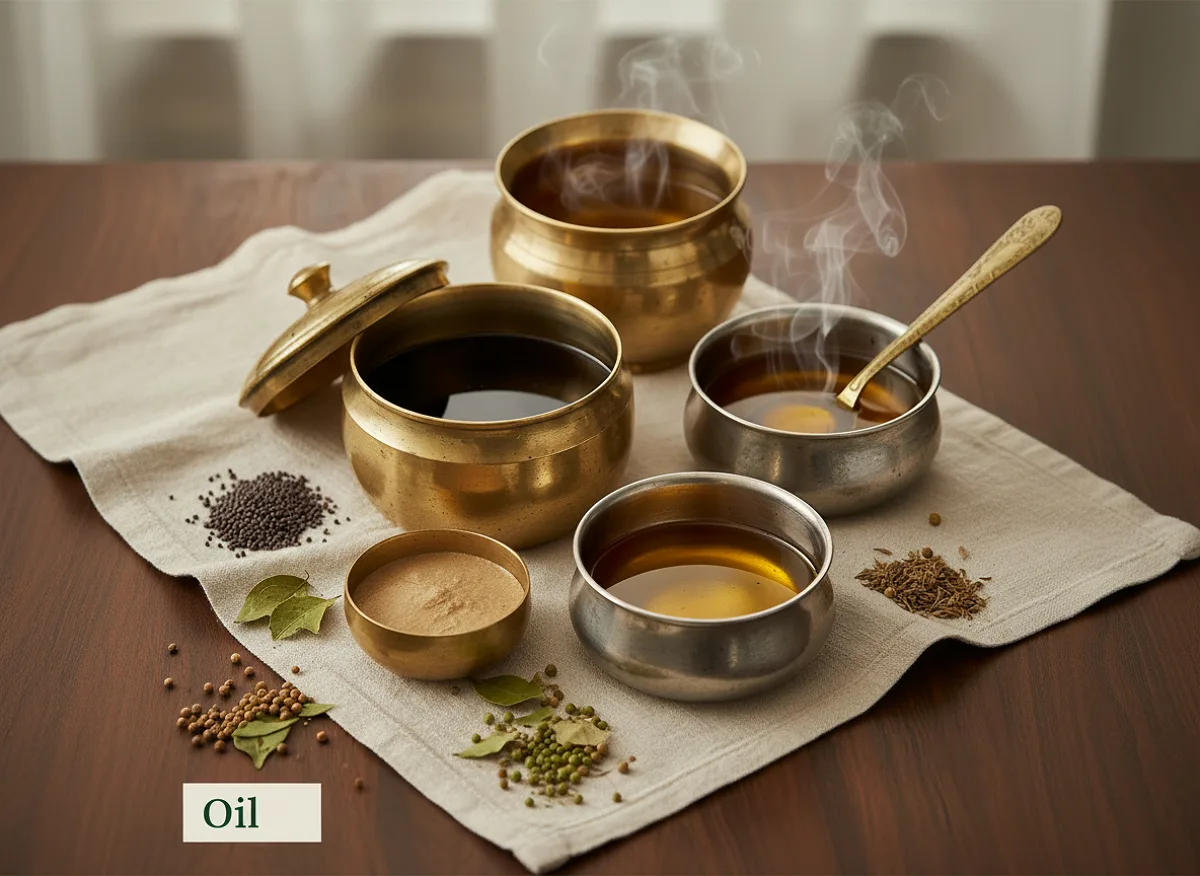
Oil
Also known as tel, तेल, cooking oil, edible oil, vegetable oil
Oil (तेल, tel) is the liquid fat at the heart of Indian cooking - whether mustard's peppery warmth in Bengal, coconut's tropical sweetness in the South, or groundnut's mild richness across the North. Every region has its preference, and every kitchen keeps a bottle within arm's r...
Nutrition per 100 g
Edible portion values from the master catalog.
More macros
Classification
About Oil
What it is
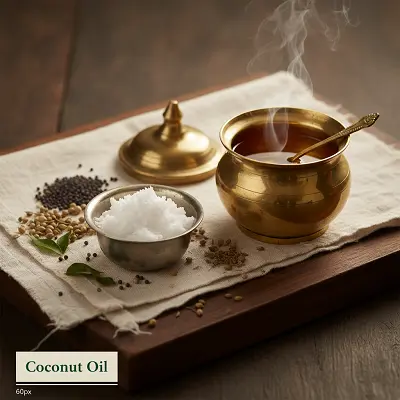
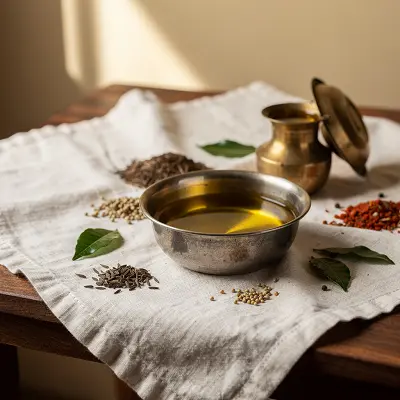
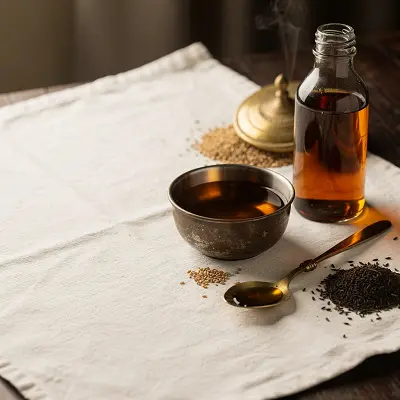
Oil (तेल, tel) is a liquid fat extracted from seeds, nuts, or coconut, and is the foundational cooking medium across Indian kitchens. Depending on region and tradition, it may be mustard oil's sharp, peppery character in the North and East; coconut oil's fragrant, slightly sweet profile in the South and coastal areas; groundnut oil's neutral warmth in Gujarat and Maharashtra; or sesame oil's toasted depth in parts of South India. Each carries distinct flavour and smoke point, shaping how a dish tastes and how it cooks. (IFCT 2017, Ref #T014)
Use in Indian Kitchen
Oil is the invisible hand in every Indian meal. It tempers mustard seeds and curry leaves for sambar and rasam; it fries onions golden for biryani and pulao; it crisps the edges of a paratha or poori; it binds spices into a tadka for dal; and it finishes a thoran or sabzi with a whisper of regional identity. A Bengali cook reaches for mustard oil to fry fish or greens; a Keralite uses coconut oil for everything from appam batter to fish curry; a Gujarati prefers groundnut oil for dhokla and fafda. The oil you choose is not just a cooking tool - it is a statement of home and heritage. A practical tip: always keep your oil in a cool, dark place and use it within its smoke point to preserve both flavour and nutrition.
Key Nutrients
Oil is nearly 100% fat, composed of fatty acids (saturated, monounsaturated, and polyunsaturated depending on the source), vitamin E in variable amounts, and phytosterols in some varieties. Exact nutrient profiles vary by oil type - coconut oil is higher in saturated fat; groundnut and mustard oils contain more unsaturated fats; sesame oil offers lignans and antioxidants. Consult IFCT 2017 tables for specific oil varieties for precise micronutrient data.
Health Benefits (Evidence-based)
- May support heart health when oils rich in monounsaturated and polyunsaturated fats (groundnut, sesame, mustard) are used in moderation.
- Vitamin E in oils acts as an antioxidant, linked to skin and cellular health.
- Phytosterols in some oils may help maintain healthy cholesterol levels.
- Aids absorption of fat-soluble vitamins (A, D, E, K) from other foods in the meal.
- Traditionally used in Ayurvedic massage (abhyanga) for skin nourishment and warmth.
Culinary Uses (Vegetarian)
- Tempering spices (tadka) - mustard seeds, curry leaves, dried chillies in hot oil for dal, sambar, rasam.
- Frying - onions, potatoes, vegetables for curries, biryanis, and stir-fries.
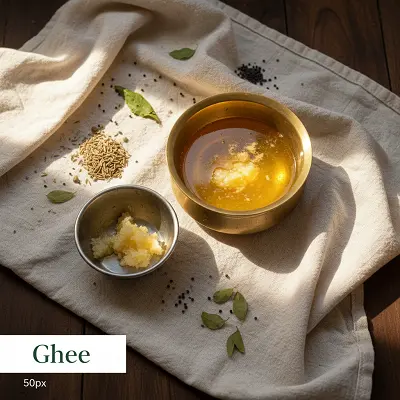
- Bread-making - ghee or oil kneaded into atta for rotis, parathas, and pooris.
- Shallow and deep frying - pakora, bhajiya, samosa, poori, jalebi.
- Finishing - a drizzle of coconut or sesame oil over thoran, kootu, or avial for aroma and richness.
- Pickling - oil as a preservative base for achaar and chutneys.
- Baking - oil in cakes, muffins, and sweet breads as a moisture agent.
Caution
- Oils are calorie-dense (about 120 calories per tablespoon); use mindfully if managing weight.
- Heating oil beyond its smoke point creates harmful compounds; use appropriate oils for high-heat cooking (groundnut, mustard) and lower-heat finishing (coconut, sesame).
- Some people with digestive sensitivity may find certain oils (especially coconut) harder to digest in large amounts.
- Mustard oil is banned in some countries but is safe and traditional in India when used in normal cooking quantities.
- Store away from heat and light to prevent rancidity, which can cause digestive upset.
References
- Indian Council of Medical Research - National Institute of Nutrition (ICMR-NIN). Indian Food Composition Tables 2017 (IFCT 2017). Hyderabad: NIN; 2017.
- Gopalan C, Ramasastri BV, Balasubramanian SC. Nutritive Value of Indian Foods. National Institute of Nutrition, ICMR. Hyderabad; 2011.
Health Benefits
- Provides Energy
Sourcing & Storage
Storage
Store oil in a cool, dark place away from direct sunlight and heat sources (not above the stove). Use a dark glass bottle or opaque container to protect from light oxidation. Keep the lid tightly sealed to prevent air exposure and rancidity. In hot, humid climates, refrigeration may extend shelf life, though some oils (coconut, sesame) may solidify - this is normal and does not affect quality. Avoid storing near spices or strong-smelling foods, as oil can absorb odours.
Shelf Life
Unopened, most cooking oils last 1-2 years when stored in cool, dark conditions. After opening, use within 6-12 months depending on the oil type and storage temperature. Coconut oil may last slightly longer due to its saturated fat content. Sesame and mustard oils, being more prone to oxidation, are best used within 6-8 months of opening. Discard if the oil smells rancid, tastes off, or shows cloudiness or sediment that does not settle.
Check Before You Buy
Buy oil from a trusted kirana or mandi vendor, or sealed bottles from reputable brands. Check the label for the oil type (groundnut, coconut, mustard, sesame, sunflower) and extraction method (cold-pressed, refined, or virgin). For loose oil from a vendor, smell it - it should be fresh and characteristic of the oil type, not musty or off. Avoid oil that looks cloudy, has visible sediment, or smells rancid. If buying in bulk, ensure the container is clean and the vendor has good turnover. For coconut oil, a slight coconut aroma and creamy texture (when solid) are signs of quality; refined coconut oil will be odourless and clear.
In Ayurveda
In classical Ayurveda, oils (taila) are considered essential for maintaining balance and supporting the body's natural functions. Different oils are traditionally matched to individual constitutions - sesame oil is warming and grounding for Vata types, coconut oil is cooling for Pitta, and mustard oil is stimulating and warming. Oils are used in abhyanga (self-massage) and as a base for medicated preparations.