Nutmeg
Myristica fragrans · Also known as jaayaphal, jaipal, muskatnussian, mace (outer covering)
Nutmeg (jaayaphal) is the hard, oval seed of the nutmeg tree, prized for its warm, slightly sweet and earthy flavour. Ground or whole, it appears in Indian spice blends, garam masala, and sweet and savoury dishes across the subcontinent. A pinch in milk-based desserts, rice dishe...
Nutrition per 100 g
Mean values ± IFCT published SD (edible portion).
More macros
Classification
About Nutmeg
What it is
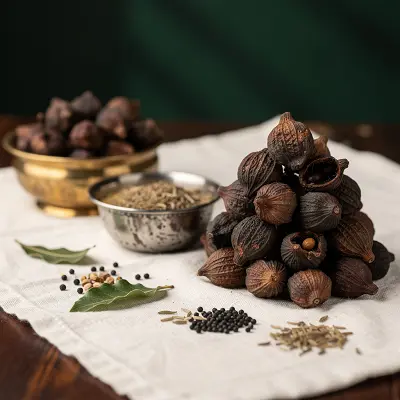
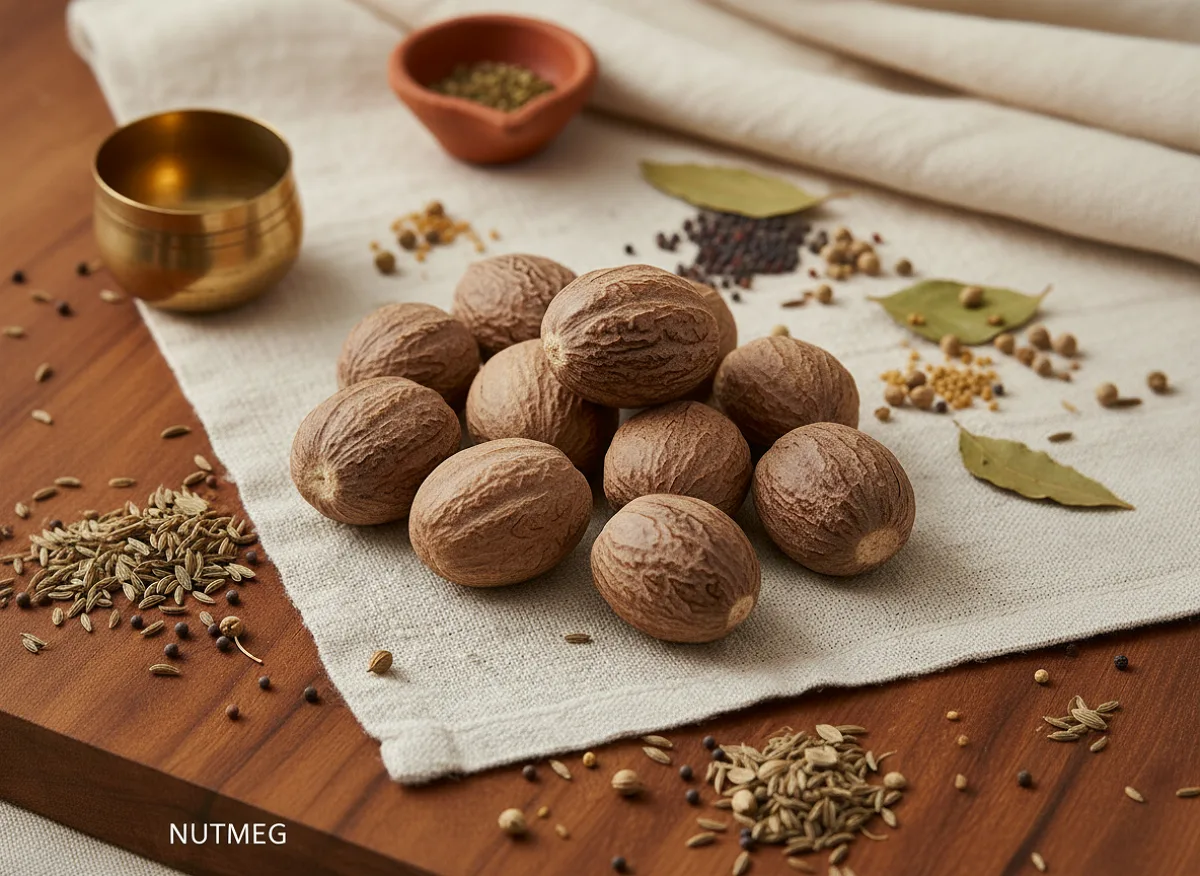
Nutmeg (jaayaphal) is the hard, wrinkled seed kernel of Myristica fragrans, enclosed in a lacy red-orange aril (mace) when fresh. The dried seed is roughly oval, tan-brown, and finely ridged. It has a warm, slightly sweet, faintly peppery aroma and a subtle nutty, almost woody taste. Whole nutmeg keeps its flavour longest; ground nutmeg loses potency quickly. It is a cornerstone of Indian spice blends and appears in both North and South Indian cooking. (IFCT 2017, Ref #G028)
Use in Indian Kitchen
Nutmeg is a quiet workhorse in Indian kitchens. A pinch of freshly grated nutmeg lifts kheer, phirni, and other milk-based desserts; it seasons rice pilafs, biryanis, and meat-free vegetable pulaos. In garam masala and other warming spice blends, it adds roundness without asserting itself. South Indian cooks add it to payasam and sweet rice dishes; North Indian cooks grate it into creamy paneer curries and dal. A small amount in warm milk or tea aids digestion and sleep. The key is restraint - nutmeg is potent, and a little goes a long way.
Key Nutrients
Nutmeg contains manganese, copper, and magnesium. It also holds volatile oils (myristicin, elemicin) and phenolic compounds. Exact nutrient composition per serving is available in IFCT 2017.
Health Benefits (Evidence-based)
- May support digestion and help ease bloating or mild indigestion when used in small amounts.
- Traditionally used in warm milk to promote restful sleep and calm the nervous system.
- Contains compounds linked to anti-inflammatory and antioxidant activity in preliminary studies.
- May help improve blood circulation and reduce mild joint discomfort when used as part of a balanced diet.
- Often included in traditional remedies for cough and cold relief, particularly in warm spiced drinks.
Culinary Uses (Vegetarian)
- Grated fresh into kheer, phirni, and rice puddings.
- A pinch in garam masala and warming spice blends.
- Dusted over creamy paneer curries, dal makhani, and vegetable pulaos.
- Stirred into warm milk with honey and cardamom for a soothing bedtime drink.
- Added to sweet payasam, halwa, and festive rice dishes.
- Ground into spice pastes for sambar and other South Indian gravies.
Caution
- Use sparingly - nutmeg is potent and large amounts can cause nausea, dizziness, or headache.
- Pregnant women should avoid nutmeg in medicinal amounts; culinary pinches are generally safe.
- People taking sedatives or blood thinners should consult a healthcare provider before using nutmeg as a remedy.
- Store away from children and pets, as accidental overdose can be harmful.
References
- Indian Council of Medical Research - National Institute of Nutrition (ICMR-NIN). Indian Food Composition Tables (IFCT 2017). Hyderabad: ICMR-NIN; 2017. [Reference code G028]
- Peixoto H, Roxo M, Gantner ME, et al. Myristicin-enriched Myristica fragrans extract exhibits anti-inflammatory and antioxidant properties in vitro. Journal of Ethnopharmacology. 2016;189:244-251.
Health Benefits
- Improves Digestion
- Anti Inflammatory
- Improves Sleep Quality
- Relieves Pain
Sourcing & Storage
Storage
Store whole nutmeg seeds in an airtight glass jar or container away from direct sunlight, heat, and moisture. Keep in a cool, dry cupboard or spice rack. Ground nutmeg loses flavour quickly and should be stored in a small, tightly sealed dark glass bottle. In humid Indian climates, add a small piece of dried neem leaf or a silica gel packet to the jar to prevent moisture absorption. Avoid storing near the stove or in damp areas like the kitchen window.
Shelf Life
Whole nutmeg seeds retain their flavour for 3 to 4 years when stored properly in an airtight container. Ground nutmeg loses potency within 6 to 8 months. Once opened, use ground nutmeg within 3 to 4 months for best aroma and taste. Refrigeration or freezing is not necessary for whole or ground nutmeg; a cool, dark cupboard is ideal.
Check Before You Buy
When buying whole nutmeg, look for seeds that are hard, dense, and free of cracks or soft spots. The colour should be tan-brown with fine ridges; avoid pale or greyish seeds, which may be old or poorly dried. Smell the nutmeg - it should have a warm, sweet, slightly peppery aroma. If buying from a mandi or loose spice vendor, ask to smell and feel the seeds before purchasing. Packaged nutmeg from reputable brands is often more reliable for purity.
Ground nutmeg should be purchased in small quantities from trusted sources, as adulteration with cheaper spices or fillers is common. Check the packaging date and buy from shops with good turnover. Whole nutmeg is preferable if you have a spice grinder at home, as you can grind it fresh and ensure quality.
In Ayurveda
In classical Ayurveda, nutmeg (जायफल) is recognized for its warming (ushna) and grounding properties. It is traditionally used to support digestion and promote sound sleep when taken with warm milk before bedtime. Ayurvedic texts associate nutmeg with balancing Vata and Kapha doshas, making it a common ingredient in traditional formulations for joint comfort and mental clarity.