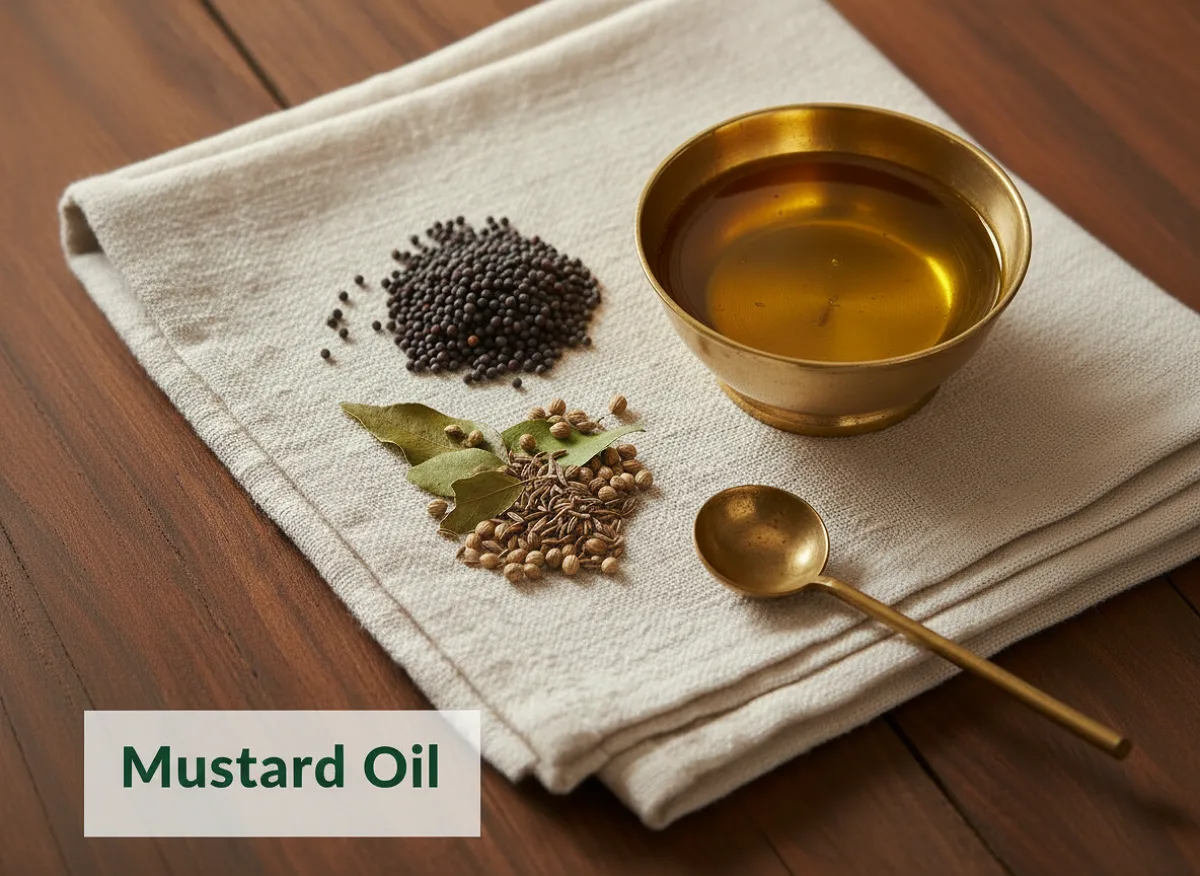
Mustard Oil
Mustard oil is a pungent, golden-amber cooking oil extracted from mustard seeds, widely used across Indian kitchens for tempering, frying, and pickling. Rich in monounsaturated fats and traditionally valued in North and East Indian cuisine, it brings a distinctive sharp flavour t...
Nutrition per 100 g
Edible portion values from the master catalog.
More macros
Classification
About Mustard Oil
What it is
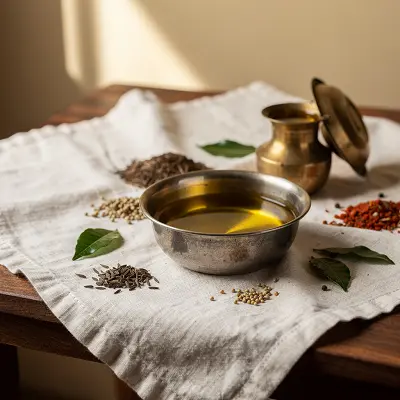
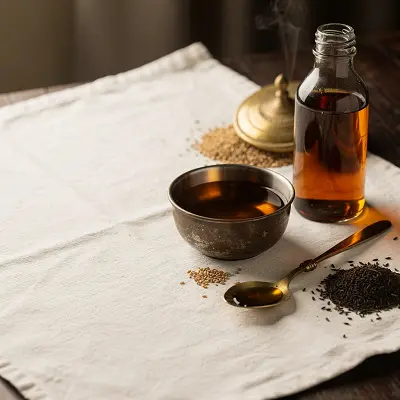
Mustard oil is a cold-pressed or expeller-pressed oil derived from mustard seeds (Brassica juncea and related species). It has a characteristic pungent, slightly spicy aroma and a golden to amber colour. In Indian kitchens, it is a staple cooking medium, especially in North India, Bengal, and Odisha, where it has been used for centuries in everyday cooking and food preservation (IFCT 2017, Ref #T006).
Use in Indian Kitchen
Mustard oil holds deep cultural roots across Indian regions. In North India, it is the preferred oil for tempering dals and tadka-based curries, lending its distinctive warmth to dishes like chana dal and moong dal. In Bengal and Odisha, it is essential for fish curries, vegetable sabzis, and traditional pickles - the oil's pungency complements fermented and preserved foods beautifully. South Indian kitchens traditionally favour coconut oil, but mustard oil appears in some regional preparations and is increasingly used in modern home cooking. The oil's sharp flavour mellows when heated, making it ideal for both raw tempering and high-heat cooking. Many Indian families associate mustard oil with grandmother's kitchen and festival-time pickling, evoking comfort and tradition.
Key Nutrients
Mustard oil is primarily composed of monounsaturated and polyunsaturated fats, with smaller amounts of saturated fat. It contains erucic acid (a long-chain monounsaturated fatty acid), omega-3 and omega-6 polyunsaturated fatty acids, and fat-soluble vitamins including vitamin E. Exact nutrient composition per serving is detailed in IFCT 2017 tables.
Health Benefits (Evidence-based)
- May support heart health due to its high monounsaturated fat content, which is linked to improved cholesterol profiles.
- Contains omega-3 fatty acids, traditionally associated with anti-inflammatory effects and joint wellness in Ayurvedic practice.
- Vitamin E content may help protect cells from oxidative stress.
- Traditionally used in Indian massage (abhyanga) and skincare preparations, though culinary use is the primary application in nutrition.
- The pungent compounds in mustard oil may aid digestion and stimulate appetite, a benefit noted in classical Indian cooking wisdom.
Culinary Uses (Vegetarian)
- Tempering (tadka) for dals, lentils, and legume curries - moong dal, chana dal, and arhar dal.
- Base oil for vegetable curries, leafy greens (saag), and root vegetables.
- Pickling and preservation of vegetables, chutneys, and achaar.
- Frying pakora, fritters, and other snacks.
- Dressing for salads and raw vegetable preparations in some regional cuisines.
- Traditional use in Bengali and Odia vegetable stir-fries and sabzis.
Caution
- Mustard oil contains erucic acid; while modern food-grade mustard oil sold in India is regulated to safe levels, those with specific cardiovascular concerns should consume in moderation and consult a healthcare provider.
- The strong aroma and flavour are not to everyone's taste; start with small quantities if new to the oil.
- Store away from direct heat and light to prevent rancidity and preserve nutritional quality.
- Pregnant or nursing individuals should use culinary amounts only; do not use for massage or medicinal purposes without professional guidance.
References
- Indian Council of Medical Research - National Institute of Nutrition (ICMR-NIN). Indian Food Composition Tables 2017 (IFCT 2017). Reference #T006.
- Gopalan, C., Rama Sastri, B. V., & Balasubramanian, S. C. (2016). Nutritive Value of Indian Foods. National Institute of Nutrition, ICMR, Hyderabad.
Health Benefits
- Anti Inflammatory
- Heart Health Support
- Improves Circulation
Sourcing & Storage
Storage
Store mustard oil in a cool, dark place away from direct sunlight and heat sources. Use a dark glass bottle or opaque container to protect the oil from light exposure, which can cause rancidity. In Indian kitchens, a sealed glass bottle kept in a kitchen cupboard or pantry away from the stove works well. In warm or humid climates, consider storing in a cool corner or, if available, a refrigerator shelf - mustard oil may become slightly cloudy when chilled, but this does not affect quality and it will clear when brought to room temperature.
Shelf Life
Well-stored mustard oil typically keeps for 12 to 18 months in a sealed, dark container at room temperature. Once opened, use within 6 to 9 months for best flavour and nutritional quality. If stored in the refrigerator after opening, shelf life may extend slightly, though the oil will thicken; allow it to return to room temperature before use. Discard if the oil develops a rancid smell or off-flavour.
Check Before You Buy
When buying mustard oil from a kirana shop or mandi, look for a clear, golden-amber colour without cloudiness or sediment. The aroma should be distinctly pungent and characteristic - not musty or off-putting. Check the label for "cold-pressed" or "expeller-pressed" if you prefer minimally processed oil. Avoid bottles with visible particles, discolouration, or signs of leakage. For packaged oils, verify the manufacturing and expiry dates, and ensure the bottle is sealed. In traditional markets, buy from trusted vendors who have good turnover; fresh oil will have a sharper, cleaner aroma than old stock.
In Ayurveda
Mustard oil is highly valued in both culinary and medicinal contexts. It is rich in monounsaturated fatty acids and omega-3 fatty acids, which contribute to heart health by lowering bad cholesterol levels. Its distinct flavor enhances various dishes, making it a staple in many Indian kitchens.
In addition to its nutritional benefits, mustard oil possesses antimicrobial and anti-inflammatory properties. It is often used in traditional medicine for its ability to improve digestion, promote skin health, and relieve muscle pain when used in massages. Overall, mustard oil serves as a versatile ingredient that supports both health and culinary traditions.