Mustard Leaves
Brassica juncea · Also known as Sarson kee pattiyaan, sarson ka saag, rai kee pattiyaan, mustard greens
Mustard leaves (sarson kee pattiyaan) are tender, slightly peppery green leafy vegetables with a distinctive sharp bite and crinkled texture. Fresh and vibrant, they are a winter staple across North India, especially Punjab, where they shine in the classic comfort dish sarson ka...
Nutrition per 100 g
Mean values ± IFCT published SD (edible portion).
More macros
Classification
About Mustard Leaves
What it is
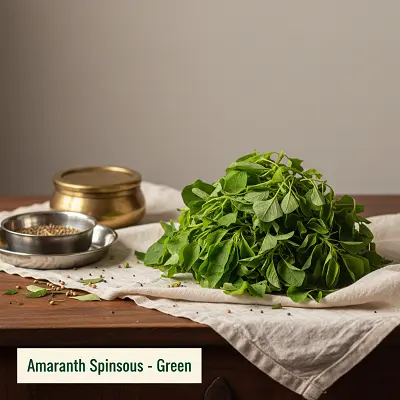
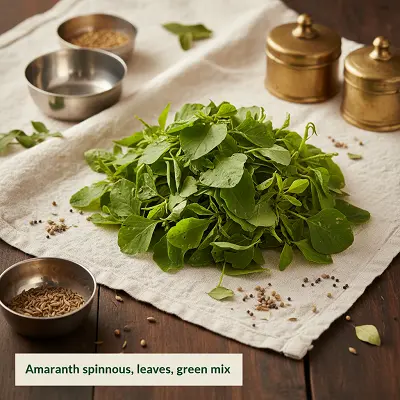
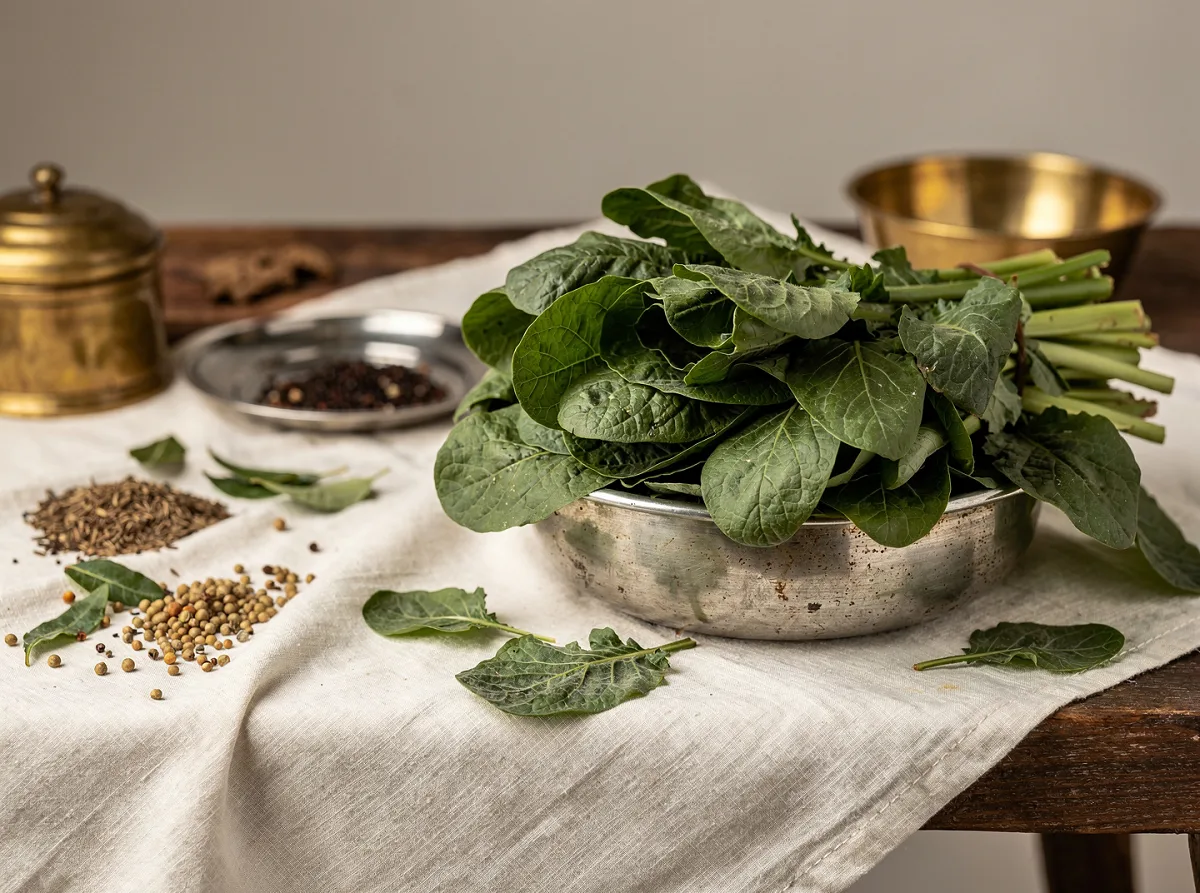
Mustard leaves (sarson kee pattiyaan) are the tender, crinkled green foliage of the mustard plant (Brassica juncea). They have a characteristic peppery, slightly sharp taste and a soft, leafy texture that becomes silky when cooked. Fresh mustard leaves are bright green and sold in bundles at winter markets across North India, particularly in Punjab and Haryana, where they are a seasonal treasure from November through February. (IFCT 2017, Ref #C026)
Use in Indian Kitchen
Mustard leaves are most beloved in sarson ka saag - a slow-cooked, creamy Punjabi dish where they are simmered with spinach, ginger, garlic, and finished with a generous dollop of ghee and cream, then served with makki ki roti (cornmeal flatbread). They are also quick-fried as a simple sabzi with onions and tempering, stirred into dal for extra greens, or blanched and added to parathas. A practical tip: blanch or soak the leaves briefly in salted water before cooking to soften any bitterness and reduce any peppery edge, especially if using older, tougher leaves. The peppery warmth pairs beautifully with earthy spices like cumin, asafoetida, and turmeric.
Key Nutrients
Mustard leaves are rich in vitamin K, vitamin A (as beta-carotene), vitamin C, and folate. They also provide calcium, iron, and dietary fibre. Exact nutrient composition is documented in IFCT 2017 (Ref #C026).
Health Benefits (Evidence-based)
- May support bone health due to high vitamin K content, which plays a role in bone mineralisation.
- Linked to improved eye health through beta-carotene and lutein content.
- May help reduce inflammation in the body, supporting general wellness.
- High in dietary fibre, which may aid digestive regularity and gut health.
- Contains compounds that may have mild detoxifying properties, traditionally valued in Ayurvedic practice.
- May help maintain healthy blood pressure due to potassium content.
Culinary Uses (Vegetarian)
- Sarson ka saag - slow-cooked with spinach, cream, and ghee (Punjabi classic).
- Quick-fried sabzi with onions, garlic, and tempering of cumin seeds and asafoetida.
- Blanched and mixed into dal (moong, masoor, or chana dal).
- Stuffed into parathas with potato or paneer filling.
- Added to vegetable curries and khichdi for extra nutrition and flavour.
- Lightly steamed and dressed with lemon juice and mustard oil as a simple side.
Caution
- Mustard leaves contain goitrogens, compounds that may interfere with thyroid function if consumed in very large quantities raw; cooking inactivates most of these compounds.
- Those on blood-thinning medications (e.g. warfarin) should maintain consistent intake, as high vitamin K content may interact with anticoagulants.
- Individuals with kidney issues should consult a healthcare provider, as mustard leaves contain oxalates.
References
- Indian Council of Medical Research - National Institute of Nutrition (ICMR-NIN). Indian Food Composition Tables (IFCT 2017). Reference #C026 - Green Leafy Vegetables (Mustard Leaves).
- Gopalan, C., Rama Sastri, B. V., & Balasubramanian, S. C. (2016). Nutritive Value of Indian Foods. National Institute of Nutrition, ICMR, Hyderabad.
Health Benefits
- Anti Inflammatory
- Supports Bone Health
- Boosts Immunity
- Supports Heart Health
- Detox Support
Sourcing & Storage
Storage
Store fresh mustard leaves in a breathable cloth bag or perforated plastic bag in the refrigerator crisper drawer, away from ethylene-producing fruits (apples, bananas). Keep them unwashed until ready to use. In warm or humid climates, wrap the leaves loosely in damp kitchen paper to retain moisture without causing rot. Avoid storing in airtight containers, which trap condensation and speed decay.
Shelf Life
Fresh mustard leaves keep for 3-5 days in the refrigerator when stored properly. Once cooked (as in sarson ka saag), the dish will last 2-3 days in an airtight container in the fridge. Blanched and frozen mustard leaves can be stored for up to 3 months in the freezer, though texture will soften slightly upon thawing.
Check Before You Buy
Look for bright, deep green leaves with no yellowing, wilting, or brown spots. The stems should be tender and snap easily when bent; avoid bundles with thick, woody stems. Smell the leaves - they should have a fresh, slightly peppery aroma with no musty or sour odour. At the mandi or kirana, check that the leaves are crisp and not slimy or damp. Avoid pre-packed bags that show condensation or browning inside. Seasonal peak is November to February in North India; leaves bought outside this window may be less tender or imported from distant regions.
In Ayurveda
In classical Ayurvedic texts, mustard leaves (sarson ka saag) are recognized as a warming, pungent (katu rasa) green vegetable with heating properties (ushna virya). They are traditionally used during winter months to support digestion and circulation, and are believed to kindle digestive fire (agni). The leaves are considered beneficial for balancing Vata and Kapha doshas when consumed in moderation with warming spices and ghee.