Muskmelon, orange flesh
Cucumis melon · Also known as Kharbuzo, Kharbooja, Kherbuz, Siral, Kharamuja, Mulam pazham, Kharbuuja
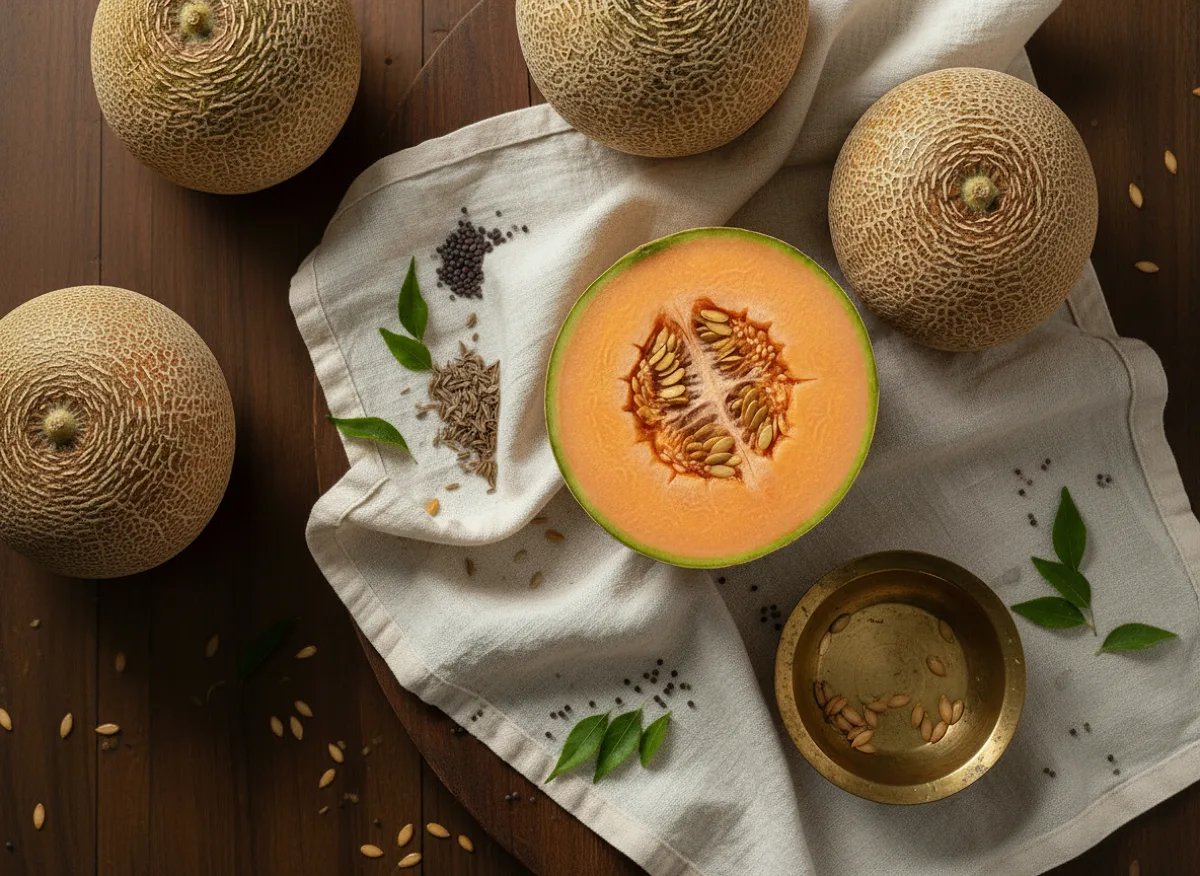
Muskmelon (खरबूजा, kharbuzo) is a netted, round melon with fragrant orange flesh, sweet and juicy when ripe. A summer favourite across India, it's eaten fresh as a cooling fruit, blended into drinks, or added to fruit salads and desserts. Look for a firm, heavy melon with a sweet...
Nutrition per 100 g
Mean values ± IFCT published SD (edible portion).
More macros
Classification
About Muskmelon, orange flesh
What it is
Muskmelon (खरबूजा, kharbuzo) is a round, netted melon with pale beige or tan skin and vibrant orange flesh inside. The flesh is soft, juicy, and naturally sweet with a musky, fragrant aroma - especially pronounced near the stem end when ripe. Fresh muskmelons are a summer staple across North India, the Deccan, and coastal regions, prized for their cooling properties and refreshing taste. (IFCT 2017, Ref #E045)
Use in Indian Kitchen
Muskmelon is typically eaten fresh, chilled, and cut into wedges or cubes as a summer fruit. In North India, it's often served as a simple dessert after meals or blended into smoothies with yoghurt and a pinch of cardamom. The flesh is also used in fruit salads, kheer (rice pudding), and traditional summer drinks like sharbat. In some regions, the seeds are dried and roasted as a light snack. A practical tip: chill the melon in the fridge for 2-3 hours before serving to enhance its cooling, refreshing quality - especially valued during hot months.
Key Nutrients
Muskmelon is rich in water (around 90%), making it deeply hydrating. It contains vitamin C, vitamin A (from beta-carotene, which gives the orange colour), potassium, and dietary fibre. The exact nutrient profile is documented in IFCT 2017, Ref #E045.
Health Benefits (Evidence-based)
- High water content helps keep the body hydrated during hot weather and supports kidney and urinary tract health.
- Vitamin C supports immune function and skin health.
- Beta-carotene (vitamin A) is linked to eye health and may help protect vision.
- Potassium supports heart health and helps regulate blood pressure.
- Dietary fibre aids digestion and may help maintain healthy cholesterol levels.
- Traditionally used in Ayurvedic summer diets for its cooling (शीतल, sheetal) nature.
Culinary Uses (Vegetarian)
- Fresh fruit - chilled wedges or cubes as a summer dessert or breakfast.
- Smoothies and lassi - blended with yoghurt, milk, and cardamom.
- Fruit salads - mixed with other seasonal fruits and a squeeze of lime.
- Kheer and payasam - cooked into rice puddings or milk-based sweets.
- Sharbat and summer drinks - blended with water, sugar, and spices.
- Roasted seeds - dried and lightly salted as a snack.
Caution
- Muskmelon seeds may cause mild digestive discomfort in some people if eaten in large quantities; remove seeds before serving to young children.
- Those with a history of melon allergies (cross-reactivity with birch pollen) should be cautious.
- Diabetic individuals should monitor portion size, as muskmelon contains natural sugars.
- Always wash the outer skin thoroughly under running water before cutting to remove any surface bacteria or pesticide residue.
References
- Indian Council of Medical Research - National Institute of Nutrition (ICMR-NIN). Indian Food Composition Tables (IFCT 2017). Reference #E045 (Fruits category).
- Gopalan, C., Rama Sastri, B. V., & Balasubramanian, S. C. (2007). Nutritive Value of Indian Foods. National Institute of Nutrition, ICMR, Hyderabad.
Sourcing & Storage
Storage
Store whole, uncut muskmelons at room temperature (20-25°C) in a cool, dry place away from direct sunlight for up to 5-7 days. Once ripe and fragrant, move to the refrigerator (4°C) to slow ripening and extend shelf life. Cut muskmelon should be stored in an airtight container in the fridge and consumed within 2-3 days. Keep cut pieces away from strong-smelling foods (onions, fish) as melon absorbs odours easily.
Shelf Life
A whole, unripe muskmelon lasts 5-7 days at room temperature; once ripe, it keeps 3-5 days in the refrigerator. Cut muskmelon, stored in an airtight container in the fridge, stays fresh for 2-3 days. Do not freeze whole melons, as the texture becomes mushy when thawed; however, you may freeze cut pieces or puree for smoothies for up to 2-3 months.
Check Before You Buy
Choose a muskmelon that feels heavy for its size and has a firm, unblemished netted skin with no soft spots or cracks. The melon should yield slightly to gentle pressure at the blossom end (opposite the stem). Most importantly, smell the stem end - a ripe muskmelon has a sweet, musky, fragrant aroma. Avoid melons that smell fermented, musty, or have no aroma at all, as these are either unripe or overripe. At the mandi or kirana shop, tap the melon gently - a ripe one produces a hollow sound. Check that the netting is even and the skin colour is uniform beige or tan, not greenish or bruised.
In Ayurveda
In classical Ayurvedic texts, muskmelon (खरबूजा) is recognized as a cooling, sweet fruit with a light and easily digestible nature. It is traditionally considered beneficial during summer (गर्मी) to balance excess Pitta dosha due to its cooling virya (potency) and high water content. The fruit is often recommended in Ayurvedic practice as a natural coolant and hydrating food for the warm season.