Musk Melon
Cucumis melon · Also known as Kharabooja, Kharbuja, Cantaloupe, Orange melon, Sweet melon
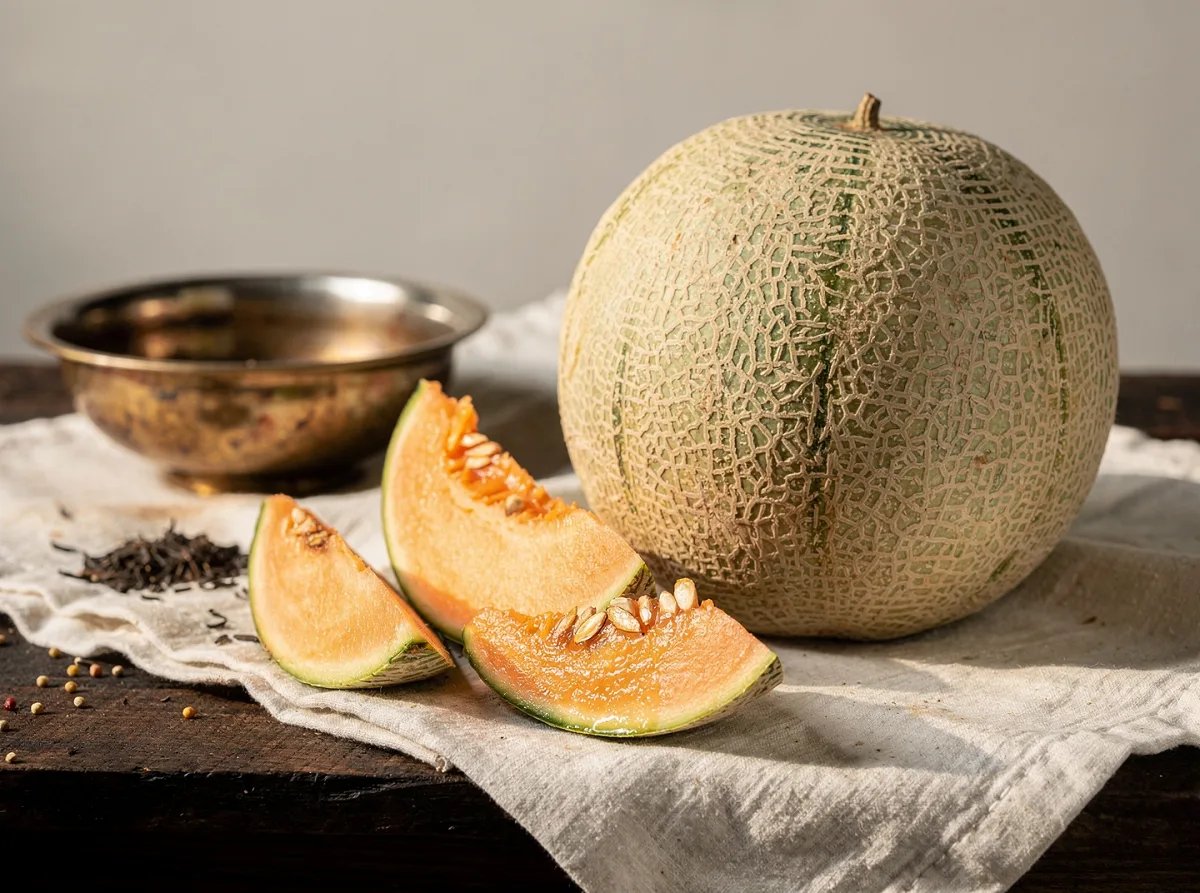
Musk melon (खरबूजा, kharabooja) is a netted, round summer fruit with fragrant orange or pale yellow flesh and a sweet, musky aroma. The firm, beige-netted rind and juicy interior make it instantly recognisable at the mandi or market. Eaten fresh as a cooling snack, sliced into fr...
Nutrition per 100 g
Mean values ± IFCT published SD (edible portion).
More macros
Classification
About Musk Melon
What it is
Musk melon (खरबूजा, kharabooja) is a netted, round summer fruit with fragrant orange or pale yellow flesh and a sweet, musky aroma. The firm, beige-netted rind and juicy interior make it instantly recognisable at the mandi or market. Eaten fresh as a cooling snack, sliced into fruit salads, or blended into sherbets and smoothies, it is a beloved monsoon and summer staple across Indian homes. (IFCT 2017, Ref #E046)
Use in Indian Kitchen
Musk melon is enjoyed fresh, chilled, and sliced as a simple summer dessert or breakfast fruit. In North India, it is often paired with black salt and a squeeze of lemon for a refreshing snack. The flesh is blended into cooling sherbets (kharbuja ka sherbet), smoothies with yoghurt, and fruit salads. Seeds are dried and eaten as a light snack or ground into chutneys. A practical tip: chill the melon in the fridge for 2-3 hours before cutting to enhance the sweet, juicy flavour and make slicing easier. Choose ripe fruit by pressing gently near the stem - it should yield slightly and smell fragrant.
Key Nutrients
Musk melon is rich in vitamin C, vitamin A (beta-carotene), potassium, and dietary fibre. It also contains folate, magnesium, and small amounts of B vitamins. The high water content (around 90%) makes it hydrating and low in calories. Exact nutrient composition per 100g is available in IFCT 2017, Ref #E046.
Health Benefits (Evidence-based)
- High in vitamin C, which supports immune function and skin health.
- Rich in beta-carotene (vitamin A), linked to eye health and antioxidant protection.
- Good source of potassium, which may help maintain healthy blood pressure and heart function.
- High water and fibre content supports digestive health and hydration, especially in hot weather.
- Low in calories and fat, making it suitable for weight management.
- Contains folate, important for cell division and traditionally valued in pregnancy nutrition.
Culinary Uses (Vegetarian)
- Fresh sliced fruit, chilled as a summer snack or breakfast.
- Blended into smoothies, lassi, and yoghurt-based drinks.
- Kharbuja sherbet - a cooling summer drink with sugar, lemon, and spices.
- Fruit salads with other seasonal fruits, black salt, and chaat masala.
- Dried seeds eaten as a light snack or ground into chutneys and spice blends.
- Occasionally used in North Indian desserts and halwas.
Caution
- Those with diabetes should monitor portion size due to natural sugar content.
- Individuals with melon allergies (linked to birch pollen allergy) should avoid.
- Pregnant women should wash the rind thoroughly before cutting to reduce risk of Listeria contamination from the outer surface.
- Consume within 3-4 days of cutting to avoid spoilage and foodborne risk.
References
- Indian Council of Medical Research - National Institute of Nutrition (ICMR-NIN). Indian Food Composition Tables (IFCT 2017). Reference #E046 (Musk melon, orange flesh).
- Gopalan, C., Rama Sastri, B. V., & Balasubramanian, S. C. (2007). Nutritive Value of Indian Foods. National Institute of Nutrition, ICMR, Hyderabad.
Health Benefits
- Hydration
- Boosts Immunity
- Supports Eye Health
- Weight Management Support
Sourcing & Storage
Storage
Store whole, uncut musk melon at room temperature (20-25°C) in a cool, well-ventilated place away from direct sunlight until ripe. Once ripe (when it yields slightly to pressure at the stem and smells fragrant), transfer to the refrigerator to slow ripening. Cut melon should be wrapped in cling film or stored in an airtight container in the fridge to prevent moisture loss and odour absorption. Keep away from strong-smelling foods like onions and garlic, as melon absorbs odours easily.
Shelf Life
A whole, unripe musk melon lasts 5-7 days at room temperature; once ripe, it keeps 3-5 days in the fridge. Cut melon, when wrapped and refrigerated, stays fresh for 3-4 days. Do not freeze whole melons, as the texture becomes mushy upon thawing. Puréed melon can be frozen in ice cube trays for up to 2-3 months for use in smoothies and sherbets.
Check Before You Buy
Choose a musk melon that feels heavy for its size and has a firm, netted beige or tan rind with no soft spots, cracks, or mould. The stem end should yield slightly to gentle pressure and emit a sweet, musky fragrance - a strong aroma is a sign of ripeness. Avoid melons that are too soft, bruised, or have a flat, dull appearance. At the mandi or kirana, tap the melon gently - a ripe one produces a hollow sound. Packed melons should have no visible damage to the netting and should not be overly heavy with water loss.
In Ayurveda
In classical Ayurvedic texts, musk melon is recognized as a cooling (शीत virya) fruit with a sweet (मधुर rasa) taste. It is traditionally used to pacify Pitta dosha, particularly during summer months, and is believed to support digestive health and promote natural hydration. The fruit's high water content and mild nature make it suitable for balancing excess heat in the body.