Mushroom
Agaricus sp. · Also known as Button mushroom, white mushroom, खुम्भी (khumbi), कुकुरमुत्ता (kukurmutta)
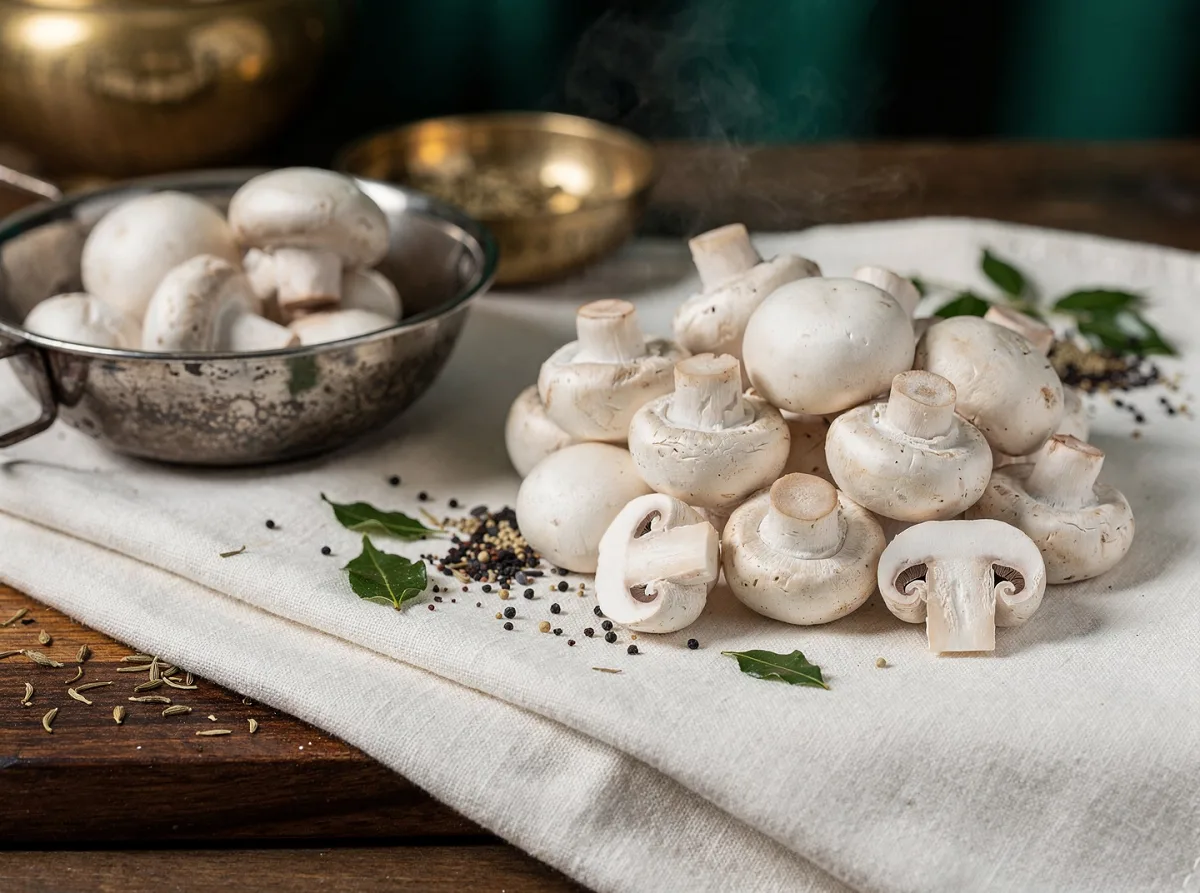
Mushroom (खुम्भी, khumbi) is a mild, tender fungus with a pale cream or white cap and soft, spongy flesh. Fresh button mushrooms are firm and earthy, turning silky when sautéed or added to curries. Common in North Indian gravies, South Indian stir-fries, and stuffed preparations,...
Nutrition per 100 g
Edible portion values from the master catalog.
More macros
Classification
About Mushroom
What it is
Mushroom (खुम्भी, khumbi) is a cultivated fungus with a rounded, pale cream or white cap and a short, thick stem. The flesh is soft, spongy, and mild in flavour - quite different from the earthy intensity of wild varieties. Fresh button mushrooms are sold whole or halved, and are now widely available in Indian markets, malls, and neighbourhood kirana shops. They are delicate and best used within a few days of purchase. (IFCT 2017, Ref #J001)
Use in Indian Kitchen
Mushrooms are increasingly popular in Indian home cooking, especially in North Indian curries, paneer-mushroom gravies, and South Indian stir-fries (sabzi). They work beautifully in creamy tomato-based dishes, mixed vegetable preparations, and stuffed paratha fillings. In the South, they are often sautéed with mustard seeds, curry leaves, and coconut. A practical tip: wipe mushrooms clean with a damp cloth rather than washing them under running water, as they absorb moisture and become soggy. Slice them just before cooking to preserve their delicate texture and prevent browning.
Key Nutrients
Mushrooms are a good source of B vitamins (including riboflavin and niacin), potassium, and selenium. They also contain ergothioneine, a unique antioxidant compound. The exact nutrient profile varies slightly by variety and growing conditions; refer to IFCT 2017 for detailed compositional data.
Health Benefits (Evidence-based)
- May support immune function through selenium and beta-glucans present in fungal cell walls.
- Linked to bone health due to ergocalciferol (vitamin D2) when exposed to sunlight during growth.
- May help maintain steady energy levels thanks to B vitamins, particularly niacin and riboflavin.
- Traditionally used in Asian cuisines for general wellness and vitality.
- Low in calories and fat, making them suitable for weight-conscious cooking.
Culinary Uses (Vegetarian)
- Sautéed with onions, garlic, and ginger in North Indian curries and gravies.
- Stir-fried with mustard seeds, curry leaves, and coconut in South Indian sabzi.
- Mixed into paneer dishes, dal preparations, and mixed vegetable curries.
- Stuffed with spiced paneer or besan-onion filling for parathas and appetisers.
- Added to soups, rasam, and light broths for umami depth.
- Grilled or pan-fried as a side dish with minimal seasoning.
Caution
- Some individuals may experience digestive sensitivity to raw or undercooked mushrooms; cooking thoroughly is advisable.
- Those with fungal sensitivities or mould allergies should exercise caution and consult a healthcare provider if uncertain.
- Always source mushrooms from reputable vendors to ensure they are cultivated varieties and not wild or toxic species.
References
- Indian Council of Medical Research - National Institute of Nutrition (ICMR-NIN). Indian Food Composition Tables (IFCT 2017). Reference #J001 - Other Vegetables category.
- Valverde, M. E., Hernández-Pérez, T., & Paredes-López, O. (2015). Edible mushrooms: improving human health and promoting quality life. International Journal of Microbiology, 2015, 376387.
Health Benefits
- Antioxidant
- Supports Bone Health
- Boosts Immunity
- Weight Management Support
- Supports Brain Health
Sourcing & Storage
Storage
Store fresh mushrooms in a paper bag or breathable container in the refrigerator, ideally in the vegetable drawer where temperature is stable and humidity is moderate. Avoid plastic bags, which trap moisture and encourage spoilage. Keep them away from direct contact with other vegetables, especially those that release ethylene gas (tomatoes, apples). Do not wash before storage; wipe gently with a damp cloth only when ready to cook. In warm Indian climates, use the coldest part of your fridge and consume within 2-3 days for best quality.
Shelf Life
Fresh button mushrooms keep for 3-5 days when stored properly in the refrigerator. Once cooked, mushroom dishes can be refrigerated for 2-3 days in an airtight container. Mushrooms do not freeze well due to their high water content and soft texture; freezing causes them to become mushy when thawed. For longer storage, consider drying mushrooms in the sun or a low oven, which concentrates their flavour and extends shelf life to several months in an airtight jar.
Check Before You Buy
Choose mushrooms with firm, unblemished caps that are pale cream or white in colour. Avoid any with dark spots, slime, or a strong ammonia smell, which indicate age or spoilage. The underside gills should be pale pink or light brown, not dark or blackened. Stems should be intact and not shrivelled. If buying from a mandi or kirana shop, ask when they arrived; mushrooms are best within 1-2 days of delivery. Packed mushrooms in supermarkets should have a clear, dry appearance and no condensation inside the packaging.
In Ayurveda
In classical Ayurvedic texts, mushrooms are not extensively documented as a primary ingredient. However, they are generally considered light and easy to digest (laghu guna). Modern Ayurvedic practitioners sometimes classify cultivated mushrooms as having a neutral to slightly cooling effect, suitable for balancing Pitta when prepared with warming spices like ginger and turmeric.