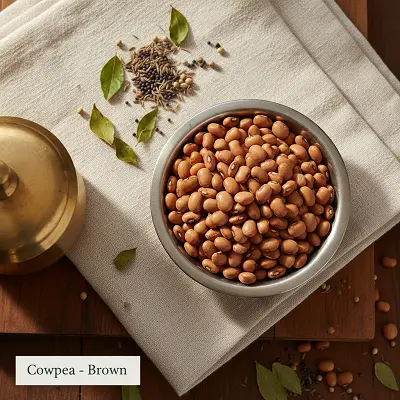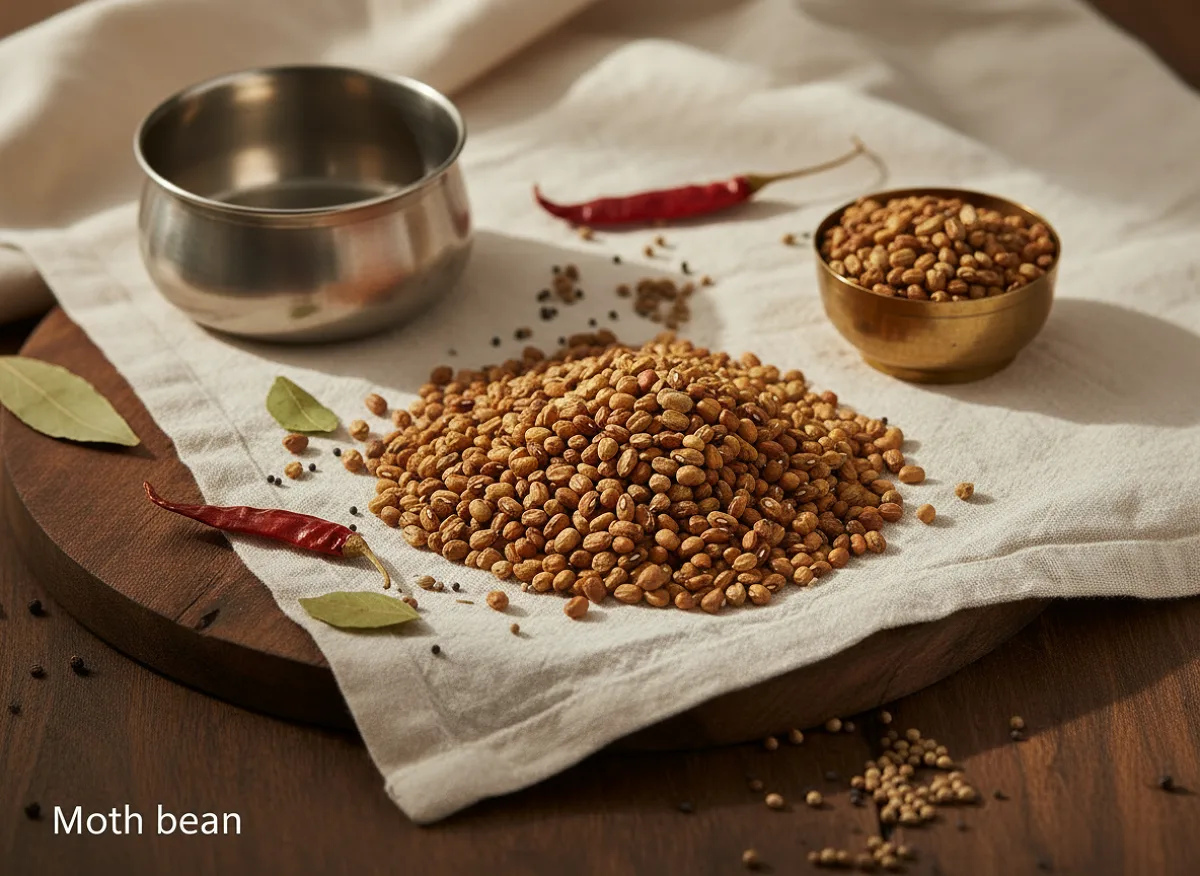
Moth bean
Vigna aconitifolia · Also known as Mat bean, Turkish gram, Dew bean, Motha, Narippayir, Matki Kal, Matki, Kheri, Math, Bhiopnitam, Moth dal
Moth bean (मोठ / मूंग की एक किस्म) is a small, drought-resistant legume widely grown across India, particularly in Rajasthan and Gujarat. Rich in protein and fibre, it is a staple in Indian home cooking, commonly used in dals, sprouts, and traditional preparations (IFCT 2017, Ref...
Nutrition per 100 g
Mean values ± IFCT published SD (edible portion).
More macros
Classification
About Moth bean
What it is
Moth bean is a small, hardy grain legume native to the Indian subcontinent, botanically known as Vigna aconitifolia. It thrives in arid and semi-arid regions and is a traditional crop across Rajasthan, Gujarat, and parts of Madhya Pradesh. The beans are tiny, round, and typically olive-brown or grey in colour. In Indian food composition tables, moth bean is classified under Grain Legumes (IFCT 2017, Ref #B016).
Use in Indian Kitchen
Moth bean holds a quiet, essential place in Indian home cooking, especially in North and West Indian kitchens. It is cooked as a simple dal, often tempered with cumin, asafoetida, and dried chillies - a humble, nourishing everyday dish. In Rajasthan and Gujarat, it appears in traditional preparations like moth sprouts (used fresh in salads and light curries) and as a component in mixed dal blends. Because it cooks relatively quickly and has a mild, slightly earthy flavour, it pairs well with seasonal vegetables and is often prepared during monsoon and winter months. Many Indian families value it for its affordability and nutritional density, making it a comfort food across generations.
Key Nutrients
Moth bean is a good source of plant-based protein, dietary fibre, and carbohydrates. It also contains minerals including iron, phosphorus, and magnesium, along with B vitamins. Exact nutrient composition is documented in IFCT 2017, Ref #B016.
Health Benefits (Evidence-based)
- May support steady energy release due to its fibre and complex carbohydrate content.
- Plant-based protein makes it a valuable addition to vegetarian and vegan diets.
- Dietary fibre may support digestive health and regular bowel function.
- Iron and other minerals may contribute to overall nutritional adequacy, particularly in plant-based eating patterns.
- Low glycaemic index profile may help maintain stable blood sugar levels.
Culinary Uses (Vegetarian)
- Cooked as a simple dal with tempering of cumin seeds, asafoetida, and dried red chillies.
- Sprouted and used fresh in salads, light curries, or as a side vegetable.
- Mixed with other dals (moong, masoor) in traditional dal blends.
- Cooked with seasonal vegetables like spinach, pumpkin, or bottle gourd.
- Used in traditional Rajasthani and Gujarati home cooking.
Caution
- Like all legumes, moth bean contains compounds that may cause bloating or gas in some people; soaking and cooking thoroughly can reduce this.
- Those with a history of kidney stones should consume in moderation, as legumes contain oxalates.
- Individuals on certain medications (e.g. blood thinners) should consult a healthcare provider, as legumes contain vitamin K.
References
- Indian Council of Medical Research - National Institute of Nutrition (ICMR-NIN). Indian Food Composition Tables 2017. Hyderabad: NIN; 2017. Grain Legumes category, Ref #B016.
- Gopalan C, Rama Sastri BV, Balasubramanian SC. Nutritive Value of Indian Foods. Hyderabad: National Institute of Nutrition, ICMR; 2016.
Sourcing & Storage
Storage
Store moth beans in an airtight container in a cool, dry place away from direct sunlight and moisture. In Indian climates, keep the container in a cupboard or pantry away from humidity and heat sources. If stored in the refrigerator during monsoon or in very warm regions, ensure the container is completely dry before sealing to prevent mould or insect infestation.
Shelf Life
When stored properly in an airtight container in a cool, dry place, moth beans can last 6 to 12 months. Once cooked, dal should be refrigerated and consumed within 2 to 3 days. Sprouted moth beans should be used within 1 to 2 days of sprouting and kept in the refrigerator.
Check Before You Buy
When buying moth beans from a mandi or kirana shop, look for beans that are uniform in size, free from cracks, discolouration, or visible damage. The beans should feel dry and hard to the touch; avoid any that feel soft or damp. Check for any musty or off odour, which may indicate moisture or pest damage. If buying from a packed packet, ensure the seal is intact and the packaging is clean and undamaged. Avoid beans that appear shrivelled or have a greyish film, as these may indicate age or storage issues.