Mangosteen
Garcinia mangostana · Also known as Purple mangosteen, Mangustan, Kodam puli
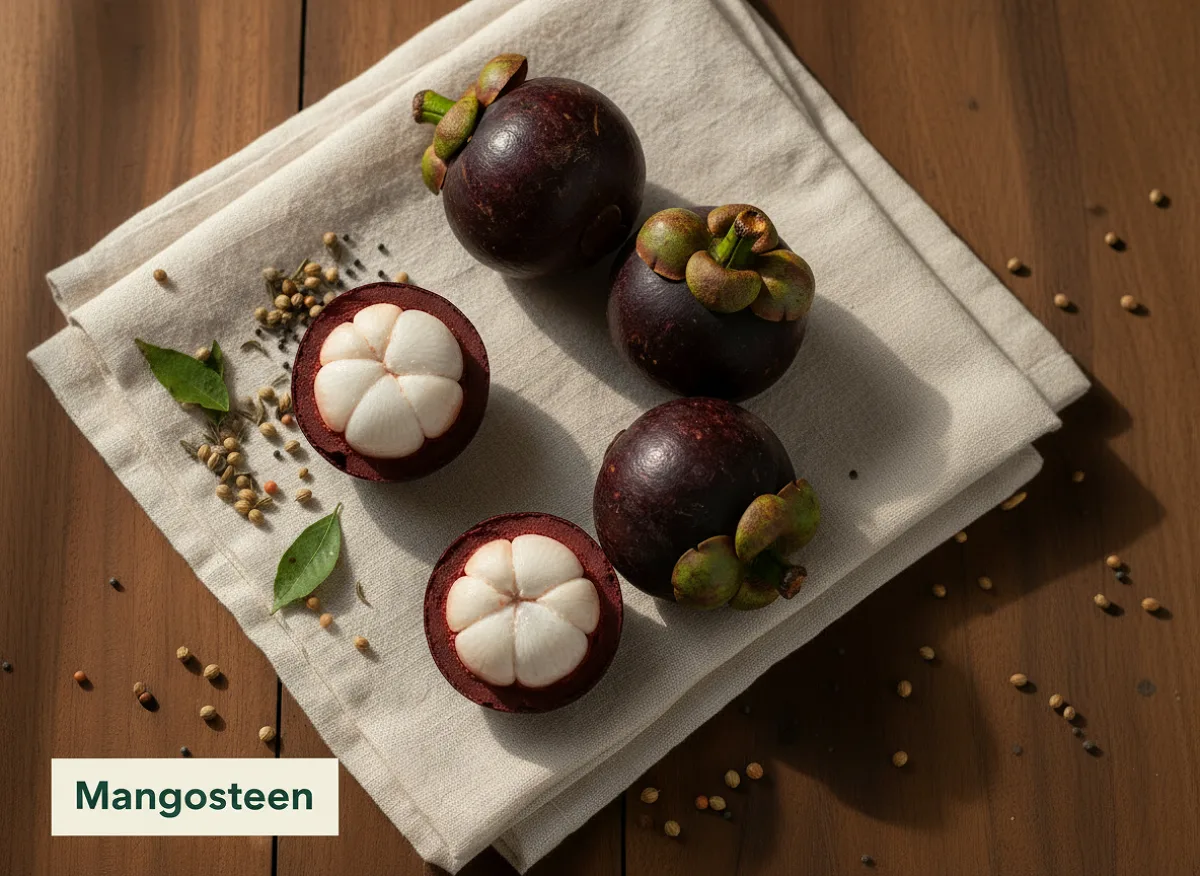
Mangosteen is a tropical fruit with a deep purple rind and creamy white segments inside, prized for its sweet-tart flavour and delicate texture. Though not native to India, it is increasingly available in premium markets and specialty stores, and is enjoyed fresh or in desserts a...
Nutrition per 100 g
Edible portion values from the master catalog.
More macros
Classification
About Mangosteen
What it is
Mangosteen (Garcinia mangostana) is a tropical stone fruit native to Southeast Asia, with a distinctive deep purple exterior and segmented white flesh inside. The fruit is small, round, and about the size of a small apple. While not traditionally grown in India, mangosteens are now imported and available in select markets, particularly in metropolitan areas and during peak season (May to September in origin countries).
Use in Indian Kitchen
Mangosteen is not a traditional Indian ingredient, but it has found a place in modern Indian kitchens, especially among health-conscious home cooks and in urban centres. The fruit is typically enjoyed fresh, chilled, as a standalone dessert or added to fruit salads and smoothie bowls. Some cooks use it in fresh juices, cordials, or as a topping for yoghurt and custards. Its delicate sweetness and slight tartness make it a refreshing addition during hot months, though it remains more of a premium or occasional treat than an everyday staple.
Key Nutrients
Mangosteen contains vitamin C, fibre, and various polyphenolic compounds. The fruit also provides small amounts of copper and manganese. Exact nutrient composition data specific to Indian food tables is limited; international sources indicate the fruit is low in calories and fat, with modest carbohydrate content.
Health Benefits (Evidence-based)
- Rich in vitamin C, which may support immune function and skin health.
- Contains polyphenols and xanthones, compounds linked in some studies to antioxidant and anti-inflammatory properties.
- High in dietary fibre, which may support digestive health and satiety.
- Low in calories and fat, making it a light choice for weight-conscious diets.
- May help maintain healthy blood sugar levels due to its fibre content and low glycaemic index.
Culinary Uses (Vegetarian)
- Eaten fresh, chilled, as a simple dessert or snack.
- Added to fruit salads, smoothie bowls, and yoghurt parfaits.
- Blended into fresh juices, smoothies, and milkshakes.
- Used in fruit cordials, syrups, and beverages.
- Occasionally incorporated into desserts, ice creams, and custards.
Caution
Mangosteen is generally safe for most people. However, those with a history of kidney stones or gout should consume it in moderation due to its oxalate content. Individuals on blood-thinning medications should consult a healthcare provider, as some compounds in mangosteen may have mild anticoagulant properties. Allergic reactions are rare but possible in sensitive individuals.
References
- Ooi, S. L., Pak, S. C. (2013). Mangosteen (Garcinia mangostana L.): A phytochemical and pharmacological review. Fitoterapia, 84, 1-7.
- Indian Council of Medical Research - National Institute of Nutrition (ICMR-NIN). Indian Food Composition Tables (IFCT 2017). Hyderabad: NIN.
Sourcing & Storage
Storage
Store mangosteens in a cool, dry place away from direct sunlight. In warm Indian climates, refrigerate them in the vegetable drawer or a perforated plastic bag to maintain freshness and prevent moisture loss. Keep them separate from ethylene-producing fruits like mangoes and bananas, as exposure to ethylene gas can cause the rind to darken and the fruit to deteriorate faster. Avoid storing in airtight containers, as they need air circulation.
Shelf Life
Fresh mangosteens typically keep for 5 to 7 days at room temperature in a cool environment, and up to 2 to 3 weeks when refrigerated in the vegetable drawer. Once cut or peeled, consume the segments within 1 to 2 days. Mangosteens do not freeze well due to their delicate texture, though the juice can be frozen for later use in beverages.
Check Before You Buy
Choose mangosteens with a deep, dark purple rind that is firm but yields slightly to gentle pressure - avoid those that are too hard or overly soft. The rind should be smooth and free of cracks, blemishes, or dark spots. A fresh mangosteen will have a subtle, slightly sweet aroma near the stem. Check the weight - a heavier fruit indicates juicier flesh. Avoid fruits with a dried-out or dull appearance, as these are likely old or have been stored poorly. When buying from premium grocers or online, ensure they arrive well-packaged and are consumed within a few days of delivery.