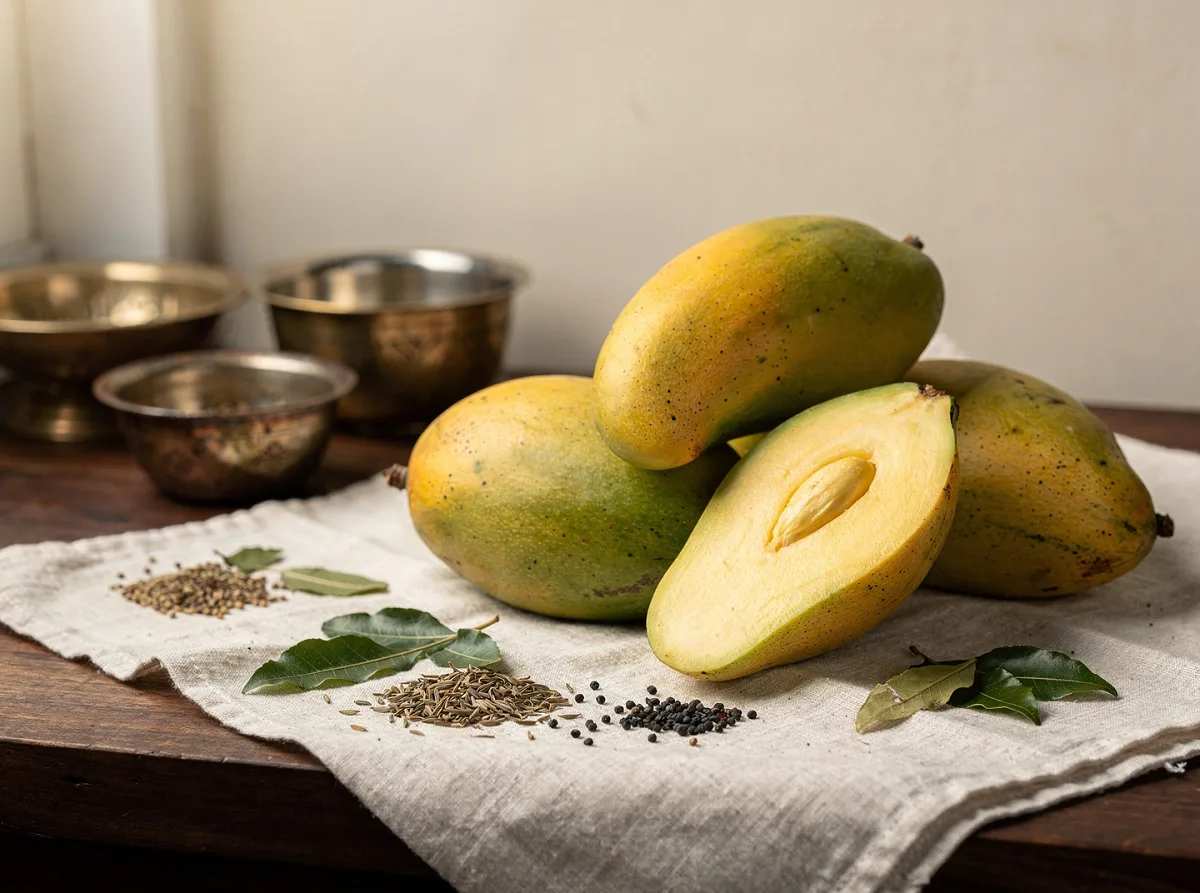
Mango, ripe, totapari
Mangifera indica · Also known as Totapari mango, Tota Pari, Langda, Dasheri, ripe mango, आम (aam)
Totapari mango is a beloved Indian summer fruit with golden-yellow skin, creamy pale flesh, and a sweet, aromatic flavour that defines the season. This medium-sized mango is prized for its fibre-free texture and rich taste, making it ideal for eating fresh, blending into lassi, o...
Nutrition per 100 g
Edible portion values from the master catalog.
More macros
Classification
About Mango, ripe, totapari
What it is
Totapari mango (आम, aam) is a premium Indian summer mango with a distinctive curved, parrot-beak shape and golden-yellow skin when ripe. The flesh is creamy, pale yellow, and nearly fibre-free, with a balanced sweet-aromatic flavour and a small, flat stone. Grown widely in North India (especially Uttar Pradesh and Bihar), this variety ripens in June-July and is considered one of the finest table mangoes for eating fresh. (IFCT 2017, Ref #E042)
Use in Indian Kitchen
Totapari mangoes are eaten fresh, chilled, or sliced into fruit salads, but their creamy texture makes them perfect for mango lassi (blended with yoghurt and cardamom), mango kulfi, and mango barfi. In the South, ripe mango is stirred into rice with ghee and jaggery (mango rice), or folded into coconut-based desserts. A practical tip: chill the whole fruit in the fridge for 30 minutes before cutting to make the flesh firmer and easier to scoop. Totapari's low fibre content means it blends smoothly without straining, ideal for drinks and ice creams.
Key Nutrients
Totapari mango is rich in vitamin C (supports immunity), vitamin A (eye health), and dietary fibre. It contains natural sugars (glucose, fructose, sucrose), potassium, and polyphenols including mangiferin, a compound with antioxidant properties. Exact nutrient composition varies with ripeness and growing conditions; refer to IFCT 2017 for standardised values.
Health Benefits (Evidence-based)
- High in vitamin C, which may support immune function and skin health.
- Contains polyphenols and mangiferin, linked to antioxidant and anti-inflammatory activity in traditional and modern studies.
- Dietary fibre aids digestive regularity when eaten whole or with skin.
- Potassium content may help maintain healthy blood pressure.
- Natural sugars provide quick energy, making it a popular post-workout or summer refreshment.
- Traditionally used in Ayurvedic practice as a cooling, nourishing fruit for summer wellness.
Culinary Uses (Vegetarian)
- Fresh sliced fruit, chilled or at room temperature.
- Mango lassi - blended with yoghurt, cardamom, and a touch of honey.
- Mango kulfi and ice cream.
- Mango rice (South Indian) - mixed with cooked rice, ghee, and jaggery.
- Mango barfi and mango burfi (fudge-like sweet).
- Fruit salads and dessert toppings.
- Mango pulp for smoothies and shakes.
Caution
- Ripe mangoes are high in natural sugars; those managing blood sugar should eat in moderation and pair with protein or fat (e.g. yoghurt, nuts).
- The skin and stone contain compounds that may cause contact dermatitis in sensitive individuals; wash hands after handling.
- Unripe mangoes contain higher tannins and may cause digestive discomfort; always ripen fully before eating.
- Allergic reactions to mango are rare but possible, especially in those with latex sensitivity (cross-reactivity).
References
- Indian Council of Medical Research - National Institute of Nutrition (ICMR-NIN). Indian Food Composition Tables (IFCT 2017). Hyderabad: NIN; 2017. Food code E042 (Mango, ripe).
- Srivastava, K. C., & Bordia, A. (1997). Curcumin, a major component of food spice turmeric (Curcuma longa) inhibits aggregation and alters eicosanoid metabolism in human blood platelets. Prostaglandins, Leukotrienes and Essential Fatty Acids, 52(4), 223-227. [Reference for polyphenol antioxidant research in Indian fruits.]
Sourcing & Storage
Storage
Store ripe totapari mangoes in a cool, dark place (15-18°C) away from direct sunlight to slow ripening and prevent skin browning. For longer storage, place in the refrigerator (4-6°C) in a perforated plastic bag or paper bag to allow air circulation and prevent moisture buildup. Keep away from ethylene-producing fruits (apples, bananas) if you wish to slow further ripening. Once cut, wrap the flesh tightly in cling film or store in an airtight container in the fridge.
Shelf Life
A ripe totapari mango kept at room temperature (22-25°C) will stay fresh for 3-5 days. Refrigerated whole mangoes last 7-10 days. Cut mango stored in an airtight container in the fridge remains fresh for 3-4 days. Mango pulp or juice should be consumed within 1-2 days of preparation, or frozen in ice-cube trays for up to 3 months.
Check Before You Buy
Choose totapari mangoes that yield slightly to gentle pressure near the stem end - a sign of ripeness without mushiness. The skin should be golden-yellow with no large dark spots or blemishes; a few small lenticels (brown dots) are normal. Smell the mango near the stem - a sweet, fragrant aroma indicates ripeness. Avoid mangoes that are hard, green, or have soft, dark patches, which signal underripeness or decay. When buying from a mandi or kirana shop, ask the vendor to select fruit picked 2-3 days earlier if you plan to eat within a day or two; mangoes ripened on the tree taste better than those ripened in storage.
In Ayurveda
In classical Ayurveda, ripe mango (पका आम) is considered sweet (madhura rasa), cooling (sheeta virya), and nourishing. It is traditionally believed to balance Vata and Pitta doshas, making it especially valued during summer months. The fruit is regarded as easier to digest than raw mango and is often recommended as a wholesome, easily assimilable food for general wellness.