Mango - Banganapalli
Mangifera indica · Also known as aam, Benishan, Banganapalli mango, Andhra mango
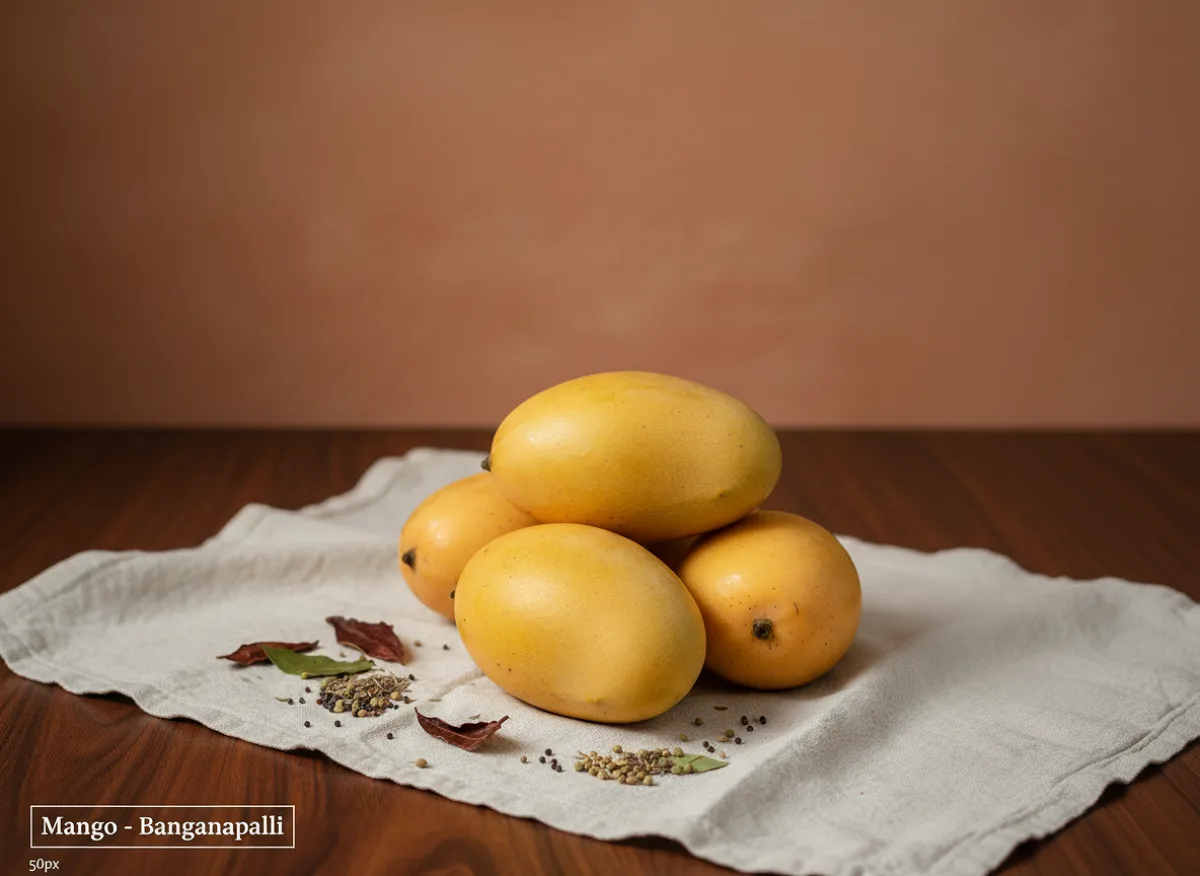
Banganapalli mango (aam) is a beloved summer fruit from Andhra Pradesh, prized for its golden-yellow skin, creamy pale-yellow flesh, and distinctly sweet, aromatic flavour with minimal fibre. This medium-sized mango is eaten fresh, sliced into desserts, or blended into lassi and...
Nutrition per 100 g
Mean values ± IFCT published SD (edible portion).
More macros
Classification
About Mango - Banganapalli
What it is
Banganapalli mango (aam) is a premium summer variety native to Andhra Pradesh, recognisable by its smooth golden-yellow skin, medium oval shape, and creamy, fibre-free pale-yellow flesh inside. The fruit is naturally sweet with a floral, aromatic fragrance and a buttery texture when ripe. Banganapalli is typically eaten fresh, chilled, or used in beverages and desserts during the mango season (April to June). (IFCT 2017, Ref #E036)
Use in Indian Kitchen
Banganapalli mangoes are most enjoyed fresh, chilled and sliced as a simple dessert or breakfast fruit. They are also blended into mango lassi (with yoghurt and cardamom), stirred into kheer and payasam, or layered into ice cream and kulfi. In South India, ripe Banganapalli is sometimes used in mango pickle (aam ka achar) when slightly underripe, though the variety's sweetness makes it less common for savoury pickles than sourer types. A practical tip: ripen the fruit at room temperature in a paper bag for 2-3 days, then refrigerate to extend freshness and concentrate the flavour.
Key Nutrients
Banganapalli mango is a good source of vitamin C, vitamin A (as beta-carotene), dietary fibre, and natural sugars. It also contains small amounts of copper, manganese, and B vitamins. Exact nutrient composition varies with ripeness and growing conditions; refer to IFCT 2017 for standardised values.
Health Benefits (Evidence-based)
- Rich in vitamin C, which supports immune function and skin health.
- Contains beta-carotene (vitamin A precursor), linked to eye health and antioxidant protection.
- Dietary fibre aids digestive regularity when eaten fresh.
- Natural sugars provide quick energy, making it a popular summer refreshment.
- Polyphenols and other plant compounds may offer antioxidant benefits.
Culinary Uses (Vegetarian)
- Fresh sliced fruit, chilled as a simple dessert or breakfast.
- Mango lassi - blended with yoghurt, cardamom, and a touch of honey.
- Mango kheer and payasam - traditional South Indian rice or semolina puddings.
- Kulfi and ice cream - frozen desserts.
- Mango pickle (aam ka achar) - when slightly underripe.
- Smoothies and shakes with milk or coconut milk.
Caution
- High natural sugar content; people managing blood sugar should eat in moderation.
- Unripe mangoes contain higher levels of tannins and may cause digestive discomfort or constipation in sensitive individuals.
- Allergic reactions are rare but possible, especially in people with birch pollen allergy.
- The skin and sap of raw mangoes can cause contact dermatitis in sensitive skin; wash hands after handling.
References
- Indian Council of Medical Research - National Institute of Nutrition (ICMR-NIN). Indian Food Composition Tables (IFCT) 2017. Hyderabad: NIN; 2017. [Ref #E036 - Mango, raw]
- Srivastava, K. C., & Bordia, A. (1997). Curcumin, a major component of food spice turmeric (Curcuma longa) inhibits aggregation and alters eicosanoid metabolism in human blood platelets. Prostaglandins, Leukotrienes and Essential Fatty Acids, 52(4), 223-227. [General mango antioxidant and polyphenol research in peer-reviewed literature.]
Health Benefits
- Improves Digestion
- Provides Energy
- Boosts Immunity
- Supports Eye Health
Sourcing & Storage
Storage
Store unripe Banganapalli mangoes at room temperature (20-25°C) in a paper or cloth bag away from direct sunlight until they yield slightly to gentle pressure and emit a sweet aroma (2-4 days depending on initial firmness). Once ripe, transfer to the refrigerator (4-6°C) to slow ripening and extend shelf life. Keep away from ethylene-producing fruits (apples, bananas) if you wish to slow ripening. In hot, humid Indian climates, refrigerate ripe fruit promptly to prevent mould and over-softening.
Shelf Life
Unripe Banganapalli mangoes last 5-7 days at room temperature. Once ripe and refrigerated, they keep for 5-10 days. Sliced or peeled mango should be consumed within 1-2 days when stored in an airtight container in the fridge. Frozen mango pulp (blended or cubed) lasts 3-4 months in the freezer.
Check Before You Buy
Choose Banganapalli mangoes with unblemished, smooth golden-yellow skin and a slight give when gently squeezed near the stem end - avoid hard, green fruit or those with dark spots, cracks, or soft mushy patches. A ripe mango should emit a sweet, floral fragrance near the stem. If buying from a mandi or kirana store, ask the vendor when the fruit was harvested; freshly picked Banganapalli will ripen evenly at home. Avoid mangoes that feel unusually light (may be dried inside) or have a fermented smell (sign of over-ripeness or spoilage).
In Ayurveda
In classical Ayurveda, mango (आम) is considered a fruit with sweet (madhura) rasa and cooling (sheeta) virya, making it beneficial for balancing Pitta dosha. The ripe fruit is traditionally used to support digestion and nourish the body (rasayana property). Unripe mango is astringent and used in digestive preparations and pickles to aid agni (digestive fire).