Malabar Spinach
Basella alba · Also known as Malabar creeper, Indian spinach, climbing spinach, basella, poi (पोई), basela (बसेला)
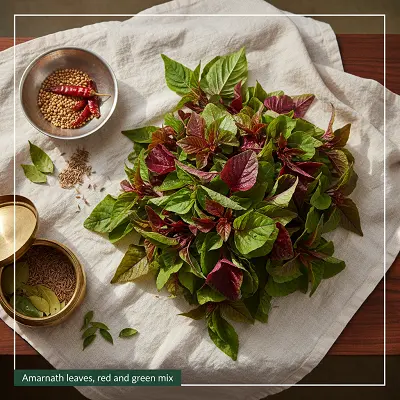
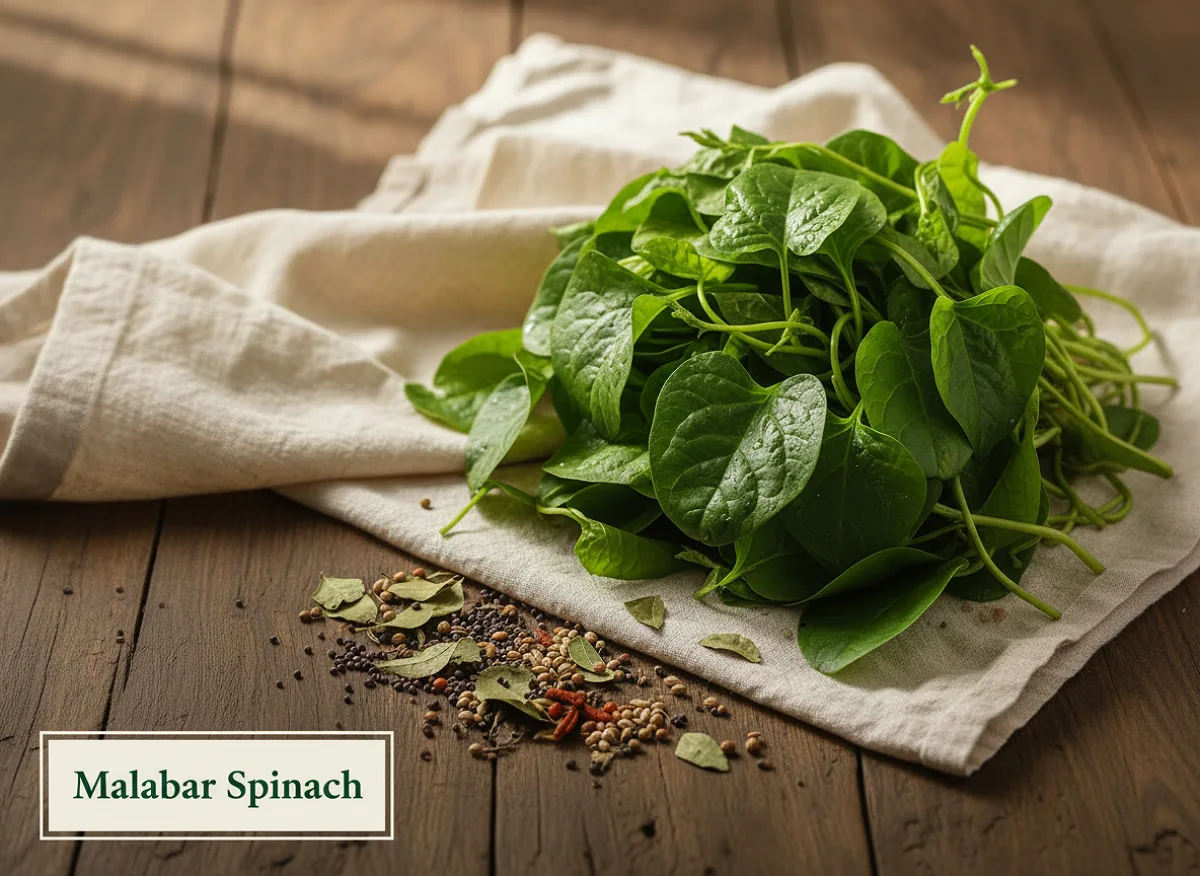
Malabar spinach (पोई, poi) is a tender, succulent climbing vine with soft heart-shaped leaves and a mild, slightly mucilaginous texture - quite different from common spinach. Fresh or cooked, it's a beloved summer green across South and West India, used in simple stir-fries, curr...
Nutrition per 100 g
Edible portion values from the master catalog.
More macros
Classification
About Malabar Spinach
What it is
Malabar spinach (पोई, poi, or बसेला, basela) is a tender, heat-loving climbing vine with soft, heart-shaped leaves and thin stems. Unlike common spinach, the leaves have a slightly slippery, mucilaginous quality when cooked - a trait that makes it prized in South Indian and Maharashtrian kitchens. It is eaten fresh or lightly cooked and is at its best during the warm monsoon and summer months. (IFCT 2017, Ref #C007)
Use in Indian Kitchen
Malabar spinach shines in simple, quick preparations. In Maharashtra and South India, it is wilted with a tadka of mustard seeds, curry leaves, and coconut oil, or stirred into sambar and rasam for a silky body. In Kerala, it appears in thoran (dry curry) with grated coconut and green chilli. North Indian home cooks often add it to dal or light vegetable curries. A practical tip: do not overcook - a minute or two of gentle heat is enough to soften the leaves without turning them mushy. Pair it with tamarind, coconut, or a squeeze of lemon to brighten its mild flavour.
Key Nutrients
Malabar spinach is a good source of vitamins A and C, dietary fibre, and minerals including iron, calcium, and magnesium. The leaves also contain small amounts of oxalates. Exact nutrient composition is documented in IFCT 2017 (Ref #C007).
Health Benefits (Evidence-based)
- May support eye health and skin integrity due to beta-carotene and vitamin C content.
- Linked to bone health through its calcium and magnesium profile.
- The dietary fibre and mucilaginous nature may aid gentle digestive comfort.
- Traditionally valued as a cooling, nourishing green during hot seasons.
- Low in calories and suitable for everyday inclusion in balanced meals.
Culinary Uses (Vegetarian)
- Wilted with mustard seeds, curry leaves, and coconut oil as a simple side dish.
- Stirred into sambar, rasam, or light dal curries for body and nutrition.
- Cooked as thoran (dry curry) with grated coconut, green chilli, and onion.
- Added to vegetable stir-fries or mixed with other greens in salads when very tender.
- Blanched and incorporated into rice dishes or mixed vegetable preparations.
Caution
- Contains oxalates; those with a history of kidney stones or on oxalate-restricted diets should consume in moderation.
- The mucilaginous texture may not suit everyone; start with small portions if unfamiliar.
- Always rinse thoroughly before cooking to remove any soil or grit.
References
- Indian Council of Medical Research - National Institute of Nutrition (ICMR-NIN). Indian Food Composition Tables (IFCT 2017). Reference #C007 - Green Leafy Vegetables category.
- Nutritive Value of Indian Foods, ICMR-NIN, New Delhi. Standard reference for Indian home cooking and nutrition education.
Health Benefits
- Hydration
- Supports Digestion
- Boosts Immunity
- Supports Eye Health
- Improves Hemoglobin
Sourcing & Storage
Storage
Store fresh Malabar spinach in a breathable cloth bag or perforated plastic bag in the refrigerator's vegetable drawer, away from ethylene-producing fruits. Keep the leaves dry; excess moisture encourages wilting and decay. In warm, humid Indian climates, use within 1-2 days of purchase for best texture and flavour. If you have a large harvest or bundle, blanch and freeze in portions for longer storage.
Shelf Life
Fresh Malabar spinach keeps for 2-3 days in the refrigerator when stored dry and cool. Once cooked, use within 1-2 days. Blanched and frozen leaves will keep for up to 3 months in an airtight container or freezer bag.
Check Before You Buy
Look for tender, bright green leaves with no yellowing, browning, or slime. The stems should snap cleanly and feel crisp, not limp or mushy. Avoid bundles with wilted or blackened leaves. At the mandi or kirana, choose freshly harvested bunches - Malabar spinach is best eaten within a day or two of picking. If buying pre-packed, check the date and ensure the leaves are not compressed or damp inside the bag.
In Ayurveda
In classical Ayurvedic texts, Malabar spinach (basella) is recognized as a cooling, light leafy vegetable suitable for summer consumption. Its soft, mucilaginous quality (snigdha guna) and cooling virya make it beneficial during hot seasons and for balancing excess pitta. Traditional Ayurvedic practice often recommends it lightly cooked with ghee and warming spices to aid digestion, rather than eaten raw.