Mace Blade
Myristica fragrans · Also known as Javitri, Mace, Muskatnussblüte (German), Noix de muscade (French)
Mace blade (javitri) is the lacy, crimson-orange aril that wraps the nutmeg seed inside its fruit. Dried and ground into a warm, slightly sweet spice with hints of pepper and cinnamon, it brings depth to Indian curries, rice dishes, and sweets without the heaviness of whole nutme...
Nutrition per 100 g
Mean values ± IFCT published SD (edible portion).
More macros
Classification
About Mace Blade
What it is
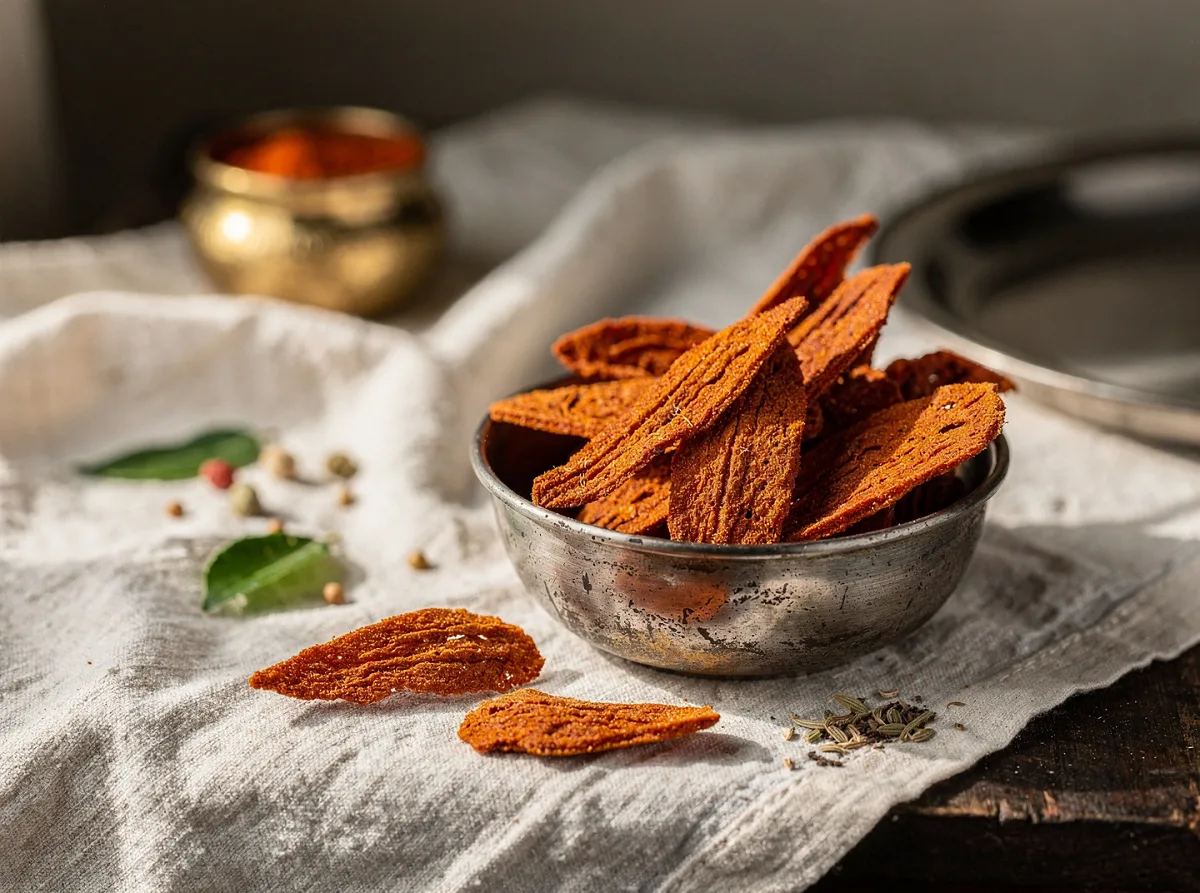
Mace blade, known in Hindi as javitri, is the dried aril - the lacy, net-like covering - that surrounds the nutmeg seed inside the fruit of Myristica fragrans. When fresh, it is bright crimson-orange; once dried, it hardens into brittle, rust-coloured blades with a delicate latticed structure. The flavour is warmer and more subtle than nutmeg alone - a blend of sweet spice, gentle pepper, and faint cinnamon notes. In Indian kitchens, it is used whole or ground into a fine powder. (IFCT 2017, Ref #G027)
Use in Indian Kitchen
Mace blade is a signature spice in South Indian sambar powder, where its warmth balances the heat of chillies and the earthiness of fenugreek. It appears in biryani masalas across North India, lending a refined sweetness to rice and meat curries. In sweet dishes - kheer, payasam, halwa - a small pinch adds complexity without overpowering. Ground mace is also used in garam masala blends and sprinkled into curd-based gravies for paneer or vegetable curries. A practical tip: toast whole blades lightly in a dry pan before grinding to deepen their aroma and make them easier to crush.
Key Nutrients
Mace blade contains volatile oils (myristicin, elemicin), fibre, and trace minerals including manganese, magnesium, and iron. Exact nutrient composition per serving is available in IFCT 2017 tables.
Health Benefits (Evidence-based)
- May support digestion and reduce bloating when used in small amounts in cooked dishes.
- Traditionally linked to improved sleep quality and relaxation in Ayurvedic and folk medicine.
- Contains antioxidant compounds that may help protect cells from oxidative stress.
- Has been used historically to ease joint discomfort and support circulation.
- May help reduce inflammation when incorporated into warm spiced foods and beverages.
Culinary Uses (Vegetarian)
- Ground into sambar powder for vegetable stews and lentil curries.
- Added to biryani and pulao masalas for fragrant rice dishes.
- Sprinkled into kheer, payasam, and milk-based desserts.
- Blended into garam masala for everyday curries and gravies.
- Used in paneer-based dishes and curd marinades for subtle warmth.
Caution
- Use sparingly - mace is potent, and excessive amounts (more than a few pinches) can cause nausea or dizziness.
- Pregnant women should avoid large quantities; small culinary amounts are generally safe.
- People with a history of seizures or neurological sensitivity should consult a healthcare provider before regular use.
- May interact with certain medications; check with a doctor if taking sedatives or anticoagulants.
References
- Indian Council of Medical Research - National Institute of Nutrition (ICMR-NIN). Indian Food Composition Tables 2017 (IFCT 2017). Reference #G027 - Condiments and Spices-Dry category.
- Parle, M. & Bansal, N. (2011). Mace (Myristica fragrans Houtt.) - A review. Indian Journal of Natural Products and Resources, 2(2), 144-152.
Health Benefits
- Improves Digestion
- Anti Inflammatory
- Boosts Immunity
- Enhances Appetite
Sourcing & Storage
Storage
Store mace blades in an airtight glass jar or container away from direct sunlight, heat, and moisture. Keep in a cool, dry cupboard or spice rack. Whole blades retain flavour longer than ground mace. In humid climates (monsoon season in India), store in the refrigerator in a sealed container with a desiccant packet to prevent clumping and mould. Ground mace should be kept in a small, dark glass bottle with a tight lid.
Shelf Life
Whole mace blades, when stored properly in an airtight container away from light and heat, retain their flavour and potency for 2-3 years. Ground mace powder loses aroma more quickly and is best used within 6-12 months. Once opened, transfer to an airtight container and use within 3-6 months for best flavour. In warm, humid Indian climates, shelf life may be shorter; store in the refrigerator to extend freshness.
Check Before You Buy
When buying whole mace blades, look for pieces that are intact, brittle, and a deep rust or reddish-brown colour - avoid pale, greyish, or broken fragments, which indicate age or poor storage. The aroma should be warm and spicy, not musty or flat. If buying from a mandi or loose spice vendor, ask for a small pinch to smell and inspect for insects or debris. Packaged mace from reputable brands should have a clear manufacturing and expiry date; check the seal is intact and the container is not damp.
Adulteration with cheaper spices or sawdust is rare but possible in loose mace; buy from trusted vendors. Ground mace powder is harder to assess for purity - stick to branded packs from established spice companies or grind whole blades yourself at home for guaranteed quality.
In Ayurveda
In classical Ayurvedic texts, mace (javitri) is recognized as a warming spice with a sweet and pungent taste (madhura and katu rasa). It is traditionally considered to have a heating potency (ushna virya) and is believed to support digestion and reduce excess vata and kapha doshas. Mace is often recommended in Ayurvedic formulations for improving appetite and promoting sound sleep when taken in small quantities with warm milk.