Litchi
Nephelium litchi · Also known as Lichu, Lychee, Lichi, Soh manir, Letchu
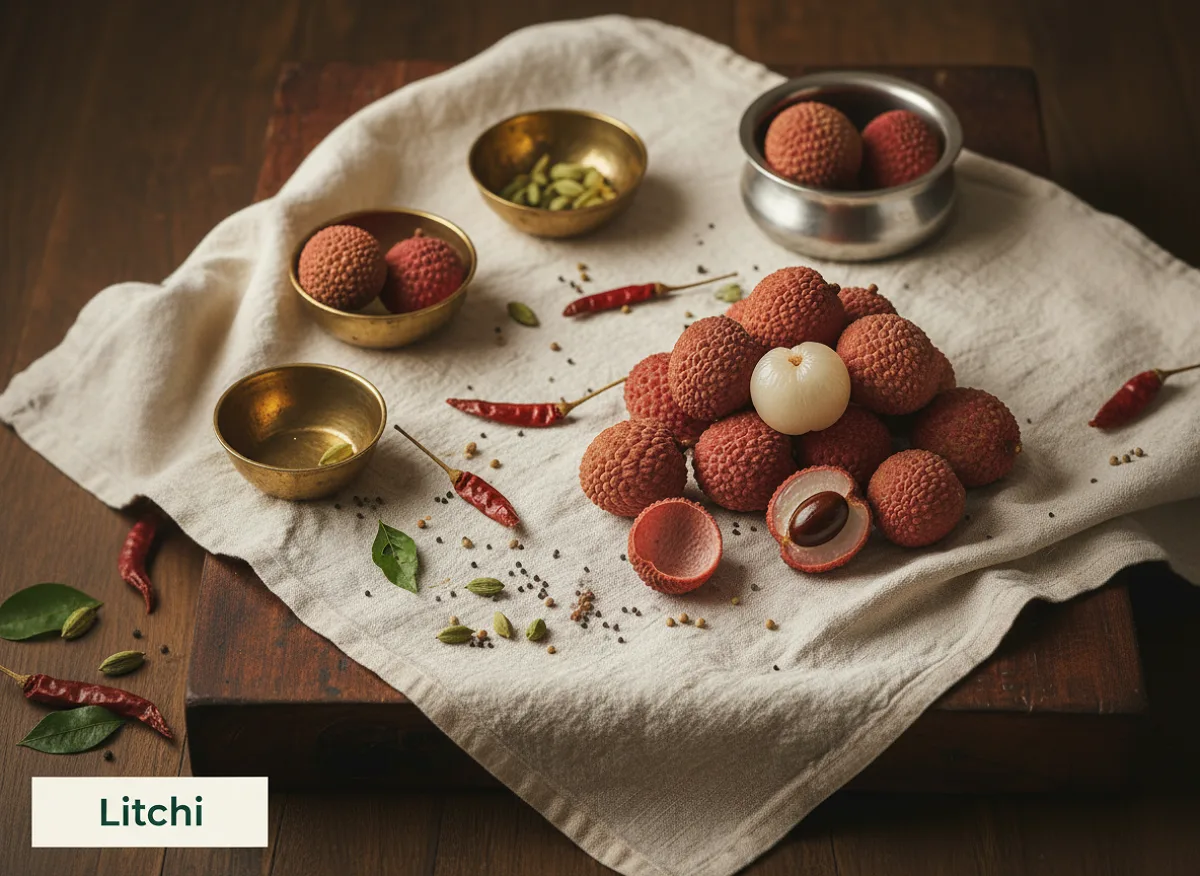
Litchi is a small, sweet tropical fruit with a bumpy red or pink skin and translucent white flesh inside. Common across Indian markets, especially in summer, it's eaten fresh, dried, or used in desserts and drinks. (IFCT 2017, Ref #E035)
Nutrition per 100 g
Mean values ± IFCT published SD (edible portion).
More macros
Classification
About Litchi
What it is
Litchi is a small, round tropical fruit native to southern China but now widely grown in India, particularly in Bihar, Jharkhand, and parts of Uttar Pradesh. The fruit has a bumpy, leathery skin that ranges from deep red to pink, enclosing a translucent, juicy white flesh with a single large seed. It is eaten fresh during the summer season (May to July) and is prized for its delicate, floral-sweet flavour. (IFCT 2017, Ref #E035)
Use in Indian Kitchen
Litchi is primarily enjoyed as a fresh fruit, chilled and eaten out of hand during the hot months. In North India, it is a seasonal favourite at markets and in home kitchens, often served as a cooling dessert or snack. The fruit is also dried to make litchi nuts, which have a chewy texture and concentrated sweetness, and can be stored longer. In some regions, litchi is used in fruit salads, desserts, and traditional sherbets or cooling drinks (sharbat). Its arrival in summer is celebrated as a sign of the season, and it remains a nostalgic childhood treat for many Indian families.
Key Nutrients
Litchi is a good source of vitamin C, which supports immunity and skin health. It also contains copper, which aids iron absorption and bone health, and provides dietary fibre for digestive support. The fruit contains natural sugars and small amounts of B vitamins. Exact nutrient composition is documented in IFCT 2017, Ref #E035.
Health Benefits (Evidence-based)
- High in vitamin C, which may help support immune function and protect cells from oxidative stress.
- Contains copper, linked to improved iron metabolism and bone strength.
- Provides dietary fibre, which may support healthy digestion and gut function.
- The natural polyphenols in litchi may have antioxidant properties, traditionally valued in Ayurvedic and Chinese medicine.
- Low in calories and fat, making it a refreshing summer fruit choice for weight-conscious diets.
Culinary Uses (Vegetarian)
- Eaten fresh, chilled, as a summer snack or dessert.
- Added to fruit salads, yoghurt parfaits, and kheer-style desserts.
- Dried litchi (litchi nuts) used in trail mixes or as a chewy sweet.
- Blended into smoothies, milkshakes, and cooling summer drinks (sharbat).
- Occasionally used in chutneys or as a garnish for festive sweets.
Caution
- Litchi seeds contain compounds that may cause mild stomach upset if swallowed; always remove the seed before eating.
- The fruit is high in natural sugars; those managing blood sugar should consume in moderation.
- Unripe litchis may contain toxins; always choose ripe, fully coloured fruit from trusted sources.
- Allergic reactions are rare but possible; discontinue if any unusual symptoms occur.
References
- Indian Council of Medical Research - National Institute of Nutrition (ICMR-NIN). Indian Food Composition Tables (IFCT) 2017. Reference #E035 (Litchi, raw).
- National Institute of Nutrition, ICMR. Nutritive Value of Indian Foods. Hyderabad: NIN Publications.
Sourcing & Storage
Storage
Store litchis in a cool, dry place or in the refrigerator in a perforated plastic bag or open container to allow air circulation. Keep away from direct sunlight and moisture. In Indian summer heat, refrigeration (4–6°C) is ideal to maintain freshness and prevent the skin from browning. Avoid sealing in airtight containers, as this can trap moisture and cause mould.
Shelf Life
Fresh litchis last 3 to 5 days at room temperature in cool weather, or up to 2 weeks when refrigerated in a well-ventilated container. In hot, humid climates, refrigeration extends shelf life significantly. Dried litchi nuts (litchi without moisture) can be stored in an airtight container in a cool, dry place for several months. Once cut or peeled, consume within a few hours.
Check Before You Buy
Choose litchis with a bright red or pink, bumpy skin free of large cracks, soft spots, or blemishes. The fruit should feel slightly firm to the touch, not mushy. Avoid any with a fermented or off smell. At the mandi or kirana shop, select fruits that are heavy for their size, indicating good juice content. Packaged litchis should have no visible mould or discolouration inside the container. If buying dried litchi nuts, check for a sweet aroma and no signs of insect damage or staleness.