Lime
Citrus limetta · Also known as Lemon, neemboo, sweet lime, mosambi (when referring to sweet lime varieties)
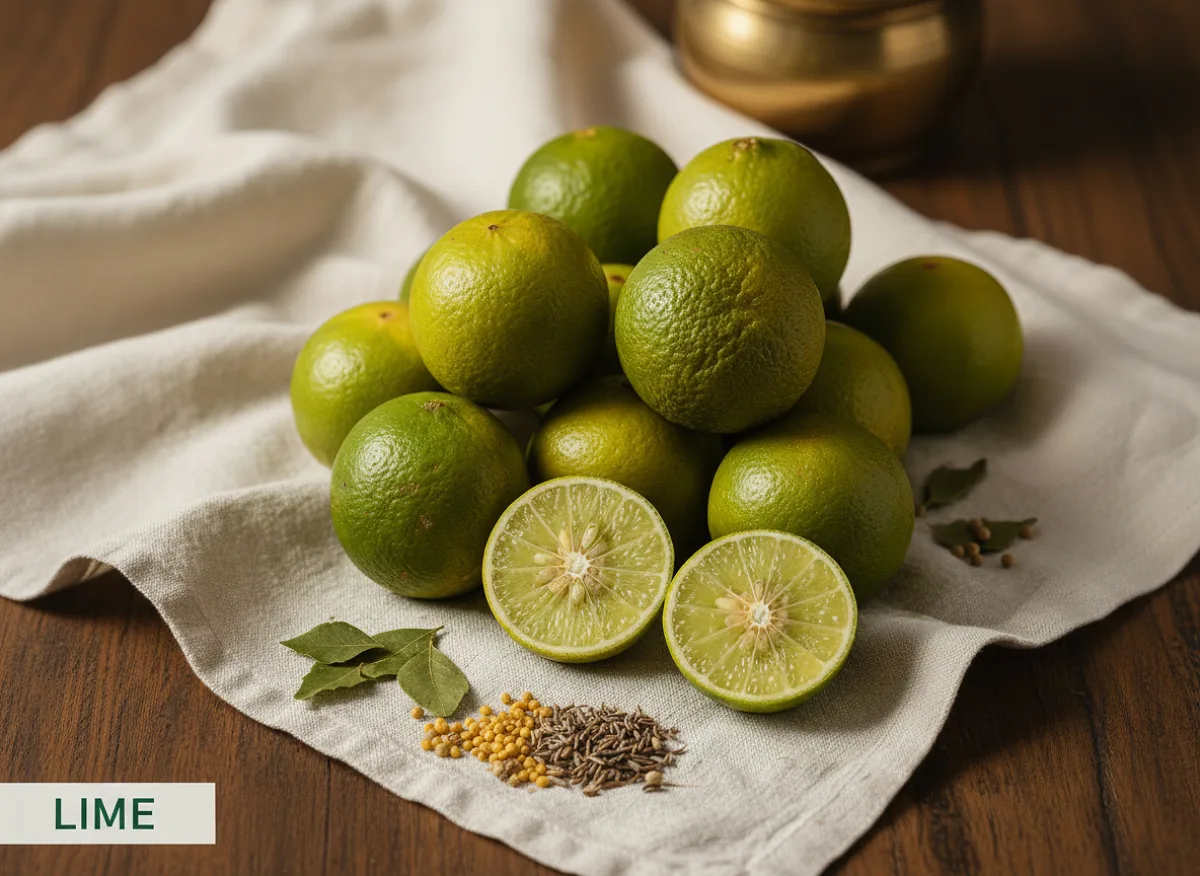
Lime (नीबू, neemboo) is a small, round citrus fruit with thin, bright yellow or green skin and juicy, tart flesh. Fresh limes are a cornerstone of Indian cooking - squeezed into dal, rasam, and chutneys for brightness, or pickled whole for tangy condiments. A squeeze of lime juic...
Nutrition per 100 g
Mean values ± IFCT published SD (edible portion).
More macros
Classification
About Lime
What it is
Lime (नीबू, neemboo) is a small, round citrus fruit with thin, bright yellow or green skin and juicy, tart flesh packed with citric acid. The fruit is typically 4-6 cm in diameter and yields 2-3 tablespoons of juice per fruit. Limes are used fresh, whole, or as juice in Indian kitchens and are available year-round in most regions, though peak season is summer. (IFCT 2017, Ref #E034)
Use in Indian Kitchen
Lime is indispensable in South Indian cooking - a squeeze brightens rasam, sambar, and kootu, while whole limes are pickled with turmeric and salt for achaar (pickle). In North India, limes are sliced and served with dal, used in chutneys, or preserved in salt for long storage. Lime juice is also mixed with warm water and a pinch of salt as a traditional digestive drink, especially after heavy meals. A practical tip: roll the lime firmly on the counter before cutting to release more juice, and store cut limes in the fridge wrapped in a damp cloth to keep them fresh longer.
Key Nutrients
Limes are rich in vitamin C (ascorbic acid), which supports immunity and iron absorption. They also contain small amounts of calcium, phosphorus, and potassium, along with citric acid and flavonoids. The exact nutrient profile varies slightly by variety and ripeness; refer to IFCT 2017 for detailed compositional data.
Health Benefits (Evidence-based)
- High in vitamin C, which may help boost immunity and support collagen formation in skin and connective tissue.
- Citric acid and flavonoids may aid digestion and support liver function when consumed regularly.
- May help improve iron absorption from plant-based foods when lime juice is consumed with meals containing iron-rich ingredients.
- Traditionally used in Ayurvedic practice to support digestive fire (agni) and balance pitta dosha.
- Low in calories and natural sugars, making it suitable for weight-conscious diets and blood sugar management.
- May have mild antimicrobial properties, supporting oral health when used in warm water rinses.
Culinary Uses (Vegetarian)
- Squeezed fresh into dal, rasam, sambar, and vegetable curries for acidity and brightness.
- Whole limes pickled with turmeric, salt, and chilli for lime achaar (condiment).
- Lime juice mixed with warm water, salt, and honey as a digestive drink or morning tonic.
- Sliced and served as a side with meals, especially with rice and dal.
- Used in chutneys (green chutney with coriander and green chilli) and marinades for paneer or vegetables.
- Preserved in salt for several months and used throughout the year in cooking.
Caution
- Lime juice is acidic and may erode tooth enamel if consumed undiluted or frequently; rinse mouth with water after use.
- Those with sensitive digestion or acid reflux should consume lime juice diluted with water rather than neat.
- Lime peel oil (limonene) can cause photosensitivity in some individuals if applied to skin and exposed to strong sunlight; wash hands after handling.
- Pregnant or nursing women should consume lime in normal culinary amounts; excessive intake is not advised without medical guidance.
References
- Indian Council of Medical Research - National Institute of Nutrition (ICMR-NIN). Indian Food Composition Tables (IFCT 2017). Hyderabad: NIN; 2017. Reference #E034.
- Visvanathan R, Chaminda Jayathilake C, Jayawardana BC. Health-beneficial properties of potato and compounds of interest. Journal of the Science of Food and Agriculture. 2016; 96(15): 4850-4860. (General citrus and vitamin C reference for Indian dietary context.)
Health Benefits
- Anti Inflammatory
- Boosts Immunity
- Detox Support
- Improves Hair Health
Sourcing & Storage
Storage
Store limes at room temperature (20-25°C) in a cool, dry place away from direct sunlight for up to 2 weeks. For longer storage, refrigerate whole limes in a perforated plastic bag or paper bag in the crisper drawer for up to 3-4 weeks. Cut limes should be wrapped tightly in cling film or placed in an airtight container in the fridge and used within 3-5 days. In hot, humid Indian climates, refrigeration is recommended to prevent mould and decay. Lime juice can be frozen in ice cube trays for up to 3 months and thawed as needed.
Shelf Life
Whole limes stored at room temperature last 2 weeks; refrigerated, they keep for 3-4 weeks. Cut limes or freshly squeezed juice should be used within 3-5 days when refrigerated. Lime juice frozen in ice cube form remains usable for up to 3 months. Pickled limes (lime achaar) stored in an airtight jar with salt and oil can last 6-12 months in a cool cupboard.
Check Before You Buy
Choose limes that feel firm and heavy for their size, with thin, unblemished skin free of soft spots, mould, or dark patches. The skin should be bright yellow or green depending on variety and ripeness; avoid dull or shrivelled fruits. A gentle squeeze should yield slight give without mushiness. Smell the fruit - a fresh, citrusy aroma indicates ripeness. When buying from a mandi or kirana shop, ask for recently arrived stock and avoid fruits stored in direct sunlight or damp conditions. Packaged limes should have a clear, intact label with a harvest or best-by date; check that the bag is not wet or mouldy inside.
In Ayurveda
In Ayurveda, lime is classified as having tikshna (sharp), kashaya (astringent), and amla (sour) rasas. It is traditionally believed to stimulate agni (digestive fire) and reduce kapha dosha. A common Ayurvedic practice is to drink warm water with lime juice and honey in the morning to support digestion and gentle detoxification. However, excessive sourness may aggravate pitta dosha, so individuals with pitta constitution or acid reflux should consume lime in balanced amounts and preferably diluted.