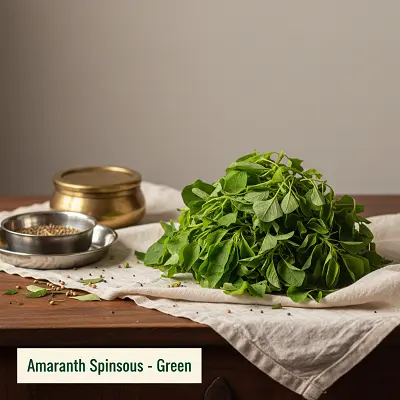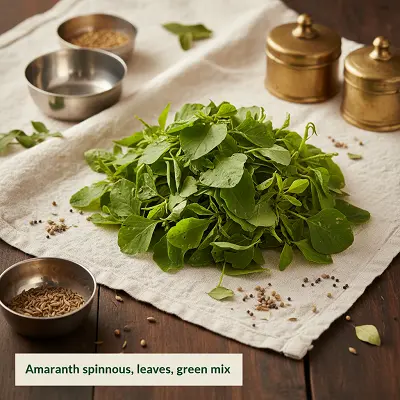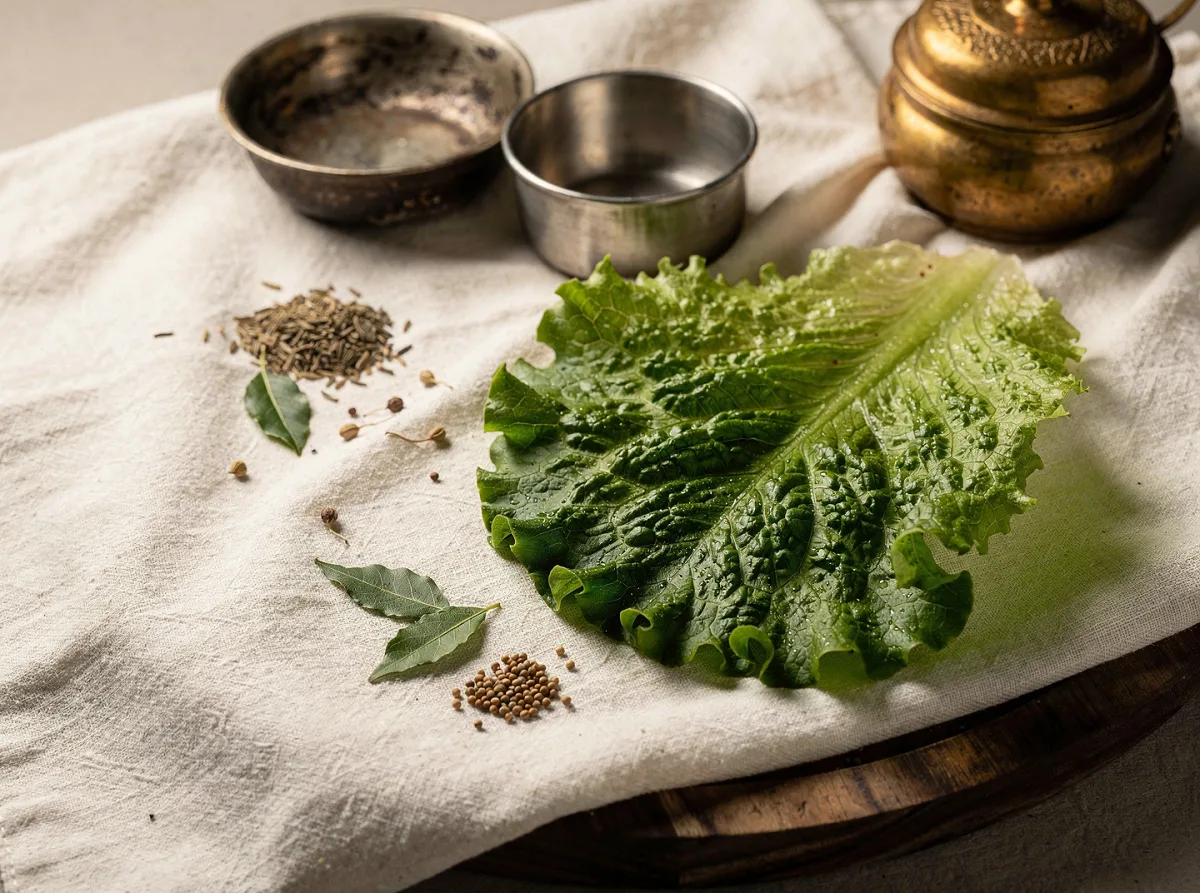
Lettuce
Lactuca sativa · Also known as Letyoos, salad patta, green leafy lettuce, Lactuca sativa
Lettuce (letyoos) is a tender, crisp green leafy vegetable with soft, pale-green to deep-green leaves that curl or layer depending on the variety. Fresh and cooling, it is eaten raw in salads, sliced into raita, or lightly wilted in quick stir-fries. A light, hydrating vegetable...
Nutrition per 100 g
Mean values ± IFCT published SD (edible portion).
More macros
Classification
About Lettuce
What it is
Lettuce (letyoos) is a tender, leafy green vegetable with soft, delicate leaves that range from pale green to deep emerald, depending on variety and growing conditions. The leaves are crisp and watery, with a mild, slightly sweet flavour and no bitterness. Eaten fresh and raw, it is a cooling, hydrating addition to the modern Indian kitchen, increasingly found in city markets, supermarkets, and home gardens. (IFCT 2017, Ref #C025)
Use in Indian Kitchen
Lettuce is most commonly used raw in fresh salads, often paired with tomato, cucumber, and a squeeze of lemon or lime. It is shredded into raita with curd and mild spices, layered into wraps and rolls, or used as a bed for chaat toppings. In some households, tender leaves are lightly wilted with mustard seeds and curry leaves for a quick sabzi, though this is less traditional than raw use. The mild flavour makes it a neutral base for dressings with tamarind, chaat masala, or simple oil and salt. Store-bought lettuce is often iceberg or romaine; home gardens may yield softer butterhead or loose-leaf varieties.
Key Nutrients
Lettuce is predominantly water (around 95%), making it very low in calories. It contains small amounts of fibre, vitamin K, folate, and vitamin A (in darker varieties). Minerals include potassium and small traces of iron and calcium. Exact nutrient composition varies by variety and growing conditions; refer to IFCT 2017 for detailed micronutrient profiles.
Health Benefits (Evidence-based)
- High water content supports hydration and may aid digestion when eaten raw.
- Vitamin K content supports bone health and blood clotting function.
- Folate and other B vitamins support energy metabolism and cell function.
- Low calorie density makes it suitable for weight-conscious meal planning.
- Fibre, though modest, contributes to digestive regularity when part of a varied diet.
- Antioxidants in darker varieties (such as romaine) may offer mild anti-inflammatory support.
Culinary Uses (Vegetarian)
- Raw in mixed green salads with tomato, cucumber, and lemon dressing.
- Shredded into raita with curd, cumin, and green chilli.
- Layered in wraps, rolls, and sandwiches.
- As a bed for chaat, bhel, or sev tameta.
- Lightly wilted in a quick tadka with mustard seeds and curry leaves.
- Mixed into curd-based dips or served alongside dal and rice.
Caution
- Wash thoroughly under running water before eating raw, as lettuce leaves can harbour soil and bacteria.
- Those with sensitive digestion may find raw lettuce difficult; cooking lightly may help.
- Lettuce is high in water and low in calories; it should not be relied upon as a sole source of nutrition.
- Store-bought lettuce may be treated with pesticides; organic varieties are preferable if available.
References
- Indian Council of Medical Research - National Institute of Nutrition (ICMR-NIN). Indian Food Composition Tables (IFCT) 2017. Reference #C025 - Green Leafy Vegetables.
- Fulgoni, V. L., Davenport, A. E. (2013). "Association between dark-green and orange vegetable consumption and mortality in a representative sample of U.S. adults." Nutrition Research, 33(1), 48-54. (General reference for leafy green benefits; specific Indian studies limited.)
Health Benefits
- Antioxidant
- Hydration
- Supports Digestion
- Weight Management Support
- Heart Health Support
Sourcing & Storage
Storage
Store lettuce in the refrigerator in a sealed plastic bag or airtight container to retain moisture and prevent wilting. Keep away from ethylene-producing fruits (apples, bananas, tomatoes) which accelerate browning. Do not wash before storage; wash only just before eating. In warm Indian climates, use the coldest part of the fridge (usually the lower shelf) and consume within 2-3 days for best crispness.
Shelf Life
Fresh lettuce keeps for 3-5 days when stored in the refrigerator in a sealed container. Loose-leaf varieties wilt faster than iceberg or romaine. Once washed and cut, use within 1-2 days. Lettuce does not freeze well and loses texture when thawed.
Check Before You Buy
Choose lettuce with crisp, firm leaves free of brown spots, slime, or yellowing. The leaves should snap cleanly when bent. Avoid heads that feel soft, mushy, or have a slimy texture, which indicate decay or age. Smell should be fresh and mild; any sour or fermented odour means the lettuce is past its prime. When buying from a mandi or kirana, check that the outer leaves are intact and the head is not bruised or crushed from stacking.
In Ayurveda
Lettuce is not extensively documented in classical Ayurvedic texts as a primary therapeutic ingredient. However, its cool, moist nature and high water content align with Ayurvedic principles of balancing Pitta dosha. In contemporary Ayurvedic practice, lettuce is sometimes recommended as a cooling, light vegetable suitable for warm seasons and for individuals with excess heat in the body.