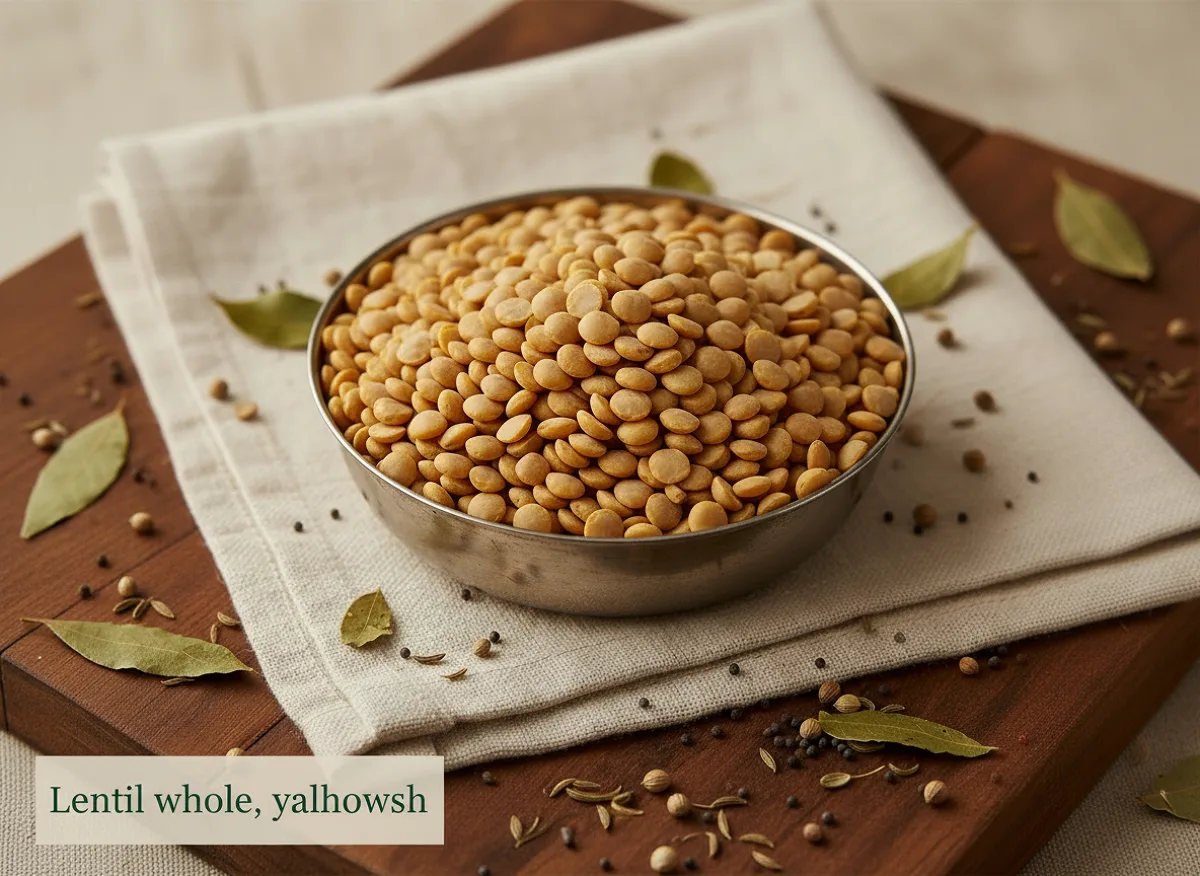
Lentil whole, yellowish
Lens culinaris · Also known as Yellow lentil, moong dal (whole), whole mung bean, Indian yellow lentil
Whole yellow lentils are small, round legumes with a mild, slightly sweet flavour and tender texture when cooked. Common across Indian kitchens in both North and South, they cook quickly into a soft dal, feature in sambar and rasam, and are often tempered with cumin and asafoetid...
Nutrition per 100 g
Edible portion values from the master catalog.
More macros
Classification
About Lentil whole, yellowish
What it is
Whole yellow lentils are small, round legumes with a pale golden-yellow hue and smooth skin. When cooked, they soften quickly into a creamy consistency without losing their shape entirely, making them ideal for everyday dal and sambar. They are a staple across Indian households, valued for their mild flavour and quick cooking time. (IFCT 2017, Ref #B015)
Use in Indian Kitchen
Yellow lentils are the backbone of simple, nourishing meals. In the South, they feature prominently in sambar (spiced vegetable stew), rasam (tangy lentil soup), and kootu (lentil and vegetable curry). In the North, they are simmered into everyday dal, often tempered with cumin seeds, dried red chilli, and asafoetida for warmth and flavour. A practical tip: rinse well before cooking to remove dust, and add a pinch of turmeric during cooking for better digestion and a golden hue. They pair beautifully with rice, roti, or flatbread, and are often combined with leafy greens or root vegetables for a complete meal.
Key Nutrients
Yellow lentils are rich in plant-based protein, dietary fibre, and complex carbohydrates. They also provide iron, folate, magnesium, and polyphenols. Exact nutrient composition per serving is available in IFCT 2017 tables.
Health Benefits (Evidence-based)
- May support steady blood sugar levels due to their low glycaemic index and high fibre content.
- Linked to improved digestive health through soluble and insoluble fibre.
- Plant-based protein source suitable for vegetarian and vegan diets.
- May help maintain healthy cholesterol levels when part of a balanced diet.
- Traditionally used in Ayurvedic cooking to support overall vitality and strength.
Culinary Uses (Vegetarian)
- Everyday dal - simmered with turmeric, cumin, and asafoetida.
- Sambar - combined with vegetables, tamarind, and sambar powder.
- Rasam - thinned into a tangy, peppery soup with tomato and spices.
- Kootu - cooked with seasonal vegetables and coconut paste (South Indian style).
- Dal fry - tempered with ghee, mustard seeds, and curry leaves for a richer finish.
- Lentil flour (besan-like) when ground, used in batters and doughs.
Caution
- Raw lentils contain enzyme inhibitors; always cook thoroughly before eating.
- Those with kidney disease or gout should consult a healthcare provider, as lentils contain purines.
- May cause bloating or gas in some individuals; soaking and rinsing before cooking can help reduce this.
References
- Indian Council of Medical Research - National Institute of Nutrition (ICMR-NIN). Indian Food Composition Tables (IFCT 2017). Reference #B015 - Grain Legumes category.
- Vaya, A. & Mahmood, S. S. (2006). Polyphenols, inflammation and cardiovascular disease. Current Pharmaceutical Design, 12(16), 1931-1945.
Sourcing & Storage
Storage
Store whole yellow lentils in an airtight container in a cool, dry place away from direct sunlight and moisture. In humid climates (common across India), keep them in a sealed glass jar or food-grade plastic container with a tight lid. Avoid storing near strong-smelling spices or foods, as lentils can absorb odours. Keep away from heat sources and damp areas such as near the kitchen sink or in a cupboard above the stove.
Shelf Life
When stored properly in an airtight container in a cool, dry place, whole yellow lentils remain fresh and cook well for 6-12 months. After opening, transfer to an airtight container and use within 3-4 months for best quality. In warm, humid climates, shelf life may be shorter; store in the refrigerator or freezer if you live in a very hot region. Once cooked, dal keeps refrigerated for 3-4 days and can be frozen for up to 3 months.
Check Before You Buy
Look for whole yellow lentils that are uniform in colour, bright golden-yellow, and free from cracks, discolouration, or dark spots. They should feel dry and not clump together when you run your fingers through them. Avoid lentils that smell musty or rancid, which indicates age or poor storage. Check the packaging date if buying pre-packed; fresher stock is preferable. At the mandi or kirana shop, ask for recently arrived stock and inspect a handful for debris, stones, or broken pieces before purchasing.
In Ayurveda
In classical Ayurveda, whole mung bean (साबुत मूंग) is considered one of the most balancing legumes, suitable for all three doshas when properly prepared. It is traditionally described as having a sweet (madhura) rasa and cooling (sheeta) virya, making it particularly beneficial during summer and for pitta-dominant constitutions.
Ayurvedic texts recommend mung dal as a staple for convalescence and gentle detoxification (langhana). When cooked with ghee, ginger, and cumin, it is believed to support digestive fire (agni) without aggravating sensitive digestion. Sprouted mung is valued for its enhanced nutritional potency and is often recommended in seasonal cleansing protocols.