Lentil whole, brown
Lens culinaris · Also known as Brown lentil, sabut masoor, whole masoor dal, Puy lentil
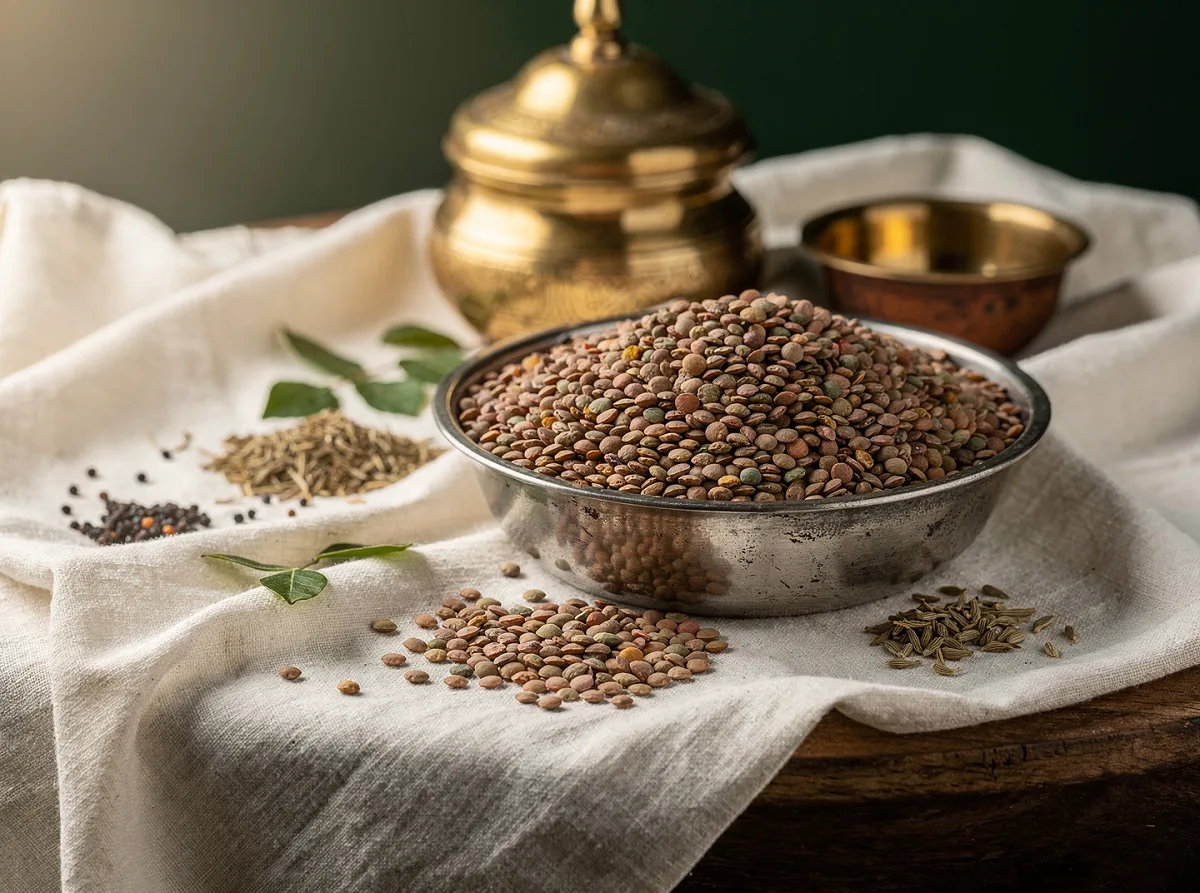
Brown lentils (sabut masoor) are earthy, firm legumes with a nutty flavour and slate-grey to brown skin. Unlike red or yellow split lentils, these whole seeds hold their shape beautifully when cooked, making them ideal for dal curries, soups, and one-pot rice dishes across Indian...
Nutrition per 100 g
Mean values ± IFCT published SD (edible portion).
More macros
Classification
About Lentil whole, brown
What it is
Brown lentils (sabut masoor in Hindi) are whole, unhulled legume seeds with a firm texture and earthy, slightly nutty taste. The seed coat is slate-grey to dark brown, and the interior is yellow-green. Unlike red masoor dal (which is split and hulled), brown lentils retain their shape during cooking, absorbing flavours while staying intact - a quality that makes them prized in dal preparations, khichdi, and vegetable curries across Indian kitchens. (IFCT 2017, Ref #B014)
Use in Indian Kitchen
Brown lentils are cooked into thick, warming dals - particularly popular in North Indian homes where they are tempered with cumin, asafoetida, and ghee. In South India, they feature in sambar and rasam, lending body and earthiness. A handful simmered with rice and turmeric makes simple khichdi, comfort food for both everyday meals and when digestion needs rest. The firm texture also suits lentil soups paired with tomato and ginger, or mixed vegetable curries where the dal should not turn mushy. Soak for 30 minutes before cooking to reduce cooking time and aid digestibility.
Key Nutrients
Brown lentils are rich in plant-based protein (approximately 25% by weight when dry), dietary fibre, and complex carbohydrates. They contain iron, folate, magnesium, and polyphenols. Exact nutrient composition per 100g is available in IFCT 2017, Ref #B014.
Health Benefits (Evidence-based)
- High in plant protein and fibre, supporting satiety and steady energy release.
- May help maintain stable blood sugar levels due to low glycaemic index and resistant starch content.
- Good source of folate and iron, nutrients important for vegetarians and during pregnancy.
- Polyphenols and fibre may support digestive health and beneficial gut bacteria.
- Traditionally used in Ayurvedic cooking as a grounding, nourishing food for all constitutions.
Culinary Uses (Vegetarian)
- Thick dal curries tempered with ghee, cumin, and asafoetida.
- Sambar and rasam bases in South Indian cooking.
- Khichdi with rice, turmeric, and ghee.
- Lentil soups with tomato, ginger, and coriander.
- Mixed vegetable curries and one-pot rice dishes.
- Cold lentil salads with cucumber, tomato, and lemon dressing (after cooking and cooling).
Caution
- Raw lentils contain enzyme inhibitors and lectins; always cook thoroughly before eating.
- High fibre content may cause bloating in those unaccustomed to legumes; introduce gradually and ensure adequate hydration.
- Soaking and discarding the water before cooking reduces oligosaccharides and improves digestibility.
- Those with kidney disease or on certain medications should consult a healthcare provider regarding legume intake.
References
- Indian Council of Medical Research - National Institute of Nutrition (ICMR-NIN). Indian Food Composition Tables 2017 (IFCT 2017). Reference #B014 - Grain Legumes category.
- Vaya, J. & Mahmood, S. (2006). Flavonoid content in leaf extracts of the fig (Ficus carrica L.), carob (Ceratonia siliqua L.) and locust bean (Ceratonia siliqua L.) trees. Journal of Agricultural and Food Chemistry, 54(20), 7651-7654. [General legume polyphenol reference]
Sourcing & Storage
Storage
Store brown lentils in an airtight container (glass jar or sealed plastic box) in a cool, dry place away from direct sunlight and moisture. Keep away from strong-smelling spices and foods, as lentils absorb odours easily. In humid climates (monsoon or coastal regions), store in the refrigerator or freezer to prevent moisture absorption and weevil infestation. Ensure the container is sealed tightly after each use.
Shelf Life
Whole brown lentils keep for 6-12 months when stored in an airtight container in a cool, dry place. In humid conditions or after opening, use within 3-6 months for best quality and flavour. Once cooked, refrigerate in an airtight container for up to 4 days, or freeze for up to 3 months.
Check Before You Buy
Look for whole, unblemished seeds with a uniform slate-grey to dark brown colour. Avoid lentils with cracks, discolouration, or a musty smell, which indicate age or moisture damage. Check the packaging date if buying pre-packed; loose lentils from a trusted kirana or mandi vendor should be free of stones, dust, and debris. A quick visual sort before cooking removes any foreign matter. Avoid lentils that feel damp or clumpy, a sign of moisture exposure.
In Ayurveda
In Ayurvedic tradition, brown lentil (sabut masoor) is considered balancing for both Vata and Pitta doshas. Its rasa (taste) is sweet, and its vipaka (post-digestive effect) is also sweet, making it gentle on digestion and nourishing to the body. Classical texts value whole lentils for their grounding and strengthening properties, particularly in convalescent diets and for building ojas (vital essence). When prepared with ghee and mild spices, it is traditionally recommended to support recovery after illness and to promote overall vitality.