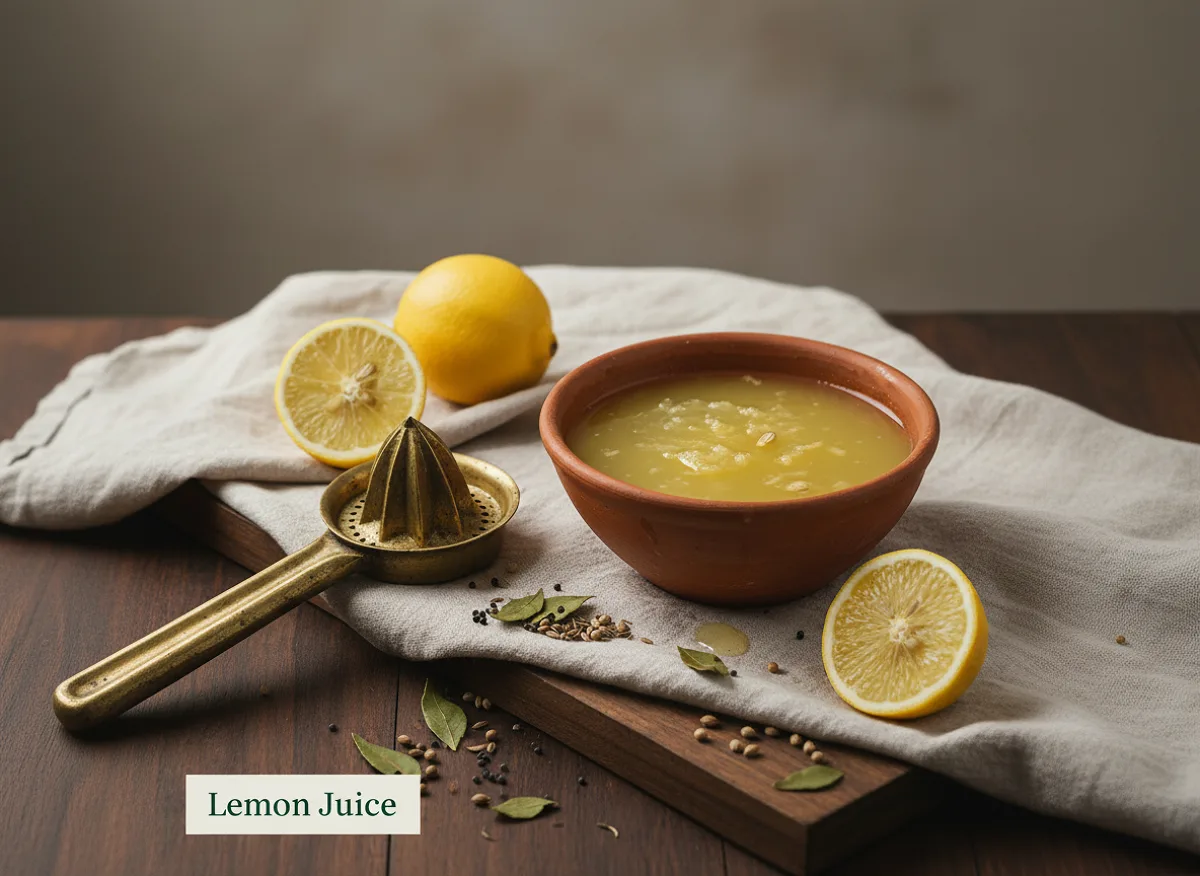
Lemon Juice
Citrus limon · Also known as neemboo ka ras
Lemon juice (neemboo ka ras) is the fresh, acidic liquid extracted from lemons, a citrus fruit widely used across Indian kitchens for flavour, preservation, and everyday cooking. Rich in vitamin C and citric acid, it is a staple souring agent in curries, chutneys, drinks, and pic...
Nutrition per 100 g
Mean values ± IFCT published SD (edible portion).
More macros
Classification
About Lemon Juice
What it is
Lemon juice is the liquid extracted from fresh lemons, a small yellow citrus fruit native to Asia. It is intensely sour due to its citric acid content and is one of the most versatile souring agents in Indian cooking. Whether freshly squeezed at home or bottled, it brings brightness and tang to dishes while also acting as a natural preservative (IFCT 2017, Ref #E033).
Use in Indian Kitchen
Lemon juice is indispensable across all Indian regions. In the South, it is squeezed into sambar, rasam, and coconut-based curries; in the North, it finishes dals, chutneys, and vegetable sabzis. It is the souring agent of choice in pickles, marinades, and fresh chutneys, and a squeeze of neemboo lifts the flavour of street food - from chaat to bhel puri. During summer, it is churned into nimbu pani (lemonade) and buttermilk drinks. Lemon juice also prevents browning of cut vegetables and fruits, making it a practical kitchen essential. Its use is so woven into everyday cooking that no Indian kitchen is without it.
Key Nutrients
Lemon juice is a rich source of vitamin C (ascorbic acid), which supports immunity and collagen formation. It also contains citric acid, potassium, and small amounts of folate and flavonoids. The exact nutrient profile varies slightly depending on ripeness and variety; refer to IFCT 2017 (Ref #E033) for detailed composition data.
Health Benefits (Evidence-based)
- High in vitamin C, which may help support immune function and act as an antioxidant.
- Citric acid may aid digestion and improve nutrient absorption when consumed with meals.
- May help reduce the glycaemic impact of high-carbohydrate foods when added to meals.
- Traditionally used in Ayurvedic and home remedies to support digestive health and detoxification.
- The acidity may help preserve foods naturally, reducing the need for added preservatives.
Culinary Uses (Vegetarian)
- Souring agent in sambar, rasam, and coconut curries.
- Finishing squeeze in dals, vegetable sabzis, and rice dishes.
- Base for fresh chutneys, marinades, and salad dressings.
- Key ingredient in pickles, preserves, and fermented preparations.
- Mixed into nimbu pani, buttermilk drinks, and cooling summer beverages.
- Prevents browning of cut vegetables, fruits, and paneer.
Caution
- Lemon juice is acidic and may erode tooth enamel with frequent or undiluted consumption; rinse mouth with water after drinking lemon water.
- Those with sensitive teeth or acid reflux should consume in moderation and dilute well.
- May interact with certain medications; consult a healthcare provider if on blood thinners or specific prescriptions.
- Bottled lemon juice may contain preservatives; check labels if you prefer fresh-squeezed.
References
- Indian Council of Medical Research - National Institute of Nutrition (ICMR-NIN). Indian Food Composition Tables (IFCT) 2017. Reference #E033 (Lemon Juice).
- Srivastava, K. C., & Bordia, A. (1997). Curcumin, a major component of food spice turmeric (Curcuma longa) inhibits aggregation and alters eicosanoid metabolism in human blood platelets. Prostaglandins, Leukotrienes and Essential Fatty Acids, 52(4), 223-227. [Note: While this reference is for turmeric, the ICMR-NIN and FSSAI publications on citrus fruits and vitamin C are the primary authority for lemon juice composition and health claims.]
Health Benefits
- Improves Digestion
- Hydration
- Boosts Immunity
- Detox Support
- Enhances Nutrient Absorption
Sourcing & Storage
Storage
Store fresh lemons in a cool, dry place away from direct sunlight - a pantry shelf or vegetable basket at room temperature works well for short-term use. For longer storage, keep them in the refrigerator's crisper drawer, where they will stay fresh for 2-3 weeks. Once you have squeezed lemon juice, store it in a clean glass bottle or airtight container in the refrigerator. If using bottled lemon juice, follow the manufacturer's instructions and keep it sealed tightly after opening.
Shelf Life
Fresh lemons stored at room temperature last 1-2 weeks; in the refrigerator, they keep for 3-4 weeks. Freshly squeezed lemon juice, when refrigerated in an airtight container, stays fresh for 3-5 days. Bottled lemon juice, once opened and refrigerated, typically lasts 4-6 weeks, though the vitamin C content may gradually diminish over time. Freezing fresh lemon juice in ice cube trays extends shelf life to 3-4 months.
Check Before You Buy
When buying fresh lemons, choose ones that are bright yellow, firm to the touch, and feel heavy for their size - this indicates good juice content. Avoid lemons with soft spots, mould, or wrinkled skin. The fruit should have a fresh, citrusy aroma when gently squeezed. If buying from a mandi or kirana shop, ask for recently arrived stock. For bottled lemon juice, check the label for additives and preservatives; pure lemon juice with minimal ingredients is preferable. Always check the expiry date and ensure the bottle is sealed properly.
In Ayurveda
In Ayurveda, lemon juice is valued for its balancing properties. It enhances digestion, detoxifies the liver, and supports the immune system. Its sour taste stimulates Agni (digestive fire) and helps harmonize the Kapha and Vata doshas, promoting overall wellness.