Ladies Finger
Abelmoschus esculentus · Also known as Okra, भिंडी (bhindi), ढिंडी (dhindi)
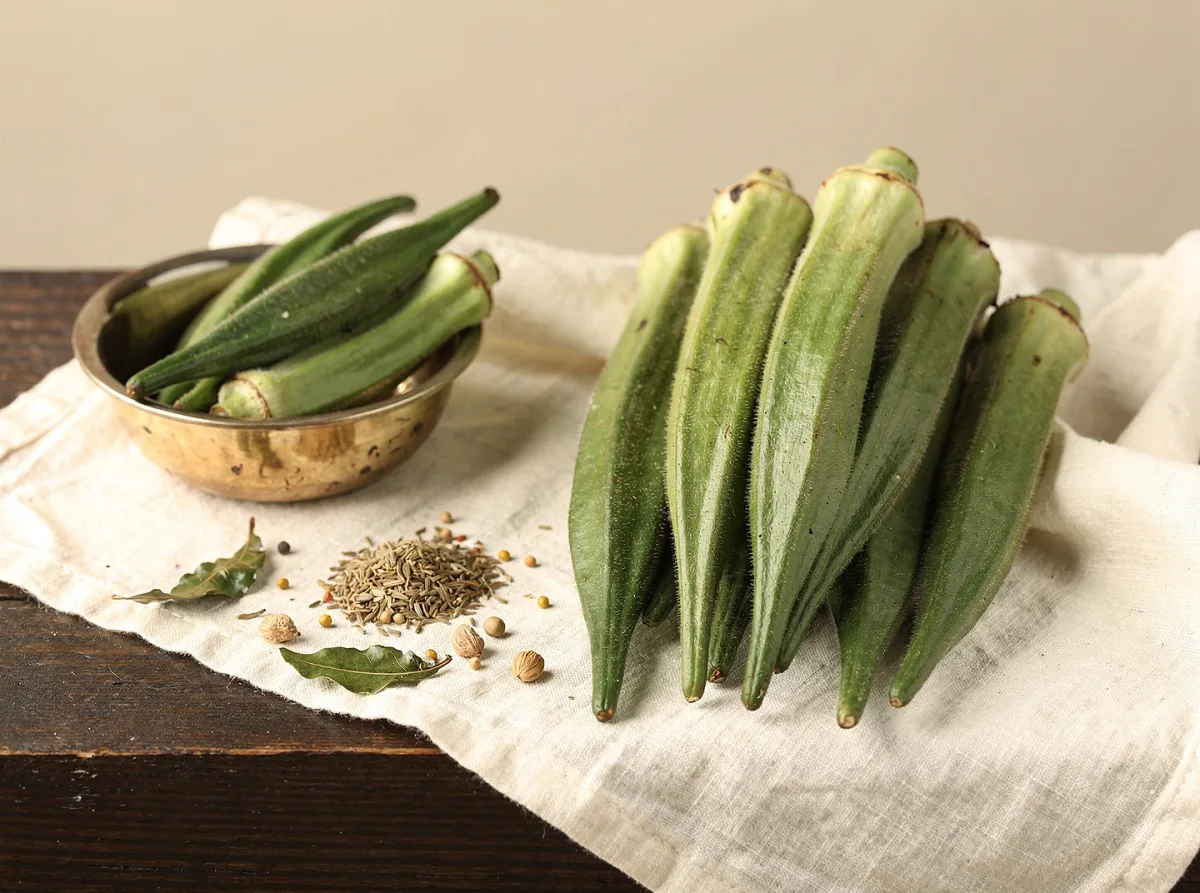
Ladies finger, or bhindi, is a slender green pod vegetable with a mild, slightly earthy flavour and a tender, mucilaginous texture when cooked. Fresh and crisp when young, it's a beloved summer vegetable across Indian kitchens - pan-fried until golden and crispy in the classic bh...
Nutrition per 100 g
Mean values ± IFCT published SD (edible portion).
More macros
Classification
About Ladies Finger
What it is
Ladies finger, known as bhindi in Hindi and regional Indian languages, is a slender, ridged green pod vegetable with a soft, slightly sticky interior when cooked. The pods are typically 7-10 cm long, with a pale green to deep green skin and a tender flesh that releases a mild mucilage when cut or cooked. Fresh bhindi is eaten whole or sliced, and is a seasonal favourite in summer kitchens across North and South India. (IFCT 2017, Ref #D056)
Use in Indian Kitchen
Bhindi is most celebrated in its simplest form - bhindi fry (or bhindi masala) - where young pods are sliced lengthwise or into rings, tossed with onions, tomatoes, and a tempering of mustard seeds and curry leaves, then cooked over high heat until crispy and golden. In South Indian kitchens, it appears in sambar and kootu curries, paired with lentils and coconut. North Indian cooks stuff whole pods with a spiced besan-onion filling for stuffed bhindi. A practical tip: slice bhindi just before cooking and avoid stirring too much during frying - this reduces the slimy texture and helps achieve that desirable crispy finish. Dry roasting the pods lightly before slicing also helps.
Key Nutrients
Bhindi is a good source of dietary fibre, vitamin C, and folate. It also contains vitamin K, magnesium, and small amounts of calcium and iron. The mucilaginous compounds in the pods are rich in soluble fibre, which supports digestive health.
Health Benefits (Evidence-based)
- High in soluble fibre, which may help support healthy digestion and regular bowel function.
- Rich in vitamin C, linked to immune support and collagen formation.
- Contains folate, important for cell division and DNA synthesis, especially during pregnancy.
- Low in calories and fat, making it a light, nutrient-dense vegetable for everyday meals.
- The mucilage may help soothe the digestive tract and support gut health.
- Contains antioxidants and polyphenols, which may help protect cells from oxidative stress.
Culinary Uses (Vegetarian)
- Bhindi fry - sliced or whole pods pan-fried with onions, tomatoes, and spices until crispy.
- Stuffed bhindi - whole pods filled with a spiced besan and onion mixture, then shallow-fried.
- Sambar and kootu curries - simmered with lentils, coconut, and South Indian spices.
- Pickles and preserves - young pods brined or fermented with mustard seeds and chilli.
- Tempering and tadka - added to dal or rice dishes for texture and mild flavour.
Caution
- Bhindi contains oxalates; those with a history of kidney stones may wish to consume in moderation.
- The mucilaginous texture can be off-putting to some; cooking at high heat and avoiding excess moisture helps reduce sliminess.
- Always wash thoroughly before use to remove any soil or residue.
References
- Indian Council of Medical Research - National Institute of Nutrition (ICMR-NIN). Indian Food Composition Tables 2017. Hyderabad: NIN; 2017. [Reference code D056 - Other Vegetables category]
- Gemede HF, Ratta N. Nutritional composition and health benefits of okra (Abelmoschus esculentus): A review. Journal of American Science. 2015;11(8):101-111.
Health Benefits
- Supports Digestion
- Boosts Immunity
- Weight Management Support
- Heart Health Support
- Regulates Blood Sugar
Sourcing & Storage
Storage
Store fresh bhindi in a breathable cloth bag or perforated plastic bag in the refrigerator's vegetable drawer, away from moisture and direct contact with other produce. In warm, humid Indian climates, use the coldest part of your fridge (usually the lower shelf). Avoid sealing bhindi in airtight containers, as trapped moisture will cause it to rot quickly. If you have a cool, dry pantry (below 15°C), bhindi can be stored there for 1-2 days in a paper bag.
Shelf Life
Fresh bhindi keeps for 3-4 days in the refrigerator when stored properly in a breathable bag. Once cut or cooked, use within 1-2 days. Bhindi does not freeze well due to its high water content and tender texture; freezing causes it to become mushy when thawed. For longer storage, consider making pickles or drying the pods.
Check Before You Buy
Choose young, tender pods that are bright green, firm to the touch, and free of blemishes, dark spots, or soft patches. Avoid pods that are yellowing, overly large, or feel limp - these are past their prime and will be tough and fibrous. The pod should snap cleanly when bent. At the mandi or kirana shop, select bhindi that was harvested within the last 1-2 days; older stock loses its tender texture quickly. Check that the pods are not slimy or damp, which indicates decay or poor storage.
In Ayurveda
In Ayurvedic tradition, okra is considered cooling (sheet virya) and is believed to help pacify excess pitta dosha. Its mucilaginous quality is thought to support digestive health and soothe the intestinal tract. However, detailed classical Ayurvedic texts do not contain extensive specific references to okra, as it is a relatively modern addition to many Indian regional cuisines.