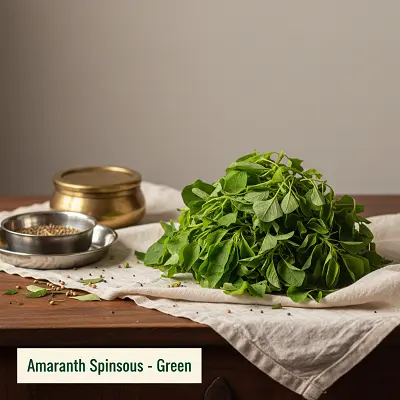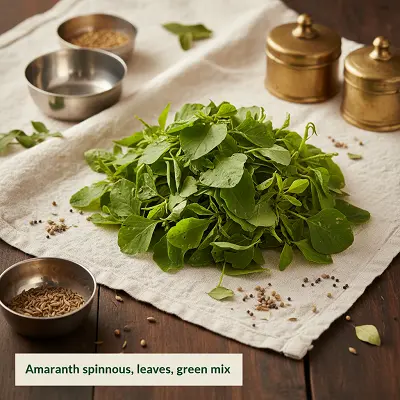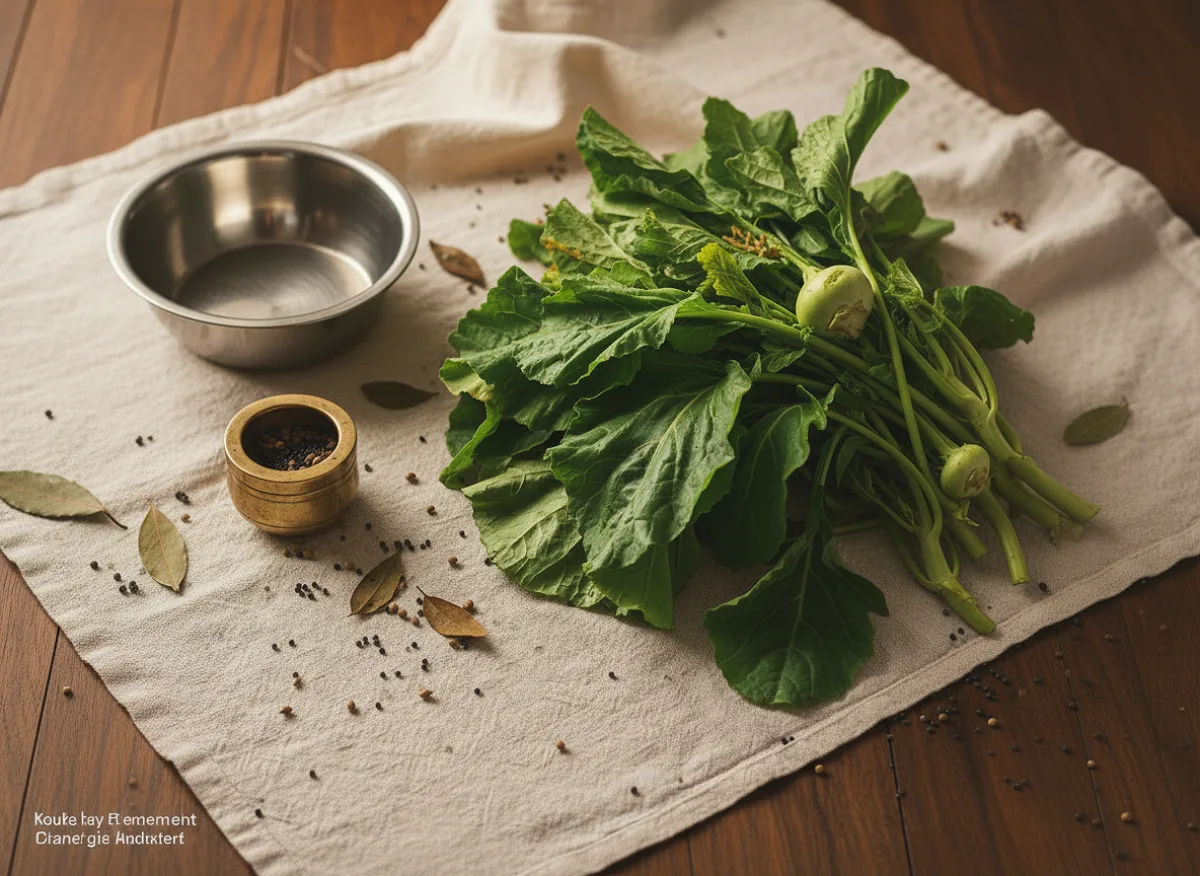
Knol-Khol Leaves
Brassica oleracea var. gongylodes · Also known as Kohlrabi greens, Ganth gobi ka sag, Gath kobi na pan, Ool kobi, Olkopi sag, Knol Knol, Wild cabbage greens, Gedde kosu, Hakh Monji, Phan Kubi, Knol-khol cheera, Kobi Maru Kabi, Nol khol ka patta, Salgam ko saag, Ulgobi saga, Knol-Khol keerai, Knol-khol akulu
Knol-khol leaves (गन्थ गोभी का साग, ganth gobi ka sag) are the tender, crinkled green tops of the kohlrabi plant, with a mild cabbage-like flavour and soft texture when cooked. Fresh and nutritious, they are a beloved green leafy vegetable across Indian home kitchens, especially...
Nutrition per 100 g
Edible portion values from the master catalog.
More macros
Classification
About Knol-Khol Leaves
What it is
Knol-khol leaves (also called ganth gobi ka sag, gath kobi na pan in regional markets) are the tender, crinkled green foliage that crowns the kohlrabi bulb. They have a soft, slightly waxy texture and a mild, sweet cabbage-like flavour - far gentler than their parent bulb. Fresh leaves are bright green, with prominent veins and a delicate structure that wilts quickly when heated. These leaves are a seasonal treasure in Indian kitchens, particularly valued in North India, Gujarat, and parts of the South during winter and early spring. (IFCT 2017, Ref #C024)
Use in Indian Kitchen
Knol-khol leaves shine in simple, flavour-forward preparations. In North India, they are commonly wilted into dal - especially moong or masoor - with a tadka of ghee, mustard seeds, and dried red chilli. In Gujarat and Rajasthan, the leaves are often kneaded into bajra or wheat dough for rotli and parathas, adding a subtle green colour and mild flavour. They also work beautifully in a quick sabzi: temper with cumin and mustard seeds, add the chopped leaves with a pinch of turmeric and salt, and finish with a squeeze of lemon. A practical tip: wash and chop the leaves just before cooking, as they wilt and lose moisture quickly. Pair them with warming spices like turmeric, cumin, and asafoetida to balance their delicate nature.
Key Nutrients
Knol-khol leaves are rich in vitamin C, vitamin A (as beta-carotene), and folate. They also provide dietary fibre, calcium, iron, and potassium. Like other brassica greens, they contain glucosinolates and other phytonutrients. Exact nutrient composition per 100 g is available in IFCT 2017 (Ref #C024).
Health Benefits (Evidence-based)
- May support immune function due to high vitamin C content.
- Linked to bone health through calcium and vitamin K presence.
- Traditionally used to aid digestion and support liver wellness in Ayurvedic practice.
- Fibre content may help maintain healthy cholesterol and blood sugar levels.
- Antioxidants and phytonutrients may offer general anti-inflammatory support.
Culinary Uses (Vegetarian)
- Wilted into dal (moong, masoor, chana) with ghee and tempering spices.
- Kneaded into wheat or bajra dough for rotli, paratha, and flatbreads.
- Quick stir-fried sabzi with mustard seeds, cumin, turmeric, and a pinch of asafoetida.
- Added to sambar or rasam for a mild green note.
- Blanched and folded into paneer or curd-based dishes.
- Dried and stored as a winter green for off-season use.
Caution
- Those with thyroid conditions should consume in moderation, as brassica greens contain goitrogens; cooking reduces their activity.
- Individuals on blood-thinning medications should maintain consistent intake due to vitamin K content.
- Wash thoroughly before use to remove soil and any pesticide residue.
References
- Indian Council of Medical Research - National Institute of Nutrition (ICMR-NIN). Indian Food Composition Tables 2017 (IFCT 2017). Reference #C024 - Green Leafy Vegetables category.
- Gopalan, C., Rama Sastri, B. V., & Balasubramanian, S. C. (2016). Nutritive Value of Indian Foods. National Institute of Nutrition, ICMR, Hyderabad.
Sourcing & Storage
Storage
Store knol-khol leaves in a breathable cloth bag or perforated plastic bag in the vegetable crisper of your refrigerator at 4-8°C. Do not wash before storage, as excess moisture encourages wilting and decay. Keep away from ethylene-producing fruits (apples, bananas) which accelerate yellowing. In warm, humid Indian climates, use the leaves within 1-2 days of purchase for best quality and flavour.
Shelf Life
Fresh knol-khol leaves keep for 3-5 days in the refrigerator when stored in a cool, dry crisper drawer. Once cooked, they should be consumed within 1-2 days. For longer storage, blanch and freeze in airtight containers for up to 2-3 months, though texture will soften after thawing.
Check Before You Buy
Look for bright, tender green leaves with no yellowing, browning, or wilting at the edges. The leaves should feel crisp and snap cleanly when bent - a sign of freshness. Avoid bunches with slimy patches, strong sulphurous odour, or insect damage. If buying from a mandi or kirana store, ask for leaves harvested the same day; pre-packed leaves in plastic should show no condensation or decay inside the pack. Reject any leaves that smell musty or feel soft and waterlogged.
In Ayurveda
Knol-khol leaves do not have a well-documented classical Ayurvedic entry in traditional texts. However, as a member of the Brassica family, these leaves are traditionally considered to support digestion and general wellness in Indian home cooking. In contemporary Ayurvedic practice, leafy greens of this type are often regarded as light, nourishing, and suitable for balancing digestion when prepared with warming spices such as mustard seeds, cumin, and asafoetida.