Kidney Beans
Phaseolus vulgaris · Also known as Rajma, Raazamen, Red kidney beans, Lal rajma
Kidney beans (राजमा, rajma) are deep red, kidney-shaped legumes prized across Indian home kitchens for their creamy texture and earthy flavour when cooked. Whole dried beans that soften into tender morsels, they are the soul of North Indian rajma-chawal and South Indian sambhar,...
Nutrition per 100 g
Mean values ± IFCT published SD (edible portion).
More macros
Classification
About Kidney Beans
What it is
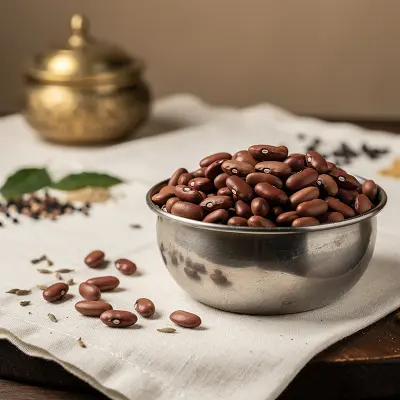
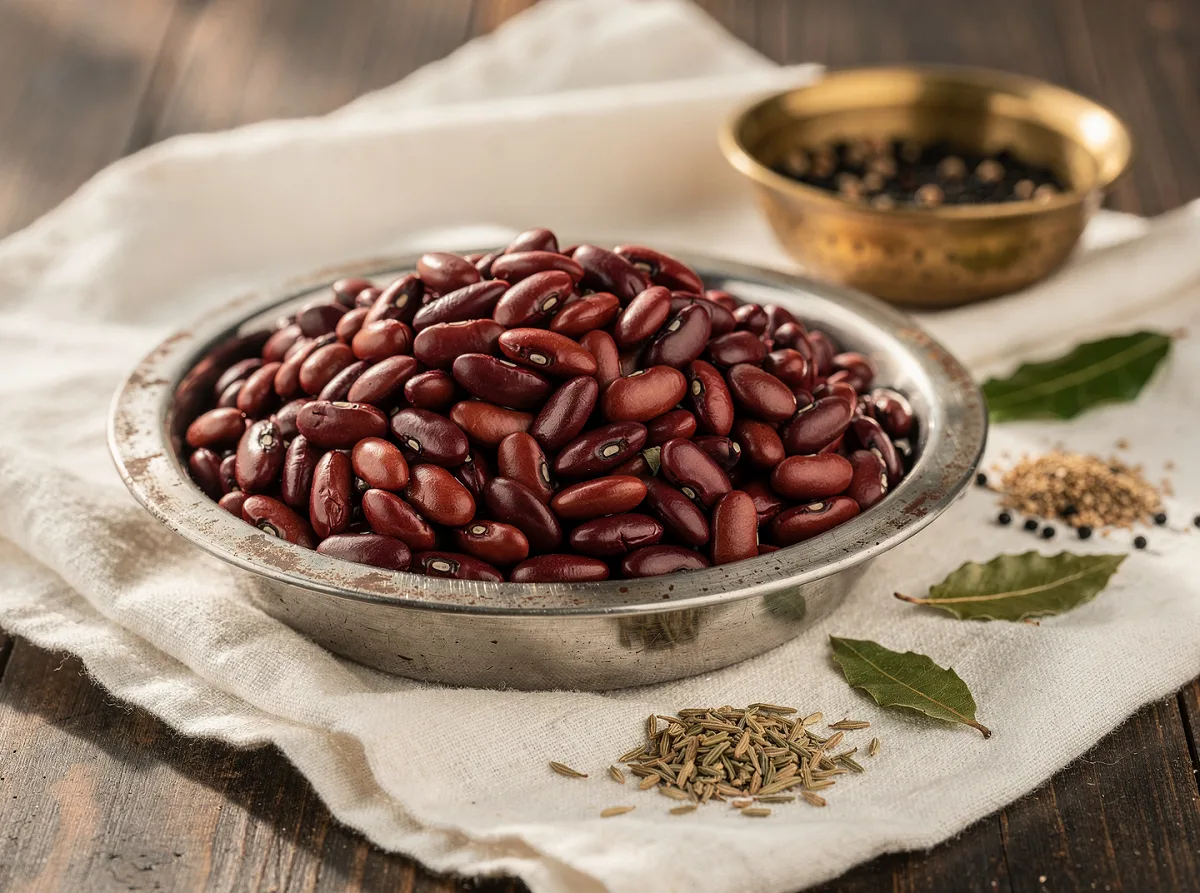
Kidney beans (राजमा, rajma) are medium-sized, deep crimson legumes with a distinctive curved kidney shape and smooth, glossy skin. Sold dried in Indian markets and kirana shops, they belong to the Phaseolus vulgaris family and are a cornerstone of Indian vegetarian protein. When cooked, they yield a soft, creamy interior with a mild, slightly nutty flavour that absorbs spices beautifully. (IFCT 2017, Ref #B020)
Use in Indian Kitchen
Rajma is most celebrated in North Indian rajma-chawal - a humble, warming one-pot meal of kidney beans simmered with onions, tomatoes, ginger, garlic, and warm spices, served over steamed rice. In South India, they feature in sambhar and kootu curries, often paired with coconut and tamarind. Rajma is also stuffed into parathas, mashed into dals, or slow-cooked in a pressure cooker with cumin seeds and asafoetida for a simple weeknight dinner. A practical tip: always soak dried beans overnight and discard the soaking water before cooking to reduce gas and improve digestibility. Pressure-cook for 15-20 minutes after soaking for tender, evenly cooked beans.
Key Nutrients
Kidney beans are rich in plant-based protein, dietary fibre, and complex carbohydrates. They contain iron, magnesium, potassium, and folate, along with polyphenols and other antioxidants. Exact nutrient composition per 100g cooked beans is available in IFCT 2017 tables.
Health Benefits (Evidence-based)
- High in plant protein and fibre, supporting sustained energy and digestive health.
- May help regulate blood sugar levels due to low glycaemic index and resistant starch content.
- Rich in folate and iron, traditionally valued in Indian vegetarian diets for blood health and energy.
- Polyphenols and antioxidants may support heart health and reduce inflammation.
- Fibre content linked to healthy cholesterol levels and improved gut microbiota.
Culinary Uses (Vegetarian)
- Rajma-chawal: slow-cooked beans with tomato, onion, ginger-garlic paste, and warm spices.
- Sambhar and kootu curries in South Indian cooking.
- Rajma paratha filling: mashed cooked beans mixed with spices and herbs.
- Dal-like preparations: pressure-cooked beans tempered with cumin, mustard seeds, and curry leaves.
- Salads and cold preparations when cooked and cooled.
Caution
- Raw or undercooked kidney beans contain lectins and should never be eaten raw; always soak and cook thoroughly.
- May cause bloating or gas in sensitive individuals; soaking overnight and discarding water helps reduce this.
- Those with gout or uric acid concerns should consume in moderation, as beans are purine-rich.
- Individuals on blood-thinning medications should maintain consistent intake, as beans contain vitamin K.
References
- Indian Council of Medical Research - National Institute of Nutrition (ICMR-NIN). Indian Food Composition Tables 2017 (IFCT 2017). Reference #B020 - Grain Legumes category.
- Vaya, J. & Mahmood, S. (2006). Polyphenol content in legume seeds and the effect of soaking and cooking on their total phenolic content. Journal of Food Composition and Analysis, 19(4), 326-331.
Health Benefits
- Antioxidant
- Supports Digestion
- Supports Heart Health
- Helps Blood Sugar Control
- Provides Satiety
Sourcing & Storage
Storage
Store dried kidney beans in an airtight container in a cool, dry place away from direct sunlight and moisture. In Indian climates with high humidity, keep beans in a sealed glass jar or food-grade plastic container in a cupboard or pantry. Avoid storing near spices or strong-smelling foods, as beans absorb odours easily. Once cooked, refrigerate in an airtight container for up to 4 days, or freeze in portions for up to 3 months.
Shelf Life
Dried kidney beans stored properly in an airtight container last 1-2 years, though they cook best within the first year. After opening a packet, transfer to an airtight container to maintain freshness. Cooked beans keep refrigerated for 3-4 days and frozen for up to 3 months. Canned kidney beans (if used) should be consumed within 1-2 days of opening and refrigerated in an airtight container.
Check Before You Buy
When buying dried kidney beans from a mandi or kirana shop, look for beans that are uniformly deep red or crimson in colour, with no discolouration, cracks, or shrivelling. Avoid beans with visible insect holes, mould, or a musty smell. If buying from bulk bins, check that the beans are dry and free of debris or stones. Packaged beans should have a clear expiry date and no signs of moisture inside the packet. Squeeze a few beans gently - they should feel firm and not brittle or hollow.
In Ayurveda
In Ayurvedic tradition, kidney beans (rajma) are considered a nourishing legume with a sweet taste (madhura rasa) and heavy quality (guru guna). They are believed to balance Vata and Pitta doshas, making them particularly valued in winter cooking. Classical texts recommend preparing rajma with warming spices such as ginger and turmeric to aid digestion and reduce any gas-forming tendency. The beans are traditionally seen as a strength-building (balya) food, especially for those recovering from illness or engaged in physical labour.