Kesar Mango, ripe
Mangifera indica · Also known as Aam, Aam paka, Kesar kedi, Mvina hannu, Aamb, Soh pieng, Mam pazham, Heinou Amunba, Amba piklela, Ampa, Amba pachila, Aamra, Mampazham, Mamidi pandu, Pakka aam
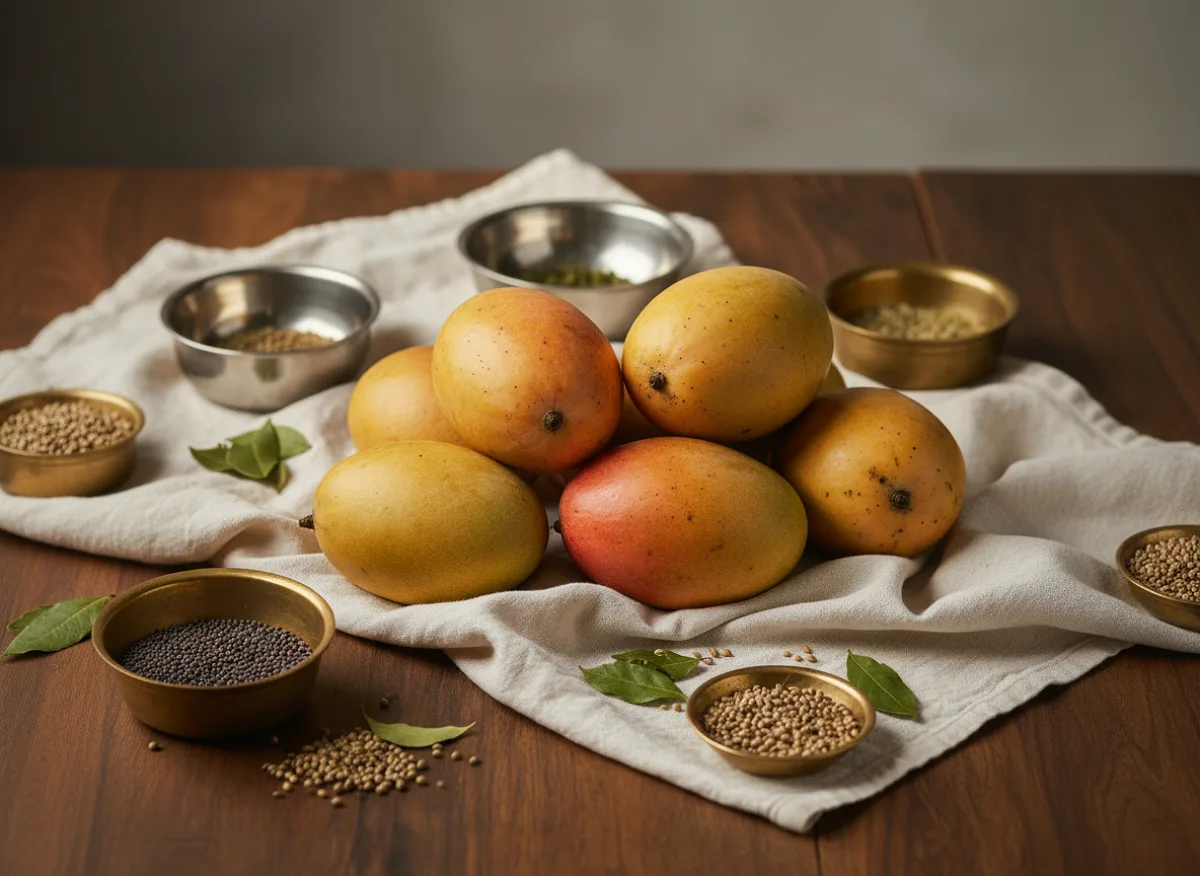
Kesar mango (केसर आम, kesar aam) is a premium Indian mango variety prized for its golden-yellow skin, creamy saffron-hued flesh, and rich, aromatic sweetness. Ripe kesar mangoes are soft to the touch, fragrant, and perfect for eating fresh, blending into lassi, or making mango pu...
Nutrition per 100 g
Mean values ± IFCT published SD (edible portion).
More macros
Classification
About Kesar Mango, ripe
What it is
Kesar mango is a premium cultivar of Mangifera indica, native to Gujarat and now grown across India. When ripe, the skin turns a distinctive golden-yellow with occasional red blush, and the flesh becomes creamy, butter-soft, and deep saffron-orange in colour. The aroma is intensely floral and sweet, and the flavour is rich, aromatic, and less fibrous than many other varieties. Ripe kesar mangoes are eaten fresh, chilled, or used in traditional Indian sweets, drinks, and preserves. (IFCT 2017, Ref #E039)
Use in Indian Kitchen
Ripe kesar mangoes are a summer staple across Indian homes. In the North, they are sliced and eaten chilled with a pinch of salt and chaat masala, or blended into mango lassi with yoghurt and cardamom. In the South, they are used to make mango pulp (aam ka ras) for payasam, mango pickle (aam ka achar), and mango rice (aam bhaat). The creamy texture makes them ideal for mango shrikhand, mango barfi, and mango ice cream. A practical tip: store ripe mangoes in the fridge to slow ripening and extend freshness; serve chilled for the best flavour and texture.
Key Nutrients
Ripe kesar mangoes are a good source of vitamin C, vitamin A (as beta-carotene), dietary fibre, and natural sugars. They also contain small amounts of potassium, magnesium, and polyphenolic compounds. Exact nutrient composition varies with ripeness and growing conditions; refer to IFCT 2017 for detailed micronutrient profiles.
Health Benefits (Evidence-based)
- Rich in vitamin C, which supports immune function and skin health.
- Contains beta-carotene and lutein, linked to eye health and antioxidant protection.
- Dietary fibre aids digestive regularity and may support healthy cholesterol levels.
- Natural polyphenols may have anti-inflammatory and antioxidant properties.
- Potassium content supports heart health and blood pressure regulation.
- Traditionally valued in Indian cuisine as a cooling, energising summer fruit.
Culinary Uses (Vegetarian)
- Fresh sliced or cubed, chilled with salt and chaat masala.
- Blended into mango lassi, mango smoothies, and mango milkshakes.
- Mango pulp for payasam, kheer, and mango ice cream.
- Mango pickle (aam ka achar) and mango chutney.
- Mango shrikhand and mango barfi.
- Mango rice (aam bhaat) and mango dal.
Caution
- High natural sugar content; those managing blood sugar should consume in moderation.
- Mangoes are high in calories; portion control is advisable for weight management.
- Some individuals may experience mild digestive discomfort if eaten in excess or on an empty stomach.
- Allergic reactions are rare but possible; those with tree nut or latex allergies should be cautious.
References
- Indian Council of Medical Research - National Institute of Nutrition (ICMR-NIN). Indian Food Composition Tables (IFCT 2017). Reference #E039 (Mango, ripe).
- Srivastava, K. C., & Bordia, A. (1997). Curcumin, a major component of food spice turmeric (Curcuma longa) inhibits aggregation and alters eicosanoid metabolism in human blood platelets. Prostaglandins, Leukotrienes and Essential Fatty Acids, 52(4), 223-227. [Note: For general antioxidant and anti-inflammatory context in tropical fruits.]
Sourcing & Storage
Storage
Store ripe kesar mangoes in the refrigerator (4-6°C) in a breathable paper bag or perforated plastic bag to slow ripening and prevent moisture loss. Keep them away from direct sunlight and strong-smelling foods. If you prefer to ripen mangoes at room temperature, place them in a paper bag on a kitchen shelf away from direct heat. Once ripe, transfer to the fridge to extend shelf life.
Shelf Life
Ripe kesar mangoes keep for 5-7 days in the refrigerator when stored properly. At room temperature, they remain fresh for 2-3 days. Once cut, store mango pieces in an airtight container in the fridge and consume within 2-3 days. Mango pulp can be frozen in ice cube trays for up to 3 months.
Check Before You Buy
Choose kesar mangoes with a golden-yellow skin and a sweet, floral aroma near the stem end. The fruit should yield slightly to gentle pressure but not be mushy. Avoid mangoes with dark spots, cracks, or a fermented smell, which indicate overripeness or spoilage. When buying from a mandi or kirana shop, ask the vendor to select mangoes that are just ripe or slightly firm if you plan to store them for a few days. Packaged kesar mangoes should have no visible bruises or blemishes.
In Ayurveda
In Ayurveda, the ripe mango is revered as the "king of fruits" (फलों का राजा). It is classified as sweet (madhura rasa), heavy (guru guna), and warming (ushna virya) in nature. Ripe mango is believed to pacify Vata dosha, strengthen digestion (agni), and nourish the body with vital energy. Traditionally, it has been consumed during summer to cool the body, support immunity, and promote overall vitality. However, individuals with a Kapha constitution should consume it in moderation due to its heavy and sweet qualities.