Karonda fruit
Carissa carandas · Also known as Karonda, Karamda, Carissa carandas, Christ's thorn, Natal plum, Bengal currant
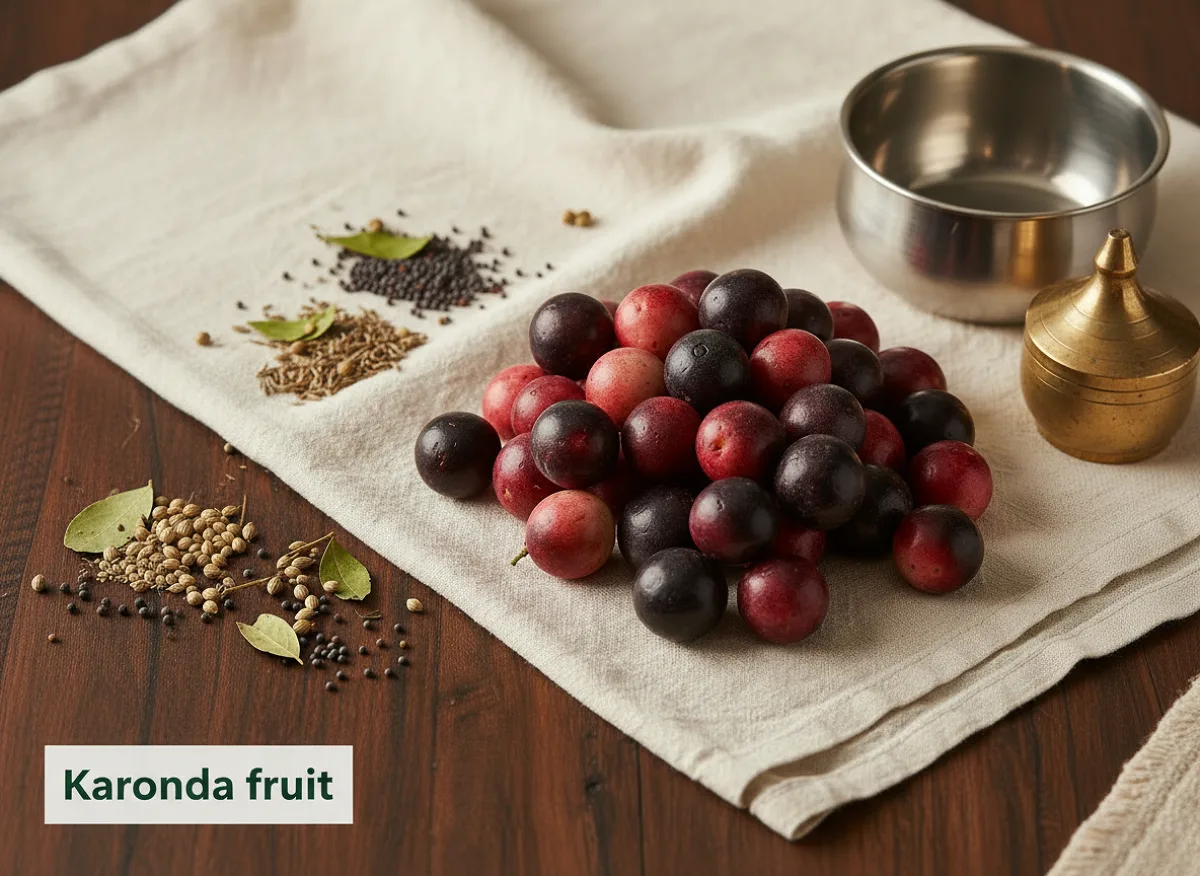
Karonda (करौंदा) is a small, dark purple or black berry with thin, glossy skin and soft, juicy flesh dotted with tiny seeds. Native to India and widely grown in home gardens across the subcontinent, it has a sweet-tart flavour that sharpens when raw and mellows when cooked. Fresh...
Nutrition per 100 g
Edible portion values from the master catalog.
More macros
Classification
About Karonda fruit
What it is
Karonda (करौंदा, also spelled karamda) is a small, oval berry about the size of a marble, with thin, glossy skin that ripens from green to deep purple or black. The flesh is soft, juicy, and pale pink, studded with tiny edible seeds. Native to India and thriving in warm, tropical climates, karonda grows on a thorny shrub and is a common sight in village gardens, orchards, and temple compounds across the country. It is eaten fresh during the monsoon and early winter months, and is equally prized for preserves and chutneys. (IFCT 2017, Ref #E032)
Use in Indian Kitchen
Karonda is most often eaten fresh, plucked straight from the tree and popped into the mouth - the sweet-tart burst is a childhood memory for many. In the kitchen, it shines in karonda pickle (a tangy, spiced preserve), karonda chutney (ground with green chilli and jaggery for a sweet-sour condiment), and karonda jam. In South India, it is sometimes stewed with jaggery and cardamom for a simple dessert. The fruit pairs beautifully with tamarind, jaggery, and warming spices like cinnamon and clove. A practical tip: if the raw fruit tastes too sharp, cook it briefly with a touch of jaggery to balance the tartness and bring out its natural sweetness.
Key Nutrients
Karonda is a good source of vitamin C, which supports immunity and skin health. It also contains dietary fibre, which aids digestion, and small amounts of calcium and phosphorus. The fruit is low in calories and contains natural sugars and organic acids that give it its characteristic tart flavour. Exact nutrient composition per 100 g is not widely documented in standard Indian food tables; for precise figures, refer to IFCT 2017.
Health Benefits (Evidence-based)
- High in vitamin C, which may help strengthen immunity and support collagen formation in skin and connective tissue.
- Contains dietary fibre, which supports healthy digestion and may help maintain steady blood sugar levels.
- The organic acids and tannins in karonda are traditionally linked to digestive health and may have mild astringent properties.
- Low in calories and naturally sweet, making it a lighter fruit choice for those watching sugar intake.
- Traditionally used in Ayurvedic and folk medicine as a cooling, digestive tonic during hot months.
Culinary Uses (Vegetarian)
- Fresh fruit - eaten raw as a snack or dessert.
- Karonda pickle - spiced preserve with mustard seeds, fenugreek, and chilli.
- Karonda chutney - ground with green chilli, ginger, and jaggery for a sweet-sour condiment.
- Karonda jam - cooked down with sugar or jaggery and cardamom for a spread.
- Stewed with jaggery and spices as a simple dessert or cooling drink base.
- Dried karonda - occasionally sun-dried and used in chutneys or eaten as a chewy snack.
Caution
- Karonda seeds are edible but hard; some people prefer to spit them out, especially if eating large quantities.
- The fruit is acidic and may cause mild mouth puckering or tooth sensitivity if eaten in very large amounts raw.
- Those with sensitive digestion should eat in moderation, as the tannins and acids may cause mild stomach upset in susceptible individuals.
- Karonda is seasonal and perishable; buy and use within a few days of purchase for best flavour and texture.
References
- Indian Council of Medical Research - National Institute of Nutrition (ICMR-NIN). Indian Food Composition Tables (IFCT 2017). Reference #E032 (Fruits category).
- Sharma, R. & Sharma, A. (2011). "Carissa carandas L. (Karonda): A review of its traditional uses, phytochemistry and pharmacology." Journal of Ethnopharmacology, regional Indian medicinal plant databases and traditional Ayurvedic texts.
Sourcing & Storage
Storage
Store fresh karonda in a cool, dry place or in the refrigerator in a breathable container or paper bag to prevent moisture buildup. Keep away from direct sunlight and strong-smelling foods. In warm, humid Indian climates, refrigeration extends shelf life significantly. Do not wash until just before eating, as moisture speeds decay. Pickles and jams should be stored in airtight glass jars in a cool, dark cupboard away from heat and light.
Shelf Life
Fresh karonda keeps for 3-5 days at room temperature in cool weather, or 7-10 days in the refrigerator when stored in a paper bag or breathable container. Once ripe, the fruit softens quickly and is best eaten within 2-3 days. Karonda pickle and jam, when properly sealed and stored in a cool, dark place, will keep for several months to over a year, depending on sugar content and sterilisation method.
Check Before You Buy
Choose karonda that is fully ripe - the skin should be deep purple or black, not green or partially coloured. The fruit should feel slightly soft to gentle pressure, indicating juiciness, but not mushy or bruised. Avoid berries with cracks, blemishes, or signs of mould. Fresh karonda should have a mild, sweet aroma. When buying from a mandi or kirana shop, select berries that are uniform in size and colour; reject any that are shrivelled or leaking juice. If buying pre-packed karonda, check the date and ensure the container is clean and free of condensation.
In Ayurveda
In classical Ayurvedic texts, karonda is recognized as a cooling (शीत / sheet) and digestive fruit. Its sour taste (अम्ल रस / amla rasa) and light quality make it suitable for pacifying excess Pitta, particularly during summer months. Traditional practitioners have recommended it for supporting digestive fire (अग्नि / agni) and promoting healthy bowel function.