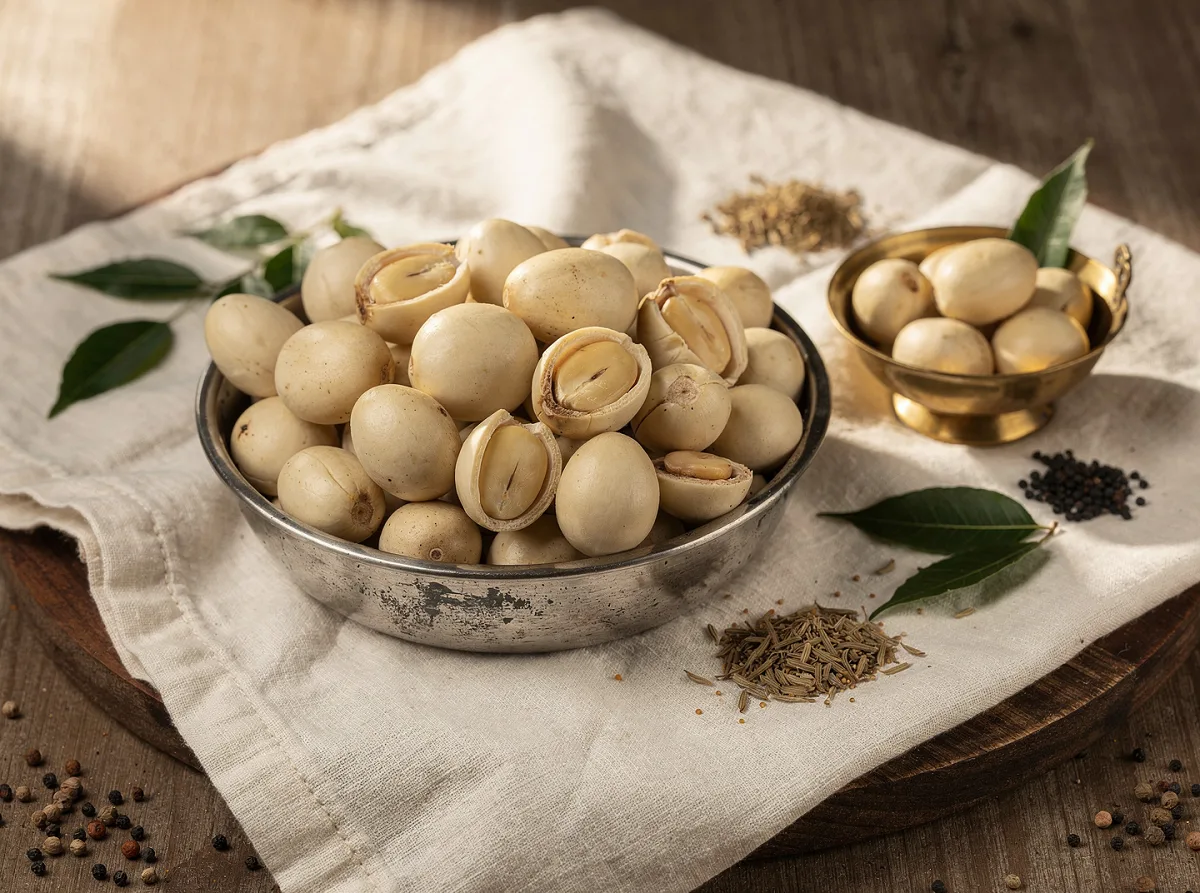
Jackfruit seed, mature
Artocarpus heterophyllus · Also known as Kothal guti, Kanthal seed, Phanas seed, Kathal seed, Chakka seed, Theibong Maru seed, jackfruit kernel
Jackfruit seeds (कंठाल के बीज, kanthal ke beej) are starchy, cream-coloured kernels from inside the large spiky fruit, eaten boiled, roasted, or curried across South and East India. Firm and slightly sweet when cooked, they work beautifully in sambar, curries, and as a snack. Boi...
Nutrition per 100 g
Mean values ± IFCT published SD (edible portion).
More macros
Classification
About Jackfruit seed, mature
What it is
Jackfruit seeds are the starchy kernels found inside the large, spiky jackfruit (Artocarpus heterophyllus), common in South India, the Northeast, and coastal regions. Each seed is roughly the size of an almond, with a cream or pale yellow interior and a thin brown skin. When cooked, they become soft and slightly sweet, with a texture similar to boiled potato or chestnut. Fresh seeds are extracted from ripe fruit and can be used immediately or dried for storage. (IFCT 2017, Ref #D052)
Use in Indian Kitchen
Jackfruit seeds are a beloved ingredient in South Indian sambar, where they add body and mild sweetness alongside lentils and vegetables. In Kerala, they are curried with coconut and spices (chakka curry), and in the Northeast, they feature in traditional stews and rice dishes. Boil seeds for 15-20 minutes until tender before adding to any dish; this softens the dense starch and makes them easier to digest. A practical tip: peel the thin brown skin after boiling if you prefer a smoother texture, though many home cooks leave it on for extra fibre. Roasted seeds also make a crunchy snack with a hint of nuttiness.
Key Nutrients
Jackfruit seeds are rich in carbohydrates and starch, with moderate protein and fibre. They contain potassium, magnesium, and small amounts of iron and zinc. Exact nutrient composition varies with ripeness and preparation; refer to IFCT 2017 (Ref #D052) for detailed micronutrient profiles.
Health Benefits (Evidence-based)
- High in resistant starch, which may support digestive health and stable blood sugar when boiled and cooled.
- Good source of plant-based protein and fibre, making them filling and supportive of satiety.
- Contain potassium and magnesium, minerals linked to heart and bone health.
- Traditionally used in Ayurvedic and folk medicine as a nourishing, grounding food for recovery and strength.
- Low in fat and naturally gluten-free, suitable for many dietary patterns.
Culinary Uses (Vegetarian)
- Boiled and added to sambar, rasam, and vegetable curries.
- Curried with coconut milk, onion, and spices (chakka curry, Kerala style).
- Roasted as a snack with salt or mild spices.
- Mashed into dal or lentil dishes for added body and nutrition.
- Steamed and served with rice and pickle as a simple side dish.
Caution
- Always boil or cook thoroughly before eating; raw seeds are hard to digest and may cause stomach discomfort.
- Those with nut allergies should be cautious, as jackfruit seeds may trigger cross-reactivity in sensitive individuals.
- High starch content means portion control is wise for people managing blood sugar or weight.
- Ensure seeds are from a ripe fruit; unripe seeds are inedible and bitter.
References
- Indian Council of Medical Research - National Institute of Nutrition (ICMR-NIN). Indian Food Composition Tables (IFCT) 2017. Reference #D052 (Other Vegetables - Jackfruit, seed, mature).
- Swami, S. B., Thakor, N. J., Haldi, S. S., & Patil, M. M. (2012). Jackfruit and its many functional components as related to human health: a review. Comprehensive Reviews in Food Science and Food Safety, 11(6), 565-576.
Sourcing & Storage
Storage
Fresh jackfruit seeds keep best in the refrigerator in an airtight container or sealed plastic bag for up to 5-7 days. For longer storage, boil seeds until tender, cool completely, and freeze in portions in freezer bags or containers for up to 3 months. Dried seeds (sun-dried or oven-dried at low heat) can be stored in a cool, dry, airtight jar away from direct light for 2-3 months. In humid Indian climates, keep dried seeds in the fridge or freezer to prevent mould.
Shelf Life
Fresh, uncooked jackfruit seeds last 5-7 days in the refrigerator. Boiled and cooled seeds keep for 3-4 days in the fridge in an airtight container. Frozen cooked seeds remain good for up to 3 months. Dried seeds, stored in an airtight container in a cool, dry place, last 2-3 months; in humid conditions, refrigerate or freeze to extend shelf life.
Check Before You Buy
When buying fresh jackfruit seeds from a mandi or vendor, look for seeds that are plump, cream-coloured, and free of dark spots, mould, or soft patches. The skin should be intact and not shrivelled. Avoid seeds that smell sour or fermented, which indicate spoilage. If buying pre-packed dried seeds, check the packaging date and ensure the bag is sealed; open the pack and smell - they should have a mild, slightly sweet aroma, not musty or rancid.
In Ayurveda
Jackfruit seeds are not extensively documented in classical Ayurvedic texts as a standalone ingredient. However, in traditional Indian household practice, they are considered nutritious and strengthening due to their high starch and carbohydrate content. The seeds are believed to be grounding and may help pacify Vata dosha when properly cooked and digested.