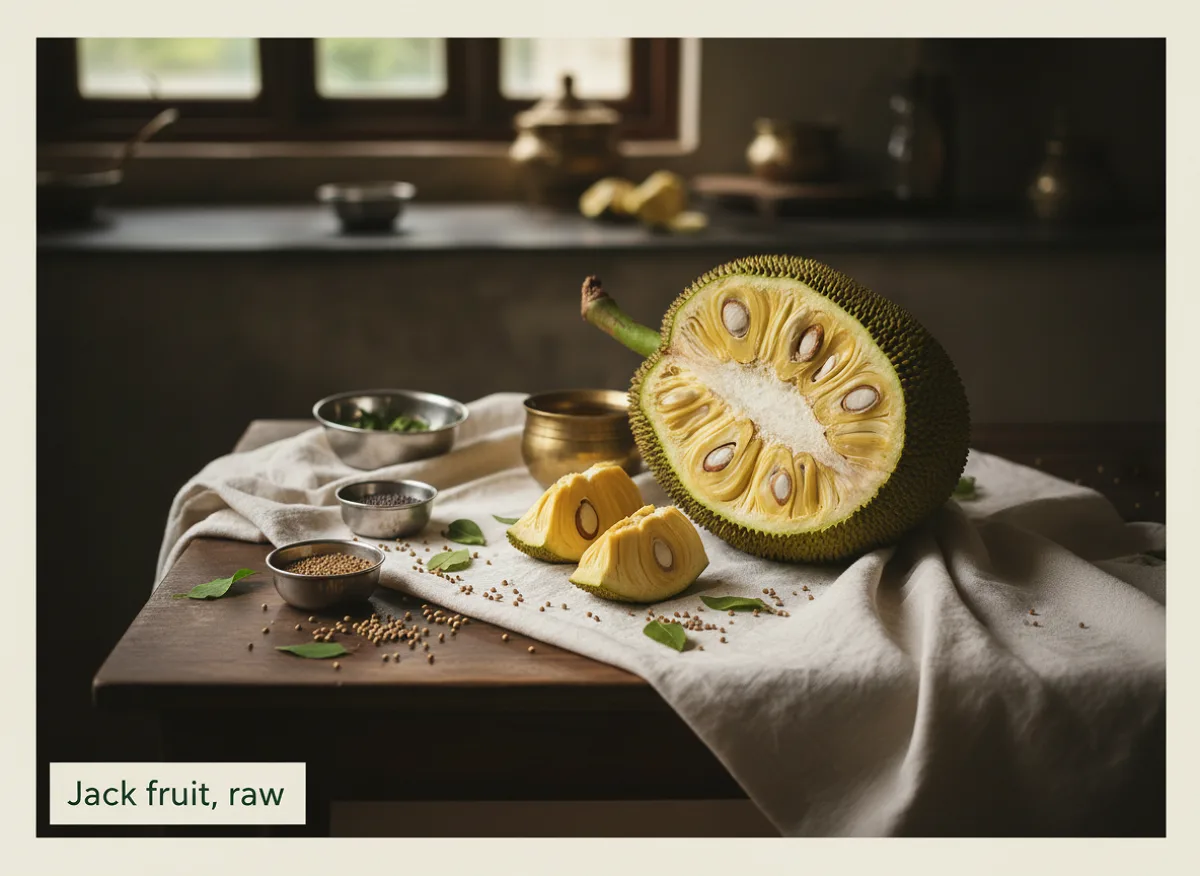
Jack fruit, raw
Artocarpus heterophyllus · Also known as Jackfruit, कटहल (kathal), कठहल, फनस (phanis), चक्कर (chakkar), artocarpus heterophyllus
Jack fruit (कटहल, kathal) is a large, spiky tropical fruit with creamy, fibrous yellow flesh and a mild, slightly sweet flavour. The raw fruit is firm and starchy, making it ideal for curries, stir-fries, and savoury preparations across South and West Indian kitchens. When cooked...
Nutrition per 100 g
Mean values ± IFCT published SD (edible portion).
More macros
Classification
About Jack fruit, raw
What it is
Jack fruit (कटहल, kathal) is a large, bumpy-skinned tropical fruit native to South Asia, now widely grown in Kerala, Karnataka, and Maharashtra. The raw fruit has pale yellow, fibrous flesh with a starchy texture and mild, faintly sweet taste. It is harvested before full ripeness for savoury cooking, when the flesh is firm and absorbs spices readily. The fruit is sold fresh in markets, often cut into chunks or sold as frozen pieces for convenience. (IFCT 2017, Ref #D051)
Use in Indian Kitchen
Raw jack fruit is a beloved vegetable in South Indian and Maharashtrian home cooking. In Kerala, it is curried with coconut and spices in kathal curry or chakka curry; in Karnataka and Maharashtra, it is stir-fried with onions and green chillies, or simmered in sambar and kootu. The fibrous texture makes it excellent for stuffing into parathas or mixing into rice dishes. A practical tip: soak cut pieces in salted water for 15-20 minutes before cooking to reduce any slight bitterness and prevent discolouration. Pairing with tamarind, coconut, and mustard tempering brings out its subtle flavour beautifully.
Key Nutrients
Raw jack fruit is a good source of dietary fibre, vitamin C, and potassium. It also contains B vitamins (thiamine, riboflavin, niacin) and small amounts of manganese and magnesium. The starchy carbohydrate content makes it filling and energy-dense compared to leafy greens.
Health Benefits (Evidence-based)
- High in dietary fibre, which may support digestive health and regular bowel function.
- Rich in vitamin C, linked to immune support and collagen formation.
- Contains potassium, traditionally valued for heart and muscle function.
- Low glycaemic index when raw, making it a gentler carbohydrate choice for blood sugar management.
- Provides polyphenols and antioxidants that may help reduce oxidative stress.
Culinary Uses (Vegetarian)
- Curried with coconut milk, mustard seeds, and curry leaves (South Indian style).
- Stir-fried with onions, green chillies, and turmeric as a simple dry sabzi.
- Simmered in sambar or kootu with lentils and vegetables.
- Stuffed into parathas with spiced onion and besan filling.
- Boiled and mashed into rice dishes or mixed vegetable preparations.
- Pickled with mustard seeds and fenugreek for long-term storage.
Caution
- Raw jack fruit is starchy and may cause bloating or heaviness if eaten in very large quantities; eat in moderation as part of a balanced meal.
- Some people may experience mild allergic reactions (itching or swelling of lips/mouth); discontinue if symptoms occur.
- The sticky latex in the skin and core can stain hands and clothes; wear gloves or oil your hands before handling.
- Not suitable for those with severe latex allergies, as cross-reactivity is possible.
References
- Indian Council of Medical Research - National Institute of Nutrition (ICMR-NIN). Indian Food Composition Tables (IFCT 2017). Reference #D051 (Other Vegetables category).
- Swami, S. B., Thakor, N. J., Haldi, S. S., & Patil, M. M. (2012). Jackfruit and its many functional components as related to human health: A review. Comprehensive Reviews in Food Science and Food Safety, 11(6), 565-576.
Sourcing & Storage
Storage
Store raw jack fruit pieces in an airtight container in the refrigerator at 4-7°C for up to 5-7 days. Keep away from direct sunlight and moisture. For longer storage, freeze cut pieces in a freezer bag or airtight container at -18°C for up to 3 months; thaw in the fridge before cooking. Whole uncut fruit keeps at room temperature (20-25°C) for 1-2 weeks in a cool, dry place, away from direct heat.
Shelf Life
Fresh raw jack fruit pieces last 5-7 days when refrigerated in an airtight container. Frozen pieces remain usable for up to 3 months when stored at -18°C or below. Once cooked, jack fruit curry or sabzi keeps refrigerated for 2-3 days in a covered container.
Check Before You Buy
Choose jack fruit that feels firm and heavy for its size, with a mild, slightly sweet aroma. The skin should be free of soft spots, dark patches, or mould. If buying pre-cut pieces from a mandi or kirana, check that the flesh is pale yellow and not discoloured or slimy. Avoid fruit with a fermented or unpleasant smell, which signals over-ripeness or spoilage. Frozen pieces should be solidly frozen with no ice crystals or freezer burn.
In Ayurveda
In classical Ayurvedic texts, jackfruit (कटहल) is not extensively documented as a primary therapeutic ingredient. However, in traditional Indian home medicine and regional Ayurvedic practice, raw jackfruit is considered to have a cooling (शीत) nature and is believed to support digestion when prepared with warming spices like turmeric and asafoetida. The fruit's fibrous quality is thought to aid bowel regularity. Ripe jackfruit, being sweeter and heavier, is traditionally used in moderation and paired with digestive aids to prevent sluggishness.