Ivy gourd, small
Coccinia cordifolia · Also known as Kunduli, Telakucha, Scarlet gourd, Ghole gluru, Konduri, Kowai, Tondekayi, Jhur thliem, Kova kai, Tondale, Kunduru, Donda kaya
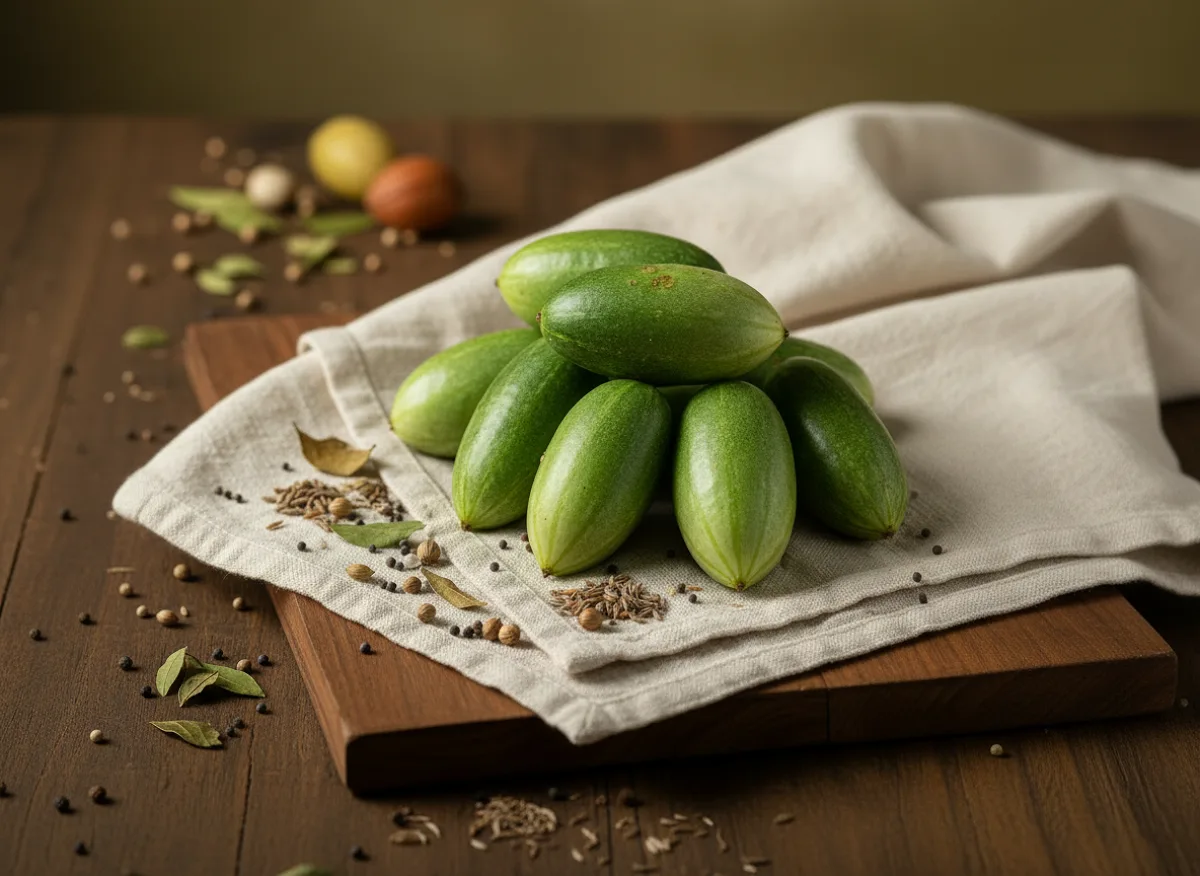
Ivy gourd (kunduli, telakucha) is a small, tender climbing vine vegetable with heart-shaped leaves and slender, ridged pods that turn deep red when ripe. The flesh is crisp, mild, and slightly sweet - quite different from its bitter relatives. Fresh and whole, it's a beloved summ...
Nutrition per 100 g
Edible portion values from the master catalog.
More macros
Classification
About Ivy gourd, small
What it is
Ivy gourd (kunduli in Hindi, telakucha in Bengali, tondekayi in Kannada) is a small, slender climbing vegetable with distinctive heart-shaped leaves and tender, ridged pods. The pods are typically 5-8 cm long, pale green when young and turning scarlet-red as they mature. The flesh is crisp, mild, and slightly sweet - quite unlike the bitter gourds it is sometimes confused with. It is eaten fresh and whole, and is a seasonal favourite across South and East India, particularly in monsoon and early summer. (IFCT 2017, Ref #D055)
Use in Indian Kitchen
Ivy gourd is most at home in sambar, where its tender pods absorb the spice and tamarind beautifully. In the South, it is also stir-fried with mustard seeds, curry leaves, and a touch of turmeric - a simple, everyday sabzi. In Bengal and Odisha, it appears in light curries and is sometimes paired with moong dal. The key to cooking it well is to add it late so the pods stay firm and don't turn mushy; overcooking dulls both texture and flavour. A light tempering of mustard seeds and dried chilli brings out its natural sweetness.
Key Nutrients
Ivy gourd is low in calories and a source of dietary fibre, vitamin C, and minerals including potassium and iron. Exact nutrient composition is available in IFCT 2017.
Health Benefits (Evidence-based)
- May support digestive health due to its fibre content and light, easily digestible nature.
- Linked to blood sugar management in traditional use; contains compounds that may help regulate glucose levels.
- Rich in vitamin C, which supports immune function and skin health.
- Low glycaemic index makes it suitable for balanced meals and weight management.
- Traditionally used in Ayurvedic and folk medicine to support liver and kidney function.
Culinary Uses (Vegetarian)
- Sambar - the classic South Indian vegetable pairing with lentils, tamarind, and spices.
- Stir-fried with mustard seeds, curry leaves, and turmeric for a simple everyday curry.
- Light dal curries, especially with moong dal or masoor dal.
- Pickled whole or sliced, often with turmeric and chilli.
- Added to vegetable kootu or mixed vegetable curries.
- Steamed and served with coconut chutney or a squeeze of lemon.
Caution
- Generally very safe and well-tolerated; no known toxins or common allergies.
- Those with sensitive digestion may find it easier to digest when cooked soft rather than raw.
- Pesticide residue is possible if not organically grown; wash thoroughly before use.
References
- Indian Council of Medical Research - National Institute of Nutrition (ICMR-NIN). Indian Food Composition Tables (IFCT) 2017. Reference #D055 (Other Vegetables category).
- Sivaraman Pillai, K. & Sumbul, A. (2011). Coccinia cordifolia: A review of its traditional uses and phytochemistry. Journal of Medicinal Plants Research, 5(2), 144-152.
Sourcing & Storage
Storage
Store ivy gourd in a cool, well-ventilated place or in the refrigerator's vegetable drawer, ideally in a perforated plastic bag or cloth to allow air circulation. Keep away from direct sunlight and moisture. In warm, humid climates, refrigeration extends shelf life significantly. Do not store in airtight containers, as condensation will cause the pods to rot quickly.
Shelf Life
When stored at room temperature in a cool, dry place, ivy gourd will keep for 2-3 days. In the refrigerator, it will last 5-7 days if kept in a perforated bag. Once cooked, store in an airtight container in the fridge for up to 2 days. It does not freeze well due to its delicate texture.
Check Before You Buy
Choose pods that are firm, unblemished, and bright green or just beginning to turn red. Avoid any that are soft, wrinkled, or have dark spots or blemishes. The pods should snap cleanly when bent. Smell for any musty or fermented odour, which indicates age or poor storage. At the mandi or kirana, buy from vendors with good turnover; ivy gourd is best eaten within a day or two of harvest.
In Ayurveda
In Ayurvedic tradition, ivy gourd is considered a light, easily digestible vegetable that balances Vata and Pitta doshas. Its bitter taste (rasa) is believed to stimulate digestive fire (agni) and support healthy digestion. The vegetable is traditionally used in home remedies to promote cooling effects during summer and to aid in gentle detoxification. Its mild astringent quality makes it suitable for those with sensitive digestion.