Horse gram, whole
Dolicus biflorus · Also known as Kulotto- kalai, Kulthi bean, Hurali, Madras gram, Kuleeth, Kulthi, Hurule, Kurath, Muthira, Bakulla, Kolatha, Kulattha, Kollu, Ulavalu
Horse gram (also called kulthi or hurali) is a small, reddish-brown legume widely grown across India and used in everyday dal and curry preparations. Rich in protein and fibre, it's a staple in South Indian and Maharashtrian kitchens, traditionally valued for its affordability an...
Nutrition per 100 g
Mean values ± IFCT published SD (edible portion).
More macros
Classification
About Horse gram, whole
What it is
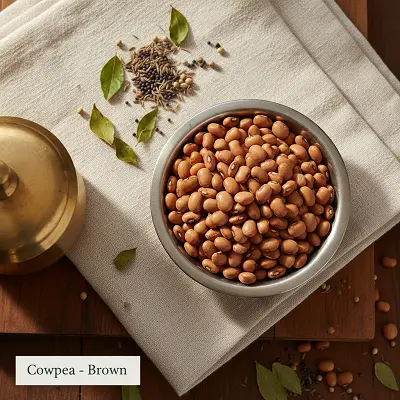
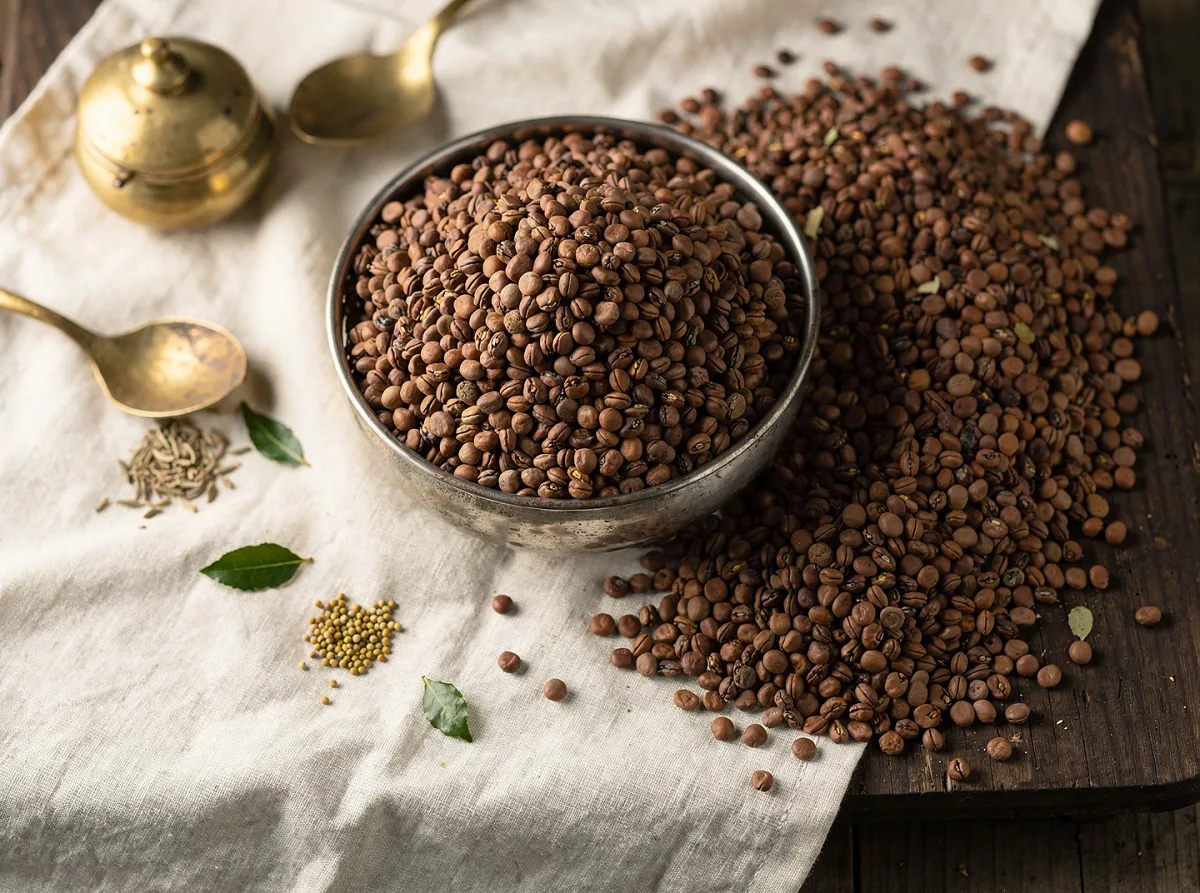
Horse gram is a small, hard legume with a distinctive reddish-brown or dark brown seed coat. Native to the Indian subcontinent, it thrives in dry, marginal soils and has been cultivated for centuries across India. The whole dried grain is what reaches your kitchen - no processing needed beyond cleaning and sorting (IFCT 2017, Ref #B012).
Use in Indian Kitchen
Horse gram holds a quiet, essential place in Indian home cooking, especially in South India, Maharashtra, and parts of Rajasthan. In Tamil and Kannada kitchens, it appears in sambar, rasam, and simple dal preparations - often cooked until soft and paired with rice and ghee. Maharashtrian families use it in curries and as a sprouted snack. It's less common in North Indian everyday cooking but appears in traditional remedies and wellness tonics. The grain cooks slowly and develops an earthy, slightly bitter flavour that deepens with spices like turmeric, cumin, and asafoetida. Many grandmothers keep a stock for monsoon season, when it's believed to aid digestion and build strength.
Key Nutrients
Horse gram is notably high in protein and dietary fibre, making it a valuable plant-based protein source for vegetarian diets. It also contains iron, calcium, and phosphorus. The exact nutrient profile per 100 g is documented in IFCT 2017 (Ref #B012); consult the full table for precise milligram values and micronutrient density.
Health Benefits (Evidence-based)
- May support digestive health due to its high fibre content, traditionally used to ease constipation and promote regular bowel function.
- Linked to sustained energy release and stable blood sugar levels, making it suitable for balanced meal planning.
- Plant-based protein source that supports muscle maintenance and repair in vegetarian and vegan diets.
- Contains iron and other minerals that may help support overall vitality and reduce fatigue when part of a varied diet.
- Traditionally used in Ayurvedic wellness practices to support digestive fire and seasonal health, particularly in monsoon.
Culinary Uses (Vegetarian)
- Cooked as a simple dal with turmeric, cumin, and ghee - served with rice or roti.
- Added to sambar and rasam for depth and protein.
- Sprouted and eaten as a light, nutritious snack or added to salads.
- Slow-cooked in curries with onion, tomato, and spices for a hearty vegetable curry.
- Ground into flour for traditional sweets and savoury preparations in regional cuisines.
Caution
- Horse gram is hard and requires soaking (2-4 hours) and longer cooking (45-60 minutes) than softer dals; pressure cooking is recommended.
- Contains compounds that may cause bloating or gas in sensitive individuals - cook thoroughly and pair with digestive spices like ginger and asafoetida.
- Those with kidney stones or gout should consult a healthcare provider before regular consumption, as it contains purines.
- Not recommended during pregnancy without medical guidance, as traditional texts suggest it may have uterine stimulant properties.
References
- Indian Council of Medical Research - National Institute of Nutrition (ICMR-NIN). Indian Food Composition Tables 2017. Hyderabad: ICMR-NIN; 2017. [Ref #B012 - Grain Legumes category]
- National Institute of Nutrition, ICMR. Dietary Guidelines for Indians - A Manual. Hyderabad: NIN; 2011.
Sourcing & Storage
Storage
Store horse gram in an airtight container - a glass jar with a tight lid or a sealed cloth bag works well - in a cool, dry place away from direct sunlight and moisture. Keep away from strong-smelling foods, as the grain can absorb odours. In humid climates (especially during monsoon), store in the refrigerator or freezer to prevent moisture absorption and pest infestation. Ensure the container is clean and completely dry before filling.
Shelf Life
When stored in an airtight container in a cool, dry place, whole horse gram keeps for 6-8 months. In the refrigerator, it will last up to 1 year; in the freezer, up to 18 months. Once cooked, horse gram dal should be refrigerated and consumed within 3-4 days, or frozen for up to 3 months.
Check Before You Buy
Look for whole grains that are uniform in colour (reddish-brown to dark brown) and free from cracks, discolouration, or mould. The grains should feel hard and dense - avoid any that are soft, shrivelled, or have a musty smell, which signals age or moisture damage. Check the packaging date if buying from a kirana or supermarket; fresher stock (within 3-4 months of packing) will cook faster and taste better. Bulk purchases from a mandi should be inspected for stones, dust, or insect damage before bringing home. Avoid grains with a rancid or off smell.