Guava, pink flesh
Psidium guajava · Also known as Amrood (अमरूद), Peyara, Guava fruit, Pink guava, Safed amrood
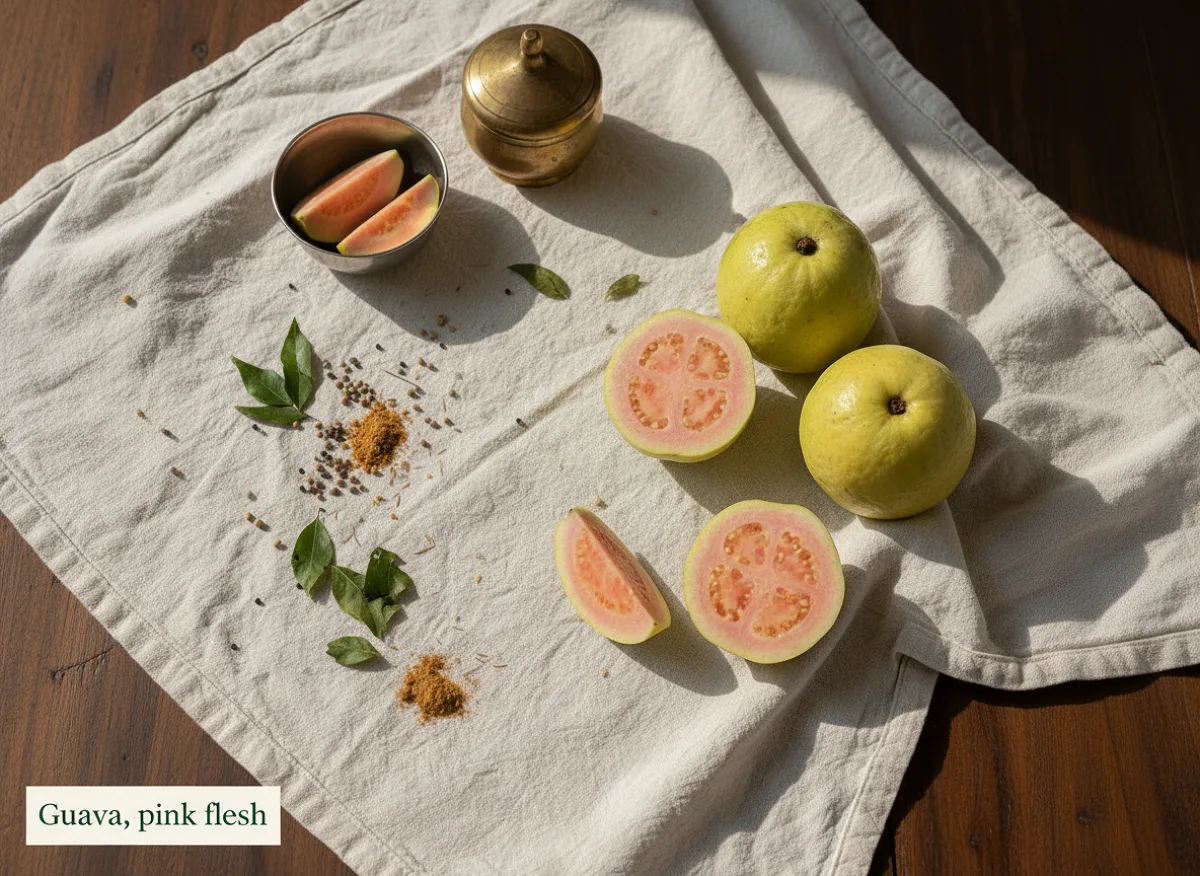
Guava with pink flesh (अमरूद, amrood) is a tropical fruit with thin, pale green or yellow skin and creamy pink interior dotted with small edible seeds. Sweet, fragrant, and slightly grainy in texture, it is eaten fresh, sliced into salads, or made into juice, jam, and chutney acr...
Nutrition per 100 g
Mean values ± IFCT published SD (edible portion).
More macros
Classification
About Guava, pink flesh
What it is
Guava with pink flesh (अमरूद, amrood) is a tropical stone fruit with thin, smooth skin ranging from pale green to yellow when ripe, and a soft, creamy pink interior studded with small edible seeds. The flesh is sweet, fragrant, and slightly grainy, with a flavour that sits between pear and strawberry. Fresh guavas are eaten whole, halved with a spoon, or sliced into fruit salads and drinks. They are a staple across Indian markets year-round, especially abundant in monsoon and winter. (IFCT 2017, Ref #E029)
Use in Indian Kitchen
Pink guava is eaten fresh as a snack or breakfast fruit, often sprinkled with a pinch of salt and chaat masala for a tangy-sweet bite. In South India, it is blended into fresh juice with a squeeze of lime and a touch of jaggery. Across the country, guava is made into thick jam, paste (amrood ka murabba), and sweet-sour chutney paired with samosas and pakoras. In the West, it features in fruit salads and as a filling for gulab jamun or kheer. A practical tip: ripe guavas bruise easily, so handle gently and store in a cool place; unripe ones can be left on the counter for 2-3 days to soften.
Key Nutrients
Pink guava is notably high in vitamin C (ascorbic acid), fibre, and potassium. It also contains folate, vitamin A, and small amounts of calcium and magnesium. The seeds are edible and add fibre. Exact nutrient composition varies with ripeness and growing conditions; refer to IFCT 2017 (Ref #E029) for detailed values.
Health Benefits (Evidence-based)
- High in vitamin C, which may support immune function and skin health.
- Good source of dietary fibre, linked to digestive regularity and satiety.
- Contains lycopene (the pigment giving pink flesh its colour), traditionally associated with antioxidant activity.
- Potassium content may help support heart health and blood pressure regulation.
- Low glycaemic index, making it suitable for blood sugar management when eaten in moderation.
- Traditionally used in Indian home remedies for cough and throat comfort.
Culinary Uses (Vegetarian)
- Fresh fruit: eaten whole, halved with a spoon, or sliced into fruit salads and breakfast bowls.
- Juice and smoothies: blended with lime, jaggery, or honey for a refreshing drink.
- Jam and paste: cooked down with sugar to make thick preserve or murabba.
- Chutney: sweet-sour condiment served with samosas, pakoras, and chaat.
- Desserts: filling for kheer, halwa, or layered with yoghurt and granola.
- Pickled: unripe guavas preserved in salt and spices for a tangy side dish.
Caution
- Unripe guavas are astringent and may cause constipation; ripe fruit is gentler on digestion.
- The seeds are safe to eat but may be hard for those with weak teeth or digestive sensitivity; they can be scooped out if preferred.
- Guava is high in natural sugars; those managing blood sugar should eat in moderation and pair with protein or fat.
- Pesticide residue is possible on conventionally grown fruit; wash well under running water before eating.
References
- Indian Council of Medical Research - National Institute of Nutrition (ICMR-NIN). Indian Food Composition Tables (IFCT 2017). Hyderabad: NIN; 2017. [Ref #E029: Guava, pink flesh]
- Nutritive Value of Indian Foods, ICMR-NIN. Available at: https://www.nin.res.in/ (accessed for IFCT data)
Sourcing & Storage
Storage
Store ripe guavas in a cool, well-ventilated place away from direct sunlight, or in the refrigerator crisper drawer at 4-7°C for up to 5-7 days. Keep them in a paper bag or loosely wrapped in newspaper to allow air circulation and prevent moisture buildup. Unripe guavas can be left on the kitchen counter at room temperature for 2-3 days to ripen. Once cut, cover the exposed flesh with cling film and refrigerate; use within 1-2 days to prevent browning and loss of flavour.
Shelf Life
Ripe guavas keep for 3-5 days at room temperature and 5-7 days in the refrigerator. Unripe fruit lasts 1-2 weeks at room temperature as it ripens. Once cut and refrigerated, use within 1-2 days. Guava juice or pulp can be frozen in ice cube trays for up to 3 months. Homemade jam or paste, when properly sealed and stored in a cool, dry place, keeps for 2-3 months; refrigerate after opening.
Check Before You Buy
Choose guavas that yield slightly to gentle pressure, indicating ripeness without being mushy. The skin should be pale green to yellow with no dark spots or blemishes. Smell the fruit near the stem - a sweet, fragrant aroma signals ripeness. Avoid guavas that are very hard (unripe and astringent), overly soft (overripe and fermented), or show signs of mould, cracks, or insect damage. When buying from a mandi or kirana shop, ask the vendor to select fruit picked within the last 1-2 days for best flavour and texture.
In Ayurveda
In Ayurvedic tradition, guava (अमरूद) is classified as a cooling (शीतल) fruit with a sweet taste (मधुर रस) and is believed to pacify Pitta dosha. The fruit is considered light to digest (लघु) and is traditionally recommended during summer months to cool the body and support digestion. Guava leaves have been used in classical Ayurvedic practice as a decoction (काढ़ा) to address digestive complaints and support healthy bowel function.