Guava
Psidium guajava · Also known as Amarood, amrud, peru, jamrool (regional), safeda (white variety)
Guava (अमरूद, amarood) is a tropical fruit with thin, pale green or yellow skin and creamy white or pink flesh dotted with small edible seeds. Sweet, fragrant, and crisp when ripe, it is eaten fresh as a snack, sliced into salads, or cooked into jams and chutneys across Indian ho...
Nutrition per 100 g
Mean values ± IFCT published SD (edible portion).
More macros
Classification
About Guava
What it is
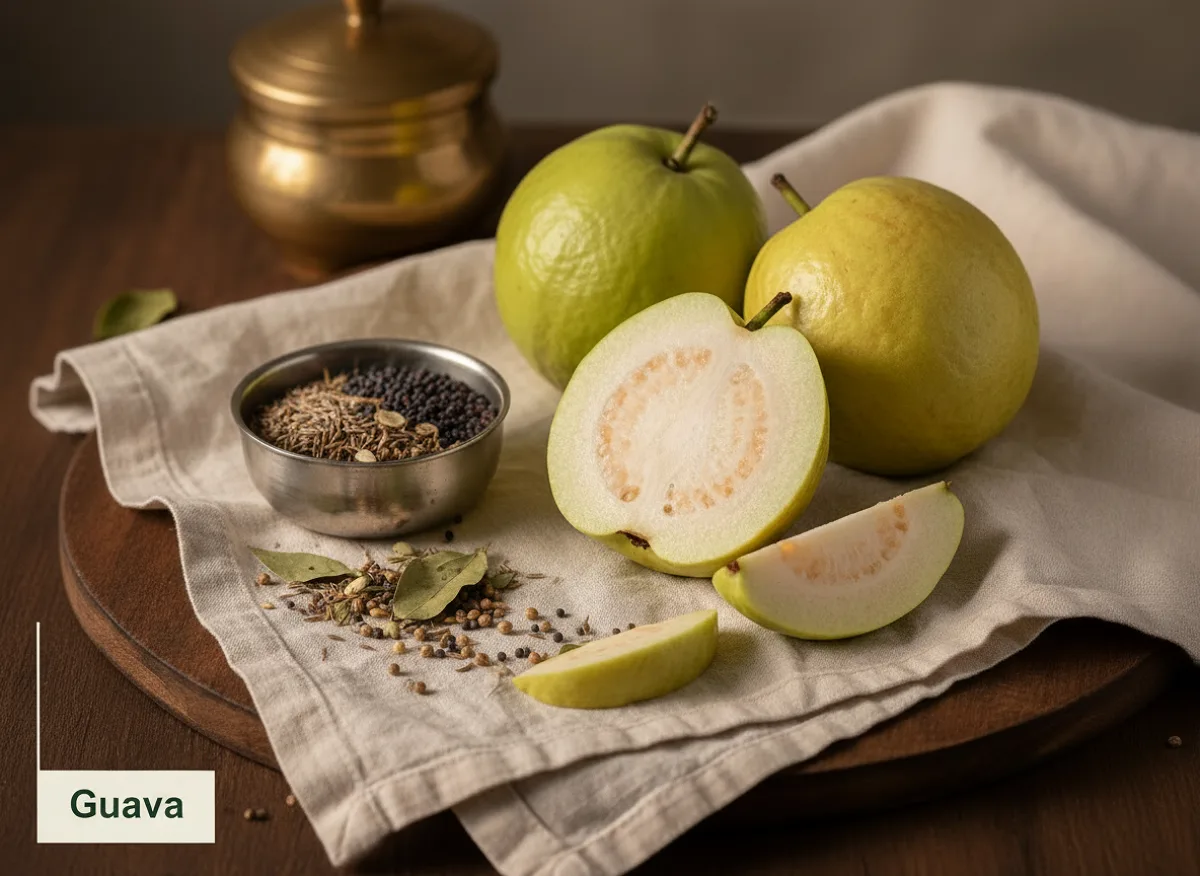
Guava (अमरूद, amarood) is a tropical stone fruit with thin, smooth or slightly bumpy skin that ranges from pale green to golden yellow when ripe. The flesh inside is creamy white, pale pink, or deep red depending on variety, studded with small soft seeds that are entirely edible. Ripe guavas are fragrant, sweet, and have a crisp, slightly grainy texture. Fresh guavas are the most common form in Indian markets, though the fruit is also dried, made into paste (amrood ka murabba), or processed into juice and powder. (IFCT 2017, Ref #E028)
Use in Indian Kitchen
Guava is eaten fresh as a simple snack, often with a pinch of salt and chaat masala sprinkled on sliced pieces - a beloved street-food pairing. It appears in fruit salads, smoothies, and lassi across North and South India. In the kitchen, guavas are stewed into thick jams and chutneys (often paired with ginger or chilli), folded into custards and kheer, or candied as a festive sweet. The leaves are sometimes brewed as a mild herbal tea. A practical tip: ripe guavas bruise easily, so handle gently and eat within a day or two of ripening; unripe guavas can be kept longer and will soften at room temperature.
Key Nutrients
Guava is exceptionally rich in vitamin C (ascorbic acid), fibre, and potassium. It also contains vitamin A, folate, and small amounts of copper and manganese. The seeds and skin contribute most of the fibre. (IFCT 2017, Ref #E028)
Health Benefits (Evidence-based)
- High in vitamin C, which may support immune function and collagen formation in skin and connective tissue.
- Fibre content may help support digestive regularity and a healthy gut microbiome.
- Potassium may help maintain healthy blood pressure and heart rhythm.
- Antioxidants (lycopene in pink varieties, polyphenols) are linked to reduced oxidative stress and may support cellular health.
- Low glycaemic index, making it a gentle choice for blood sugar management when eaten in moderation.
- Traditionally used in Indian home remedies to soothe mild digestive upset and support overall vitality during seasonal change.
Culinary Uses (Vegetarian)
- Fresh sliced fruit with chaat masala and lemon juice as a street snack.
- Guava jam, paste (murabba), and chutney for breakfast spreads and condiments.
- Smoothies, lassi, and fresh juice.
- Stewed into kheer, custard, or rice pudding.
- Dried guava chips as a portable snack.
- Guava leaf tea for a mild herbal infusion.
Caution
- The seeds are safe to eat but may cause mild constipation in sensitive individuals if consumed in very large quantities; most people digest them without issue.
- Unripe guavas are astringent and may cause mild stomach upset in some; ripe fruit is gentler.
- Those with a latex allergy should be cautious, as guava is botanically related to latex-bearing plants, though allergic reactions are rare.
References
- Indian Council of Medical Research - National Institute of Nutrition (ICMR-NIN). Indian Food Composition Tables (IFCT 2017). Reference E028 (Guava, raw).
- Gupta, R. K., Patel, A. V., Shah, N., & Tandon, R. V. (2004). Nutritional and medicinal value of guava (Psidium guajava L.). Indian Journal of Natural Products and Resources, 3(2), 152-159.
Health Benefits
- Supports Digestion
- Boosts Immunity
- Heart Health Support
- Regulates Blood Sugar
Sourcing & Storage
Storage
Store ripe guavas in a cool, well-ventilated place at room temperature (18-22°C) away from direct sunlight for 1-2 days. For longer storage, place them in a perforated plastic bag in the refrigerator crisper drawer at 4-8°C, where they will keep for up to a week. Unripe guavas can be left at room temperature to ripen naturally over 3-5 days. Once cut, wrap the exposed flesh in cling film and refrigerate; use within 1-2 days. Avoid storing near ethylene-producing fruits (apples, bananas) if you wish to slow ripening.
Shelf Life
Ripe guavas last 1-2 days at room temperature and up to 7 days in the refrigerator when stored in a perforated bag in the crisper. Unripe guavas can be kept at room temperature for 3-5 days until they soften and sweeten. Once cut and refrigerated, use within 1-2 days. Guava jam, paste, and dried chips last several weeks to months when stored in airtight containers in a cool, dry place.
Check Before You Buy
Choose guavas that yield slightly to gentle pressure - a sign of ripeness - with a fragrant aroma near the stem. The skin should be smooth or finely bumpy, free of dark bruises, soft spots, or blemishes. Avoid very hard, pale green guavas unless you plan to ripen them at home over several days. Colour alone is not a reliable ripeness indicator; white and pink varieties may look pale even when ripe. If buying from a mandi or kirana, ask the vendor to select fruit that is just beginning to soften; if buying packaged guavas, check the pack date and inspect for any signs of mould or fermentation.
In Ayurveda
In classical Ayurveda, guava is recognized as a cooling (शीत) and astringent (कषाय) fruit. It is traditionally used to support digestive health and is believed to help balance Pitta dosha. The fruit's high fiber content aligns with Ayurvedic principles of promoting healthy digestion and regular elimination. Ripe guava is considered easier to digest than unripe varieties.