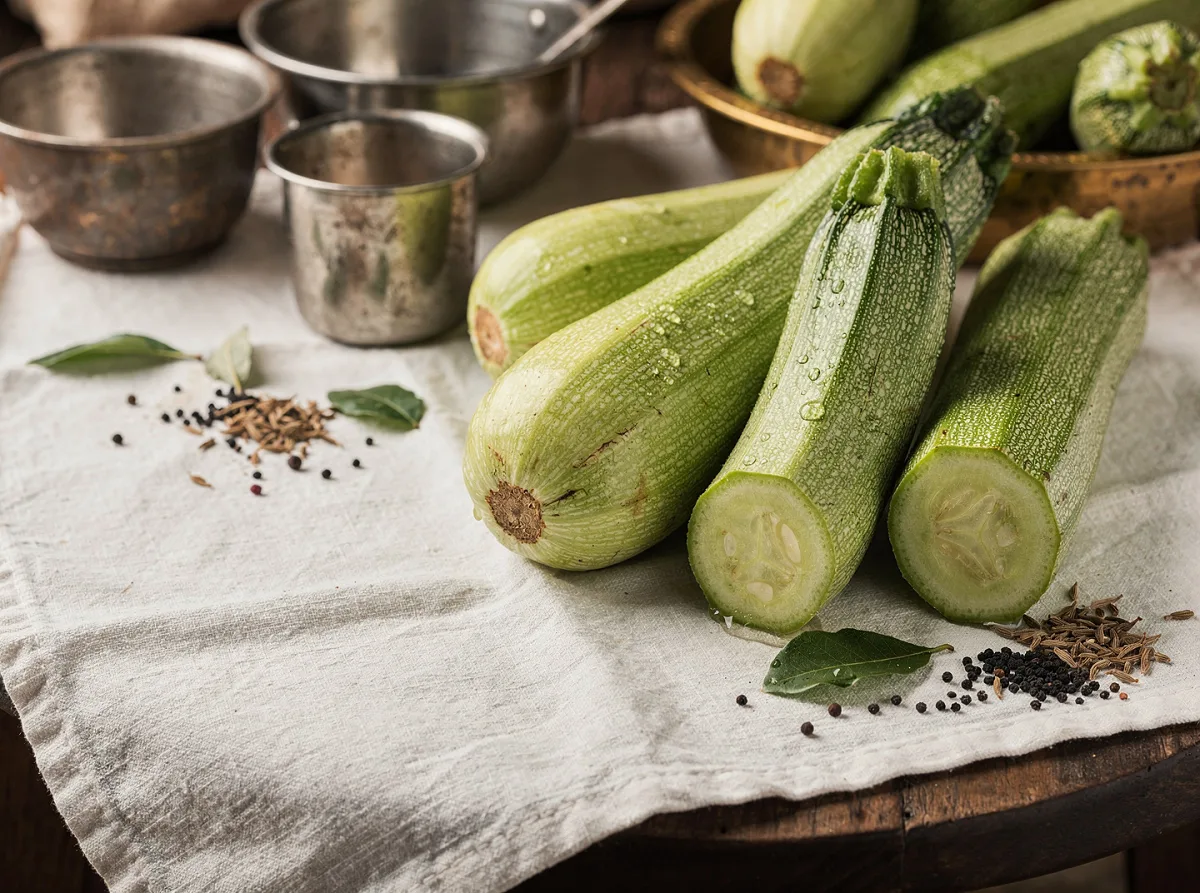
Green Zucchini
Cucurbita pepo · Also known as toree, tori, bottle gourd squash, Indian squash
Green zucchini, known as toree in Hindi kitchens, is a tender summer squash with smooth pale-green skin and mild, slightly sweet flesh. Crisp and versatile, it's a staple in North Indian home cooking, commonly pan-fried with onions and spices, stuffed with besan filling, or simme...
Nutrition per 100 g
Edible portion values from the master catalog.
More macros
Classification
About Green Zucchini
What it is
Green zucchini, or toree (तोरी), is a tender summer squash with smooth, pale-green skin and soft, watery flesh inside. It is harvested young when the skin is still tender and the seeds are barely formed, making it ideal for quick cooking. Fresh toree is a beloved vegetable across North India, particularly in Punjabi and Haryanvi home kitchens, where it appears regularly in the monsoon and early summer months. (IFCT 2017, Ref #D077)
Use in Indian Kitchen
Toree is most commonly sliced into thin rounds or half-moons and pan-fried with onions, green chillies, and a tempering of cumin seeds and asafoetida - a simple, everyday sabzi that takes barely 10 minutes. In North India, it is also stuffed with a spiced besan and onion mixture, then shallow-fried until golden. Some home cooks add it to mixed vegetable curries or cook it with tomatoes and coriander for a light, summery side dish. A practical tip: slice it just before cooking to prevent it from becoming watery and mushy; high heat and quick cooking preserve its tender crunch. The mild flavour means it absorbs tempering spices beautifully without overpowering other ingredients.
Key Nutrients
Green zucchini is predominantly water (around 94%), making it very low in calories. It contains small amounts of vitamin C, dietary fibre, and minerals including potassium and manganese. Exact nutrient composition is documented in IFCT 2017.
Health Benefits (Evidence-based)
- May support hydration and gentle digestion due to high water content and mild fibre.
- Low calorie density makes it suitable for weight-conscious meals.
- Contains vitamin C, which may support immune function and skin health.
- Potassium content may help maintain healthy blood pressure when part of a balanced diet.
- Traditionally used in Indian home cooking as a cooling, easily digestible summer vegetable.
Culinary Uses (Vegetarian)
- Pan-fried toree with onions, cumin, and asafoetida - a quick everyday sabzi.
- Stuffed toree (bharwan toree) with spiced besan and onion filling, shallow-fried.
- Mixed vegetable curries and light tomato-based gravies.
- Sliced thin and added to mixed vegetable dal or khichdi.
- Grated and used in vegetable fritters (pakora) or mixed into dough for parathas.
Caution
- Very high water content means it wilts quickly; store in the coldest part of the fridge and use within 3-4 days.
- Overcooking turns it mushy and bland; cook on high heat for a short time to retain texture.
- No known toxins or common allergens, but individuals with sensitive digestion may find raw zucchini harder to digest than cooked.
References
- Indian Council of Medical Research - National Institute of Nutrition (ICMR-NIN). Indian Food Composition Tables 2017. Hyderabad: ICMR-NIN; 2017. [Reference code D077 - Other Vegetables category]
- Gopalan C, Rama Sastri BV, Balasubramanian SC. Nutritive Value of Indian Foods. Hyderabad: National Institute of Nutrition, ICMR; 2011.
Health Benefits
- Hydration
- Supports Digestion
- Boosts Immunity
- Weight Management Support
- Heart Health Support
Sourcing & Storage
Storage
Store green zucchini in the vegetable crisper drawer of the refrigerator, ideally in a perforated plastic bag or paper towel to allow air circulation and prevent excess moisture buildup. Keep it away from ethylene-producing fruits like apples and bananas. Do not wash before storing; wash only just before use. In warm Indian climates, use within 2-3 days for best texture and flavour.
Shelf Life
When stored properly in the refrigerator, fresh green zucchini will keep for 3-4 days. Once cut, use the pieces within 1-2 days. Cooked toree sabzi can be refrigerated for up to 2 days in an airtight container. Freezing is not recommended as the high water content causes it to become mushy upon thawing.
Check Before You Buy
Choose firm, unblemished green zucchini with smooth, glossy skin and no soft spots or wrinkles. The vegetable should feel heavy for its size, indicating good water content. Avoid very large specimens, which tend to have tougher skin and larger seeds; medium-sized toree (about 6-8 inches long) is ideal for tender, quick cooking. Check that the stem end is fresh and green, not brown or dried. When buying from a mandi or kirana, gently press the skin - it should spring back, not leave an indentation.
In Ayurveda
Green zucchini (turai) is not extensively documented in classical Ayurvedic texts as a standalone ingredient. However, it shares properties with other cooling, water-rich vegetables valued in Ayurvedic practice. Its high water content and light, easily digestible nature align with ingredients traditionally used to support pitta balance during warm seasons.