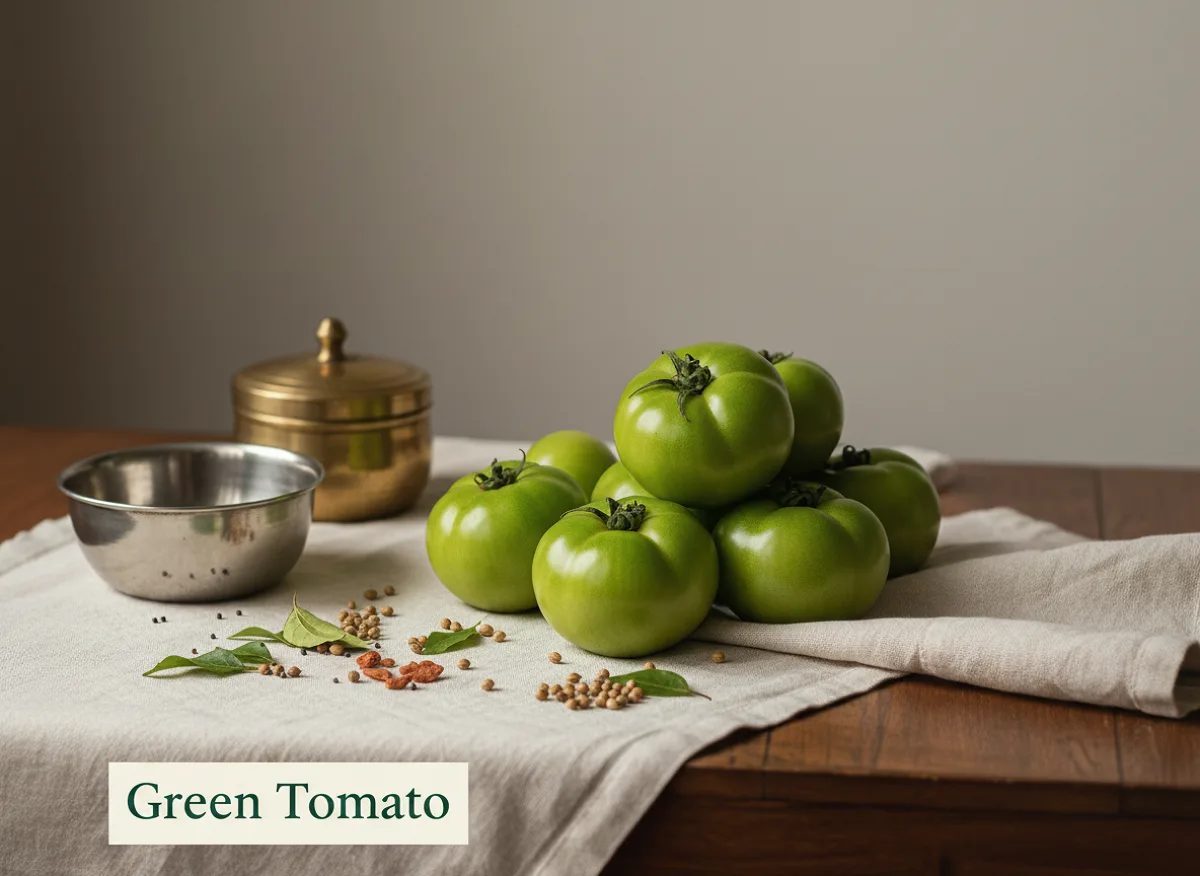
Green Tomato
Lycopersicon esculentum · Also known as Hara tamaatar
Green tomato (hara tamaatar) is the unripe fruit of the tomato plant, harvested before it turns red. Common in Indian kitchens for pickles, chutneys, and curries, it offers a tart, slightly tangy flavour and firm texture. Classified under Other Vegetables in IFCT 2017 (Ref #D074)...
Nutrition per 100 g
Mean values ± IFCT published SD (edible portion).
More macros
Classification
About Green Tomato
What it is
Green tomato is the unripe fruit of Solanum lycopersicum, picked before it reaches maturity and turns red. It has a firm, dense flesh and a distinctly tart, slightly grassy flavour. In Indian food composition tables, green tomato is classified as Other Vegetables (IFCT 2017, Ref #D074).
Use in Indian Kitchen
Green tomatoes hold a cherished place across Indian regional kitchens. In North India, they feature in tangy chutneys, pickles (achar), and sabzis paired with potatoes or paneer. South Indian cooks use them in sambar and rasam for their acidity and bite. In the West, green tomato pickles are a monsoon staple, and in East India, they appear in light curries and stir-fries. The tartness makes them ideal for balancing rich gravies and lending complexity to dal-based dishes. Traditionally, green tomatoes were also used to extend the tomato season when ripe fruit was scarce, making them a practical and resourceful choice in home kitchens.
Key Nutrients
Green tomatoes contain vitamin C, potassium, and dietary fibre. They also provide small amounts of vitamin A, phosphorus, and magnesium. Exact nutrient composition is documented in IFCT 2017 (Ref #D074); values vary slightly with ripeness and growing conditions.
Health Benefits (Evidence-based)
- May support immune function due to vitamin C content.
- Linked to heart health through potassium, which helps regulate blood pressure.
- Dietary fibre may aid digestive regularity.
- Antioxidants present in green tomatoes may help reduce oxidative stress.
- Low in calories, making them suitable for weight-conscious cooking.
Culinary Uses (Vegetarian)
- Pickles and achars - classic monsoon preserves.
- Chutneys - raw or cooked, often paired with dal or rice.
- Curries and sabzis - with potatoes, onions, and spices.
- Sambar and rasam - for tartness and body.
- Stir-fries - with mustard seeds, curry leaves, and coconut.
- Stuffed preparations - halved and filled with spiced paneer or lentil paste.
Caution
Green tomatoes contain solanine, an alkaloid compound present in unripe nightshade fruits. While small amounts in cooked dishes are generally safe, those with nightshade sensitivity or certain digestive conditions should consume them in moderation. Pregnant women and people taking specific medications should consult a healthcare provider if consuming large quantities regularly.
References
- Indian Council of Medical Research - National Institute of Nutrition (ICMR-NIN). Indian Food Composition Tables 2017. Hyderabad: NIN; 2017. Category D - Other Vegetables, Ref #D074.
- Visvanathan R, Jayathilake C, Jayawardana BC. Health-beneficial properties of potato and compounds of interest. Journal of the Science of Food and Agriculture. 2016; 96(15): 4850-4860. (General nightshade and solanine reference for context.)
Health Benefits
- Improves Digestion
- Antioxidant
- Boosts Immunity
- Heart Health Support
Sourcing & Storage
Storage
Store green tomatoes in a cool, dry place away from direct sunlight - a pantry shelf or kitchen counter works well in most Indian homes. Keep them in a single layer in a cardboard box or paper bag to allow air circulation and prevent moisture buildup. In humid climates, store in the refrigerator's vegetable drawer, wrapped loosely in paper towels to absorb excess moisture. Avoid plastic bags, which trap condensation and encourage rot.
Shelf Life
Green tomatoes keep for 1 to 2 weeks at room temperature in a cool, dry place. In the refrigerator, they last 2 to 3 weeks. Once cut, use within 1 to 2 days. For longer storage, pickle or preserve them - properly made achars can last several months in an airtight jar at room temperature.
Check Before You Buy
Choose firm, unblemished green tomatoes with no soft spots or dark patches. The skin should be smooth and taut, and the fruit should feel heavy for its size. Avoid tomatoes with cracks, bruises, or signs of mould. Look for a uniform pale to medium green colour - very pale or yellowish tomatoes may be overripe and less suitable for pickles. At the mandi or kirana store, gently press the fruit; it should resist pressure without yielding. If buying pre-packed, check the packaging date and ensure no tomatoes are crushed or leaking inside the container.
In Ayurveda
In Ayurveda, green tomatoes are valued for their digestive properties and ability to balance the doshas, particularly Pitta and Kapha. Their tangy nature helps stimulate digestion and appetite, making them beneficial for overall gastrointestinal health.
In home remedies, green tomatoes are often used to treat skin conditions due to their antioxidant properties. They can be applied topically to help reduce acne and improve skin texture. Additionally, consuming green tomatoes is believed to support hydration and detoxification, enhancing overall wellness.