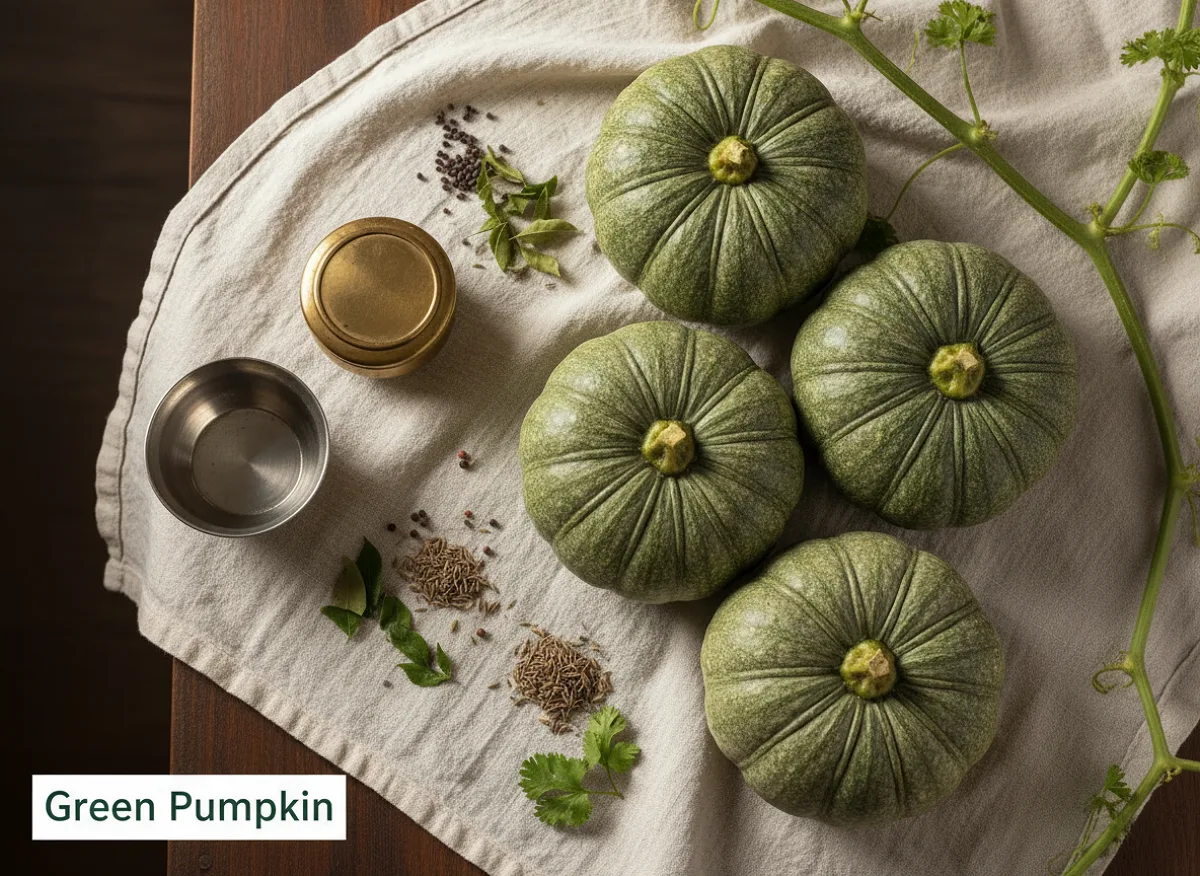
Green Pumpkin
Cucurbita maxima · Also known as Kaddoo
Green pumpkin, or kaddoo, is a mild, watery squash commonly used in Indian home cooking. Rich in water and fibre, it features in curries, stir-fries, and dal preparations across the country. (IFCT 2017, Ref #D065)
Nutrition per 100 g
Edible portion values from the master catalog.
More macros
Classification
About Green Pumpkin
What it is
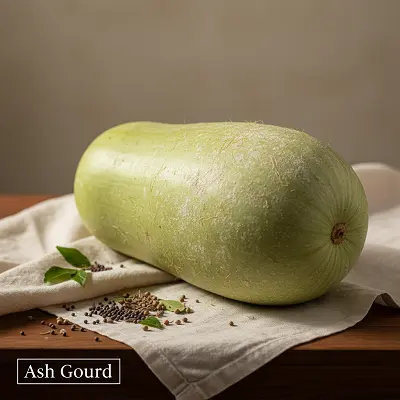
Green pumpkin, known as kaddoo in Hindi and regional Indian languages, is a tender summer squash with pale green skin and soft, pale flesh. It belongs to the Cucurbitaceae family and is grown widely across India during the monsoon and post-monsoon seasons. The vegetable is prized for its mild flavour and high water content, making it light and easy to digest. (IFCT 2017, Ref #D065)
Use in Indian Kitchen
Green pumpkin holds a quiet, everyday place in Indian kitchens. In North India, it is often cooked into a simple sabzi with onions, tomatoes, and spices, or added to mixed vegetable curries. In the South, it appears in sambar and rasam, lending body and mild sweetness. Eastern and Western regions use it in dal-based preparations and light curries suited to warm weather. Traditionally, it is a monsoon vegetable, associated with comfort food and home cooking rather than festive menus. Its tender flesh and neutral taste make it a go-to choice for children's meals and convalescent diets in Indian homes.
Key Nutrients
Green pumpkin is predominantly water (around 92%), making it very low in calories. It contains dietary fibre, small amounts of vitamin C, and trace minerals including potassium and manganese. The exact nutrient profile is documented in IFCT 2017 (Ref #D065).
Health Benefits (Evidence-based)
- May support hydration and gentle digestion due to high water and fibre content.
- Low calorie density makes it suitable for weight-conscious meal planning.
- Fibre content may help maintain healthy bowel function.
- Traditionally used in Indian home remedies as a cooling, easily digestible vegetable during summer and fever recovery.
- Contains small amounts of antioxidants linked to general wellness support.
Culinary Uses (Vegetarian)
- Cooked into dry sabzi with onions, tomatoes, and tempering of cumin and mustard seeds.
- Added to mixed vegetable curries and dal preparations.
- Included in sambar and rasam for body and mild sweetness.
- Steamed or boiled and mashed for baby food and light meals.
- Stir-fried with minimal oil and spices for a quick side dish.
- Pairs well with turmeric, cumin, coriander, and asafoetida.
Caution
Green pumpkin is generally safe for all ages and dietary needs. Those with sensitive digestion may find it easier to digest when cooked soft and seasoned mildly. No significant interactions with common medications are documented.
References
- Indian Council of Medical Research - National Institute of Nutrition (ICMR-NIN). Indian Food Composition Tables 2017. Hyderabad: ICMR-NIN; 2017. Ref #D065 (Other Vegetables category).
- National Institute of Nutrition, ICMR. Dietary Guidelines for Indians - A Manual. 2nd ed. Hyderabad: NIN; 2011.
Health Benefits
- Hydration
- Supports Digestion
- Boosts Immunity
- Weight Management Support
- Heart Health Support
Sourcing & Storage
Storage
Store green pumpkin in a cool, dry place away from direct sunlight, ideally in a well-ventilated vegetable basket or cloth bag. In warm, humid climates, keep it in the vegetable compartment of the refrigerator to slow decay. Avoid plastic bags, which trap moisture and encourage rot. Handle gently to prevent bruising, which accelerates spoilage.
Shelf Life
When stored in a cool room (below 20°C), green pumpkin keeps for 5-7 days. In the refrigerator, it lasts 10-14 days. Once cut, wrap the unused portion in a damp cloth and store in the fridge; use within 2-3 days. Do not freeze raw; cooked pumpkin curry can be refrigerated for 3-4 days or frozen for up to 2 months.
Check Before You Buy
Choose green pumpkins with unblemished, evenly coloured skin and a firm body that yields slightly to gentle pressure. Avoid those with soft spots, cracks, or dull, wrinkled skin, which signal age or decay. The vegetable should feel heavy for its size, indicating good water content. At the mandi or kirana shop, ask for recently harvested stock; older pumpkins become fibrous and watery. If buying pre-cut pieces, ensure the flesh is pale and moist, not yellowed or slimy.
In Ayurveda
In Indian Ayurveda, pumpkin is highly valued for its nutritional and medicinal properties. Known as "kaddu," it is praised for its cooling effects on the body and its ability to balance the doshas, particularly Pitta. Rich in vitamins A and C, fiber, and antioxidants, pumpkin supports digestion, boosts immunity, and promotes healthy skin.
In home remedies, pumpkin is often used to alleviate various health issues. For instance, the juice can be consumed to aid digestion and relieve constipation, while a paste made from its pulp can be applied topically to soothe skin irritations. Additionally, pumpkin seeds are recognized for their health benefits, including supporting prostate health and enhancing urinary function.
Incorporating pumpkin into your diet aligns with Ayurvedic principles, promoting overall well-being and vitality.