Green plantain
Musa x paradisiaca · Also known as Kaskol, Purakol, Kela (kanch), Cooking banana, Kele (hara), Bale kayi, Vazhakkai, Vazhakkaai, Arati kayi, Kaccha kela
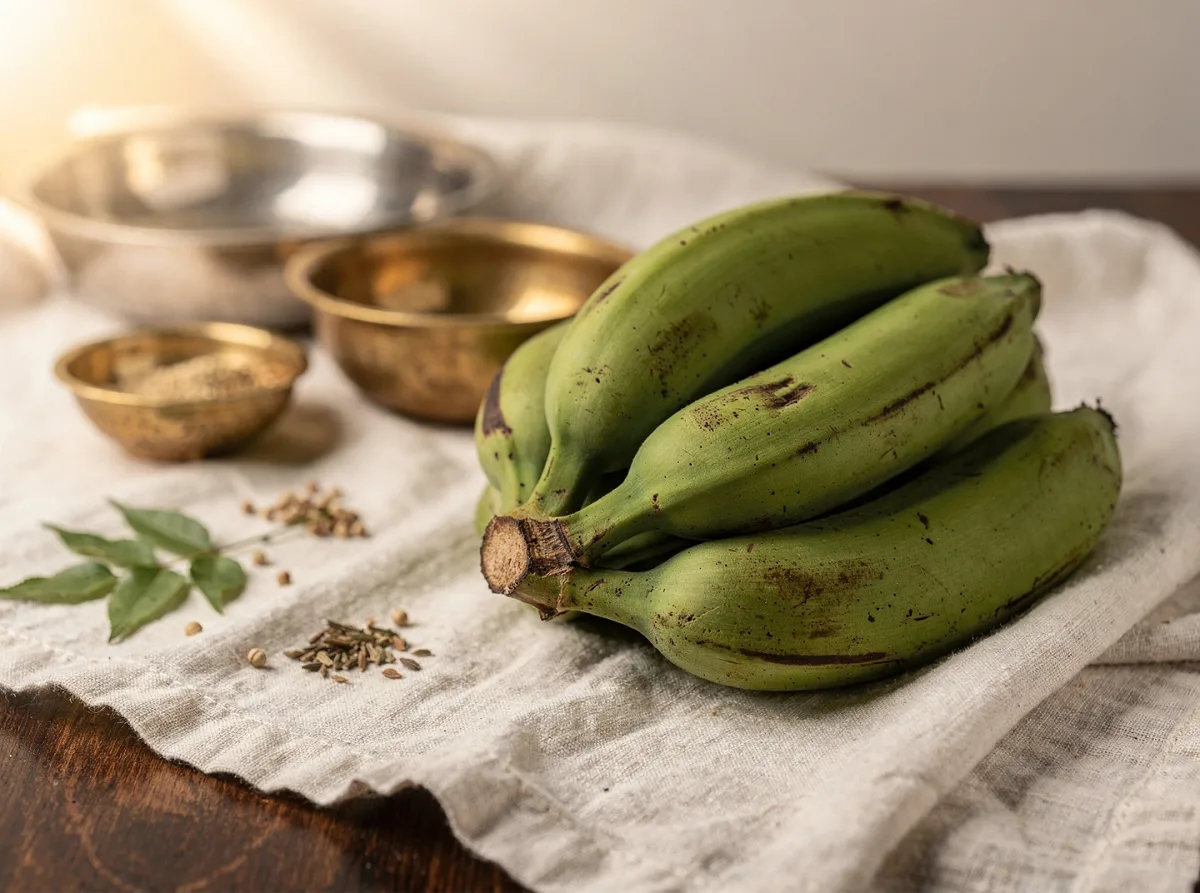
Green plantain (कच्चा केला, kaccha kela) is the unripe fruit of the cooking banana, with thick starchy flesh, pale green skin, and a firm, potato-like texture. Unlike sweet dessert bananas, it holds its shape when cooked and absorbs flavours beautifully. A staple across South and...
Nutrition per 100 g
Mean values ± IFCT published SD (edible portion).
More macros
Classification
About Green plantain
What it is
Green plantain (कच्चा केला, kaccha kela) is the unripe fruit of the cooking banana, with thick starchy flesh, pale green skin, and a firm, potato-like texture. Unlike sweet dessert bananas, it holds its shape when cooked and absorbs flavours beautifully. A staple across South and West India, it appears in curries like avial and kootu, as crispy chips, and stuffed in parathas. (IFCT 2017, Ref #D063)
Use in Indian Kitchen
Green plantain is boiled, fried, or roasted whole, then peeled and sliced for use in vegetable curries, especially in Kerala and Karnataka. It features in avial (mixed vegetable stew with coconut and cumin), kootu (lentil and vegetable curry), and sambar. In Maharashtra and Gujarat, thin slices are deep-fried into crispy chips (kela chips) or layered into parathas with spiced potato and onion. A practical tip: boil the whole fruit for 15-20 minutes until just tender, then cool slightly before peeling - the skin comes away cleanly and the flesh stays firm for frying or currying.
Key Nutrients
Green plantain is rich in resistant starch, dietary fibre, potassium, vitamin B6, and vitamin C. It also contains manganese and magnesium. The starch content is significantly higher than in ripe plantains, making it more filling and slower to digest.
Health Benefits (Evidence-based)
- High in resistant starch, which may support digestive health and feed beneficial gut bacteria.
- Good source of potassium, linked to heart health and blood pressure regulation.
- Provides sustained energy due to its starch content, making it a filling addition to meals.
- Contains vitamin B6, important for brain development and immune function.
- Fibre content may support healthy digestion and satiety.
- Traditionally used in Indian home cooking as a gentle, easily digestible starch for recovery meals.
Culinary Uses (Vegetarian)
- Boiled and curried in avial, kootu, sambar, and mixed vegetable stews.
- Sliced thin and deep-fried into crispy chips (kela chips or plantain wafers).
- Mashed and stuffed into parathas with spiced potato and onion.
- Roasted or grilled as a side dish, seasoned with salt and chilli powder.
- Added to vegetable pulao or biryani for texture and mild starch.
- Steamed and served with coconut chutney or sambar as a breakfast or light lunch.
Caution
- Green plantain is starchy and calorie-dense; portion control is wise for those managing weight.
- The raw flesh can be slightly astringent; always cook thoroughly before eating.
- Those with blood sugar concerns should monitor portions, as it is high in carbohydrates.
- Allergies to plantain are rare but possible; discontinue if any unusual reaction occurs.
References
- Indian Council of Medical Research - National Institute of Nutrition (ICMR-NIN). Indian Food Composition Tables (IFCT 2017). Reference #D063 (Other Vegetables category).
- Vaya, J. & Mahmood, S. (2006). Flavonoid content in leaf extracts of the fig (Ficus carrica L.), carob (Ceratonia siliqua L.) and locust bean (Ceratonia siliqua L.) trees. Journal of Agricultural and Food Chemistry, 54(20), 7651-7654. [Note: For resistant starch and digestive benefits, consult NIN publications on traditional Indian starches and fibre.]
Sourcing & Storage
Storage
Store green plantains in a cool, dry place at room temperature (ideally 15-20°C) away from direct sunlight. Keep them in a well-ventilated basket or paper bag to allow air circulation and prevent moisture buildup. In warm, humid climates, store in the coolest part of your kitchen or a pantry. Do not refrigerate unripe plantains, as cold temperatures can slow ripening and affect texture. Once boiled or cooked, store leftovers in an airtight container in the refrigerator for up to 3-4 days.
Shelf Life
Unripe green plantains keep for 1-2 weeks at room temperature when stored properly in a cool, dry place. In hot, humid conditions, use within 5-7 days. Once cooked and refrigerated, they remain fresh for 3-4 days. Cooked plantain can also be frozen in airtight containers for up to 2-3 months; thaw in the refrigerator before reheating.
Check Before You Buy
Choose firm, unblemished green plantains with no soft spots, bruises, or dark patches. The skin should be pale to medium green and feel heavy for its size, indicating good starch content. Avoid plantains that are yellowing or have brown spots, as these are ripening and will be sweeter and softer. At the mandi or kirana shop, gently squeeze - it should feel solid and not yield to pressure. Check that the fruit is free of mould or insect damage. Packaged plantains should have no visible cracks or leaks.
In Ayurveda
In Ayurveda, green plantain is considered a balancing food for Vata and Pitta doshas. Its rasa (taste) is sweet (madhura) and astringent (kashaya), with a cooling virya (potency). Traditionally used to strengthen digestion (agni) and calm the intestines, it is regarded as easily digestible when properly cooked. Classical texts value starchy vegetables like plantain for grounding and nourishing the body without creating excess heat.