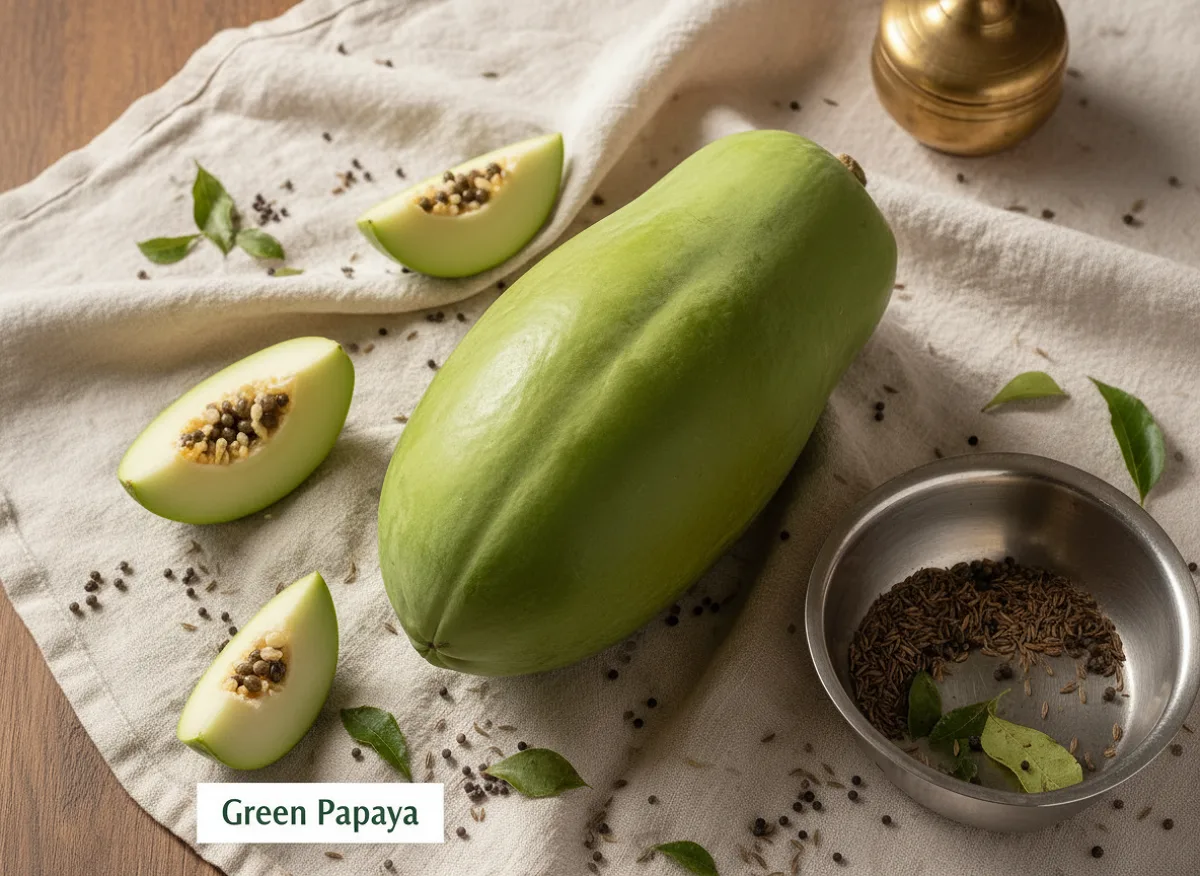
Green Papaya
Carica papaya · Also known as kachcha papeeta
Green papaya (kachcha papeeta) is the unripe fruit of the papaya plant, harvested before it ripens to yellow. Firm, pale green, and mildly sweet with a subtle vegetal note, it is a staple in South Indian curries, North Indian sabzis, and regional pickles. Rich in enzymes and vita...
Nutrition per 100 g
Mean values ± IFCT published SD (edible portion).
More macros
Classification
About Green Papaya
What it is
Green papaya is the unripe fruit of Carica papaya, harvested at the mature-green stage before the fruit develops its characteristic yellow colour and sweetness. The flesh is firm, pale cream to light green, with a mild, slightly earthy flavour. It is classified under Other Vegetables in the IFCT food composition tables (IFCT 2017, Ref #D059) and is widely cultivated across tropical and subtropical regions of India.
Use in Indian Kitchen
Green papaya holds a cherished place in Indian home cooking, particularly in South Indian kitchens where it is simmered into sambhar, rasam, and coconut-based curries. In North India, it appears as a tender sabzi, often cooked with onions, tomatoes, and spices. The vegetable is also popular in pickles and achaar across regions, and in some parts of the East and Northeast, it is used in stir-fries and light curries. Its firm texture and mild flavour make it an ideal canvas for absorbing spice and coconut milk. Traditionally, it has been valued not just for taste but for its gentle digestive properties, making it a comfort vegetable in family kitchens.
Key Nutrients
Green papaya contains vitamin C, vitamin A, dietary fibre, and small amounts of potassium and magnesium. It also provides papain, a natural enzyme with proteolytic properties. Exact nutrient composition is documented in IFCT 2017, Ref #D059.
Health Benefits (Evidence-based)
- May support digestive health through the enzyme papain, which aids protein breakdown and is traditionally used to ease digestion.
- Rich in vitamin C, which may help support immune function and skin health.
- Contains dietary fibre, linked to healthy digestion and bowel regularity.
- Low in calories and fat, making it suitable for weight-conscious diets.
- Traditionally used in Ayurvedic and folk medicine to support liver and digestive wellness.
Culinary Uses (Vegetarian)
- Sambhar and rasam - a South Indian staple, simmered with lentils, spices, and tamarind.
- Coconut curries - cooked with grated coconut, onions, and tempering in Kerala and coastal kitchens.
- Sabzi - North Indian dry or semi-dry preparation with tomatoes, onions, and garam masala.
- Pickles and achaar - preserved with mustard seeds, fenugreek, and chilli for long shelf life.
- Stir-fries - quick-cooked with minimal oil and spices in East Indian and home-style preparations.
- Dal curries - paired with moong dal or masoor dal for a light, nourishing meal.
Caution
Green papaya is generally safe for most people. However, pregnant women should avoid consuming large quantities, as papain may have mild uterine stimulant properties. Those with latex allergy should be cautious, as papaya plants contain latex-like compounds. If taking blood-thinning medications, consult a healthcare provider before consuming papaya regularly in large amounts.
References
- Indian Council of Medical Research - National Institute of Nutrition (ICMR-NIN). Indian Food Composition Tables (IFCT 2017). Reference #D059 - Other Vegetables category.
- Hewavitharana, A. K., & Jayatilaka, A. (2006). Papain and its applications. Journal of Food Science and Technology. General reference on papain enzyme and digestive properties in traditional use.
Health Benefits
- Supports Digestion
- Boosts Immunity
- Detox Support
- Weight Management Support
- Improves Gut Health
Sourcing & Storage
Storage
Store green papaya in a cool, dry place away from direct sunlight at room temperature (18–22°C) for short-term use. For longer storage in warm Indian climates, place in the vegetable compartment of the refrigerator (4–8°C) in a perforated plastic bag or paper wrap to allow air circulation and prevent moisture buildup. Keep away from ethylene-producing fruits like bananas and mangoes, which may accelerate ripening.
Shelf Life
When stored at room temperature, green papaya will keep for 3–5 days. In the refrigerator, it can last 1–2 weeks if kept in a breathable bag and away from excess moisture. Once cut, wrap the exposed surface tightly in plastic wrap and use within 2–3 days. Green papaya does not freeze well due to its high water content and texture changes upon thawing.
Check Before You Buy
Choose firm, unblemished green papayas with an even pale green colour and no soft spots or dark patches. The skin should feel slightly waxy and smooth, not wrinkled or dull. Avoid fruits that are too soft or show signs of mould or insect damage. When buying from a mandi or kirana shop, gently press the fruit - it should yield slightly to pressure but not feel mushy. If buying pre-packed, check the packaging date and ensure no liquid is pooling inside, which may indicate decay.
In Ayurveda
In Ayurveda, green papaya is highly valued for its cooling properties and digestive benefits. It is known to balance the **Pitta** and **Kapha** doshas, making it an excellent choice for promoting overall health, especially in hot climates. The enzymes found in green papaya, particularly papain, aid in the digestion of proteins and support gut health.
In home remedies, green papaya is often used to treat digestive issues, such as constipation and bloating. It is also applied topically to help with skin conditions, as its natural enzymes can promote healing and reduce inflammation. Overall, green papaya is considered a beneficial ingredient that aligns well with Ayurvedic principles of health and wellness.