Green Gram
Phaseolus aureus · Also known as Mung, hara chana, moong, mung bean
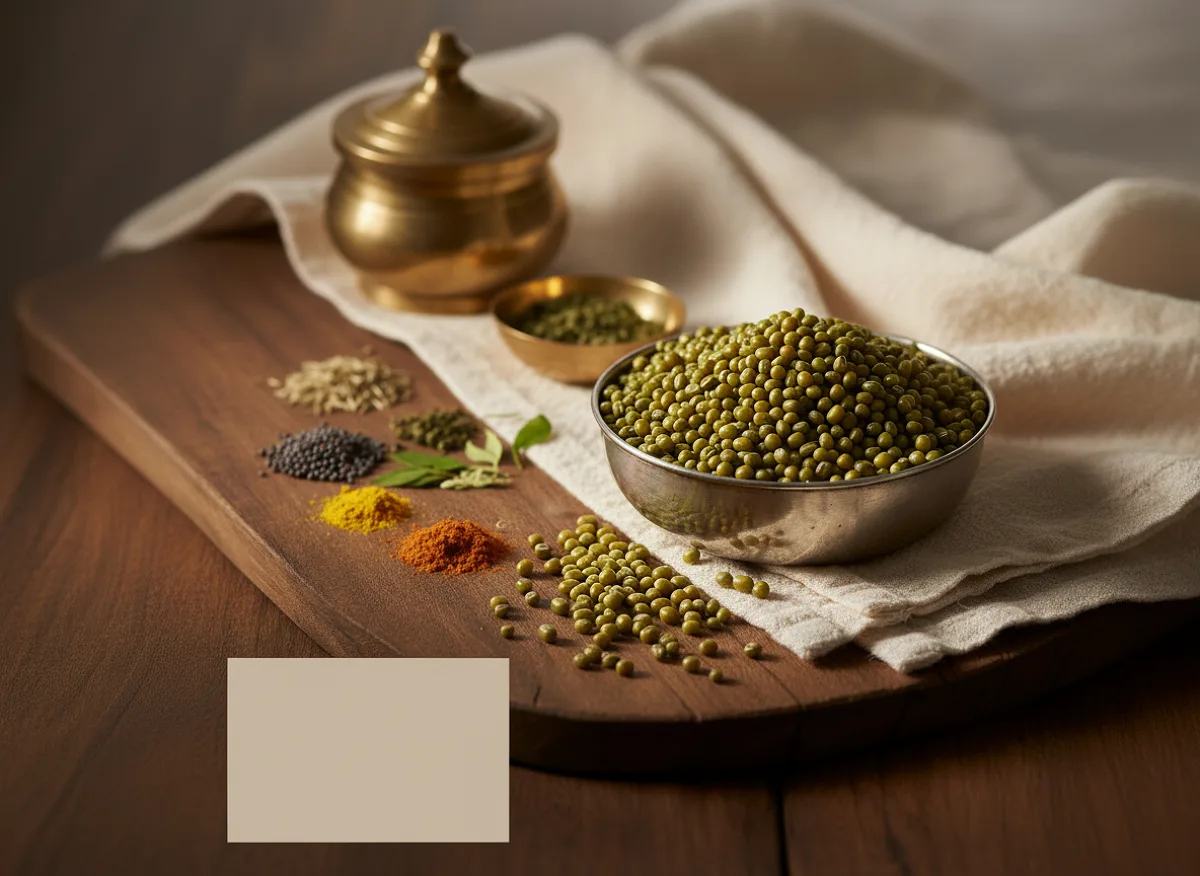
Green gram (हरा चना, hara chana) or moong is a small, round, olive-green legume prized across Indian kitchens for its mild, slightly sweet flavour and quick cooking time. Whole or split, it forms the backbone of everyday dals, sprouted salads, and creamy khichdi. A staple comfort...
Nutrition per 100 g
Mean values ± IFCT published SD (edible portion).
More macros
Classification
About Green Gram
What it is
Green gram (हरा चना, hara chana), also called moong or mung bean, is a small, smooth, round legume with a distinctive olive-green skin and pale yellow interior. Sold whole, split (moong dal), or sprouted, it cooks faster than most dals and has a gentle, slightly nutty flavour. Across India - from Punjabi kitchens to South Indian homes - green gram is a daily staple, valued for its digestibility and versatility. (IFCT 2017, Ref #B011)
Use in Indian Kitchen
Green gram appears in countless forms: a simple tadka dal with cumin and asafoetida, creamy khichdi with rice and ghee, crispy moong sprouts in salads, and sweet moong halwa for festivals. In South India, it features in sambhar and kootu; in the North, it's the soul of comfort meals. A practical tip: soak whole green gram for 2-3 hours before cooking to reduce cooking time and improve digestibility. Sprouting green gram at home (soak overnight, drain, and keep moist for 2-3 days) transforms it into a crunchy, nutrient-dense snack that pairs beautifully with fresh lime and chaat masala.
Key Nutrients
Green gram is a good source of plant-based protein, dietary fibre, and carbohydrates. It also contains iron, folate, magnesium, and B vitamins. Exact nutrient composition varies by form (whole vs. split) and growing conditions; refer to IFCT 2017 (Ref #B011) for detailed values.
Health Benefits (Evidence-based)
- High in plant protein and fibre, supporting steady energy and digestive health.
- May help maintain stable blood sugar levels due to its low glycaemic index and fibre content.
- Rich in folate and iron, traditionally valued in Indian nutrition for supporting vitality and blood health.
- Sprouted green gram has higher bioavailability of nutrients and enzymes, aiding digestion.
- Contains polyphenols and antioxidants linked to general wellness and inflammation support.
Culinary Uses (Vegetarian)
- Whole green gram: dal, khichdi, curries, and slow-cooked stews.
- Split moong dal (moong dal): creamy dals, dhokla batter, sweet halwa, and parathas.
- Sprouted: fresh salads, chaat, sandwiches, and light snacks with lime and spices.
- Moong flour: besan-like batters for pakora, chikhalwali, and traditional sweets.
Caution
- Raw or undercooked green gram may cause digestive discomfort; always cook thoroughly.
- Those with a history of gout or uric acid issues should consume in moderation and consult a healthcare provider.
- Sprouted gram should be stored carefully and consumed fresh to avoid bacterial growth; rinse well before eating.
References
- Indian Council of Medical Research - National Institute of Nutrition (ICMR-NIN). Indian Food Composition Tables (IFCT) 2017. Reference #B011 (Grain Legumes - Green Gram).
- Grover, J. K., Yadav, S., & Vats, V. (2002). Medicinal plants of India with anti-diabetic potential. Journal of Ethnopharmacology, 81(1), 81-100.
Health Benefits
- Antioxidant
- Supports Digestion
- Supports Heart Health
- Helps Blood Sugar Control
- Provides Satiety
Sourcing & Storage
Storage
Store whole or split green gram in an airtight container in a cool, dry place away from direct sunlight and moisture. In humid Indian climates, keep in the refrigerator or freezer to prevent insect infestation and mould. Transfer from open packets to sealed glass jars or food-grade plastic containers. Keep sprouted green gram in a breathable cloth bag in the refrigerator and use within 2-3 days.
Shelf Life
Whole or split dried green gram keeps for 6-12 months when stored in an airtight container in a cool, dry place. In humid conditions or after opening, consume within 3-4 months for best quality. Sprouted green gram lasts 2-3 days in the refrigerator in a breathable bag; discard if it develops an off smell or slime.
Check Before You Buy
When buying whole green gram, look for uniform olive-green colour, smooth skin, and no visible cracks or discolouration. Avoid grains that feel soft, smell musty, or show signs of insect damage. Split moong dal should be bright yellow or pale gold with no grey or dark specks (a sign of age or poor storage). Buy from trusted kirana shops or mandi vendors with good turnover; check the packaging date on pre-packed goods and avoid bags that feel damp or clumpy.
In Ayurveda
In Ayurveda, green gram (mung bean) is considered one of the lightest and most balancing legumes, suitable for all three doshas - Vata, Pitta, and Kapha. Its rasa (taste) is sweet, its guna (quality) is light and dry, and its virya (potency) is cooling, making it especially beneficial during summer and in Pitta-dominant constitutions.
Traditionally, mung khichdi (a simple preparation of mung and rice) is prescribed as a restorative food after illness or during periods of weakness, as it is easily digestible and nourishes the body without taxing the digestive system. Classical Ayurvedic texts recognize mung as a food that supports digestion and promotes overall wellness when prepared with warming spices like ginger and turmeric.