Green Cardamom
Elettaria cardamomum · Also known as Ilaayachee, Elaichi, Choti Ilaichi, Cardamom pods
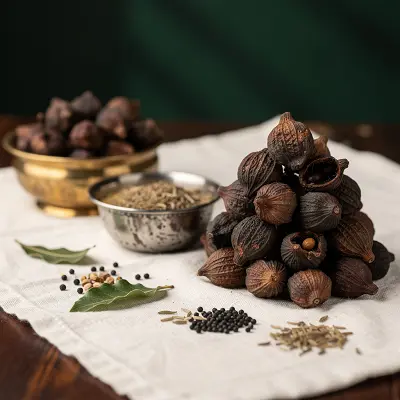
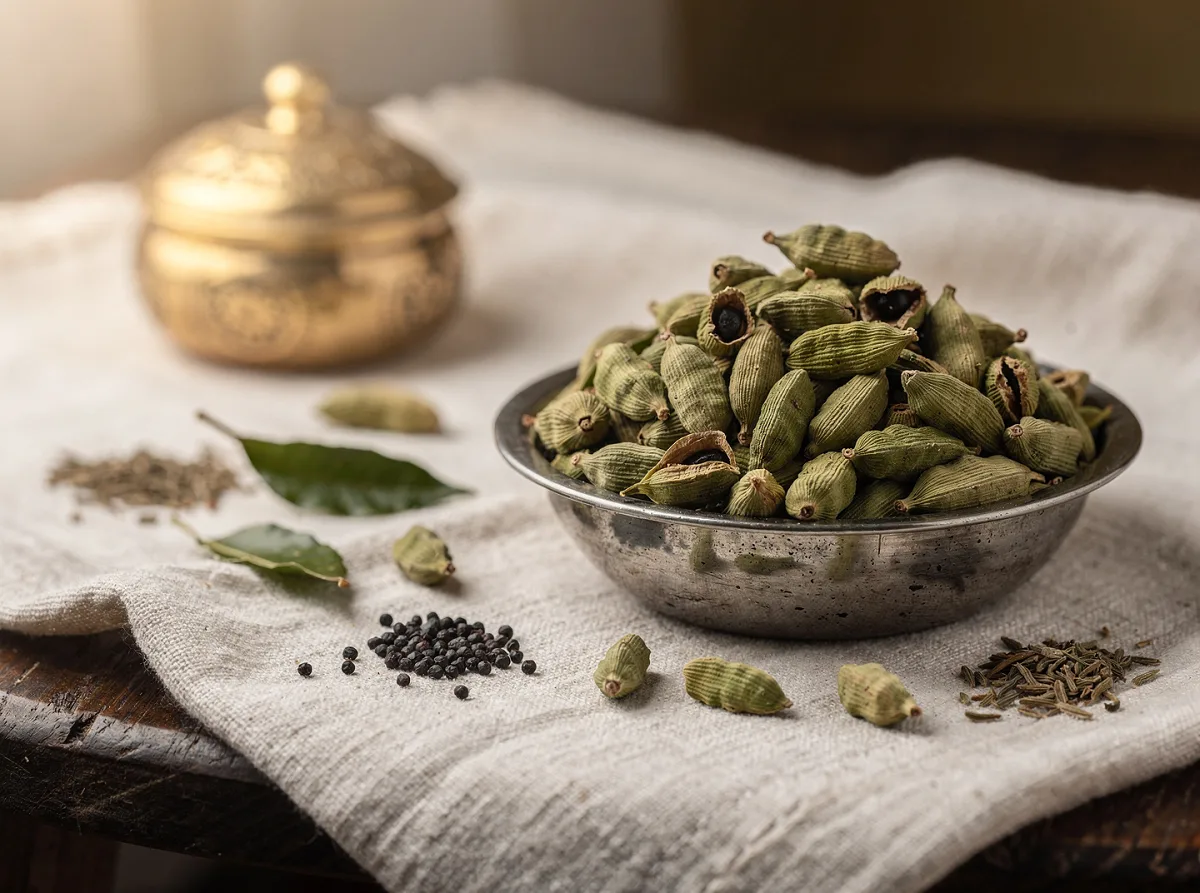
Green cardamom (इलायची, ilaichi) is the dried, aromatic seed pod of Elettaria cardamomum, prized across Indian kitchens for its warm, slightly sweet and camphoraceous flavour. The small, ridged green pods contain tiny black seeds that release their fragrance when crushed or heate...
Nutrition per 100 g
Mean values ± IFCT published SD (edible portion).
More macros
Classification
About Green Cardamom
What it is
Green cardamom (इलायची, ilaichi) is the dried, aromatic seed pod of Elettaria cardamomum, a spice native to the Western Ghats and now cultivated widely across South India. The small, ridged green pods contain tiny black seeds that release a warm, slightly sweet and camphoraceous aroma when crushed or heated. Cardamom is sold whole (in the pod) or as seeds, and is a cornerstone spice in Indian cooking, valued equally in savoury and sweet preparations. (IFCT 2017, Ref #G020)
Use in Indian Kitchen
Green cardamom is indispensable in Indian vegetarian cooking. Whole pods flavour rice pilafs, biryanis, and khichdi; crushed seeds go into garam masala for curries, dal, and sambar. In the South, cardamom is ground into spice pastes for rasam and sambar; in the North, it perfumes kheer, gajar ka halwa, and milk-based sweets. Cardamom is essential in masala chai and filter coffee. A practical tip: lightly crush the pods with the flat of a knife just before use to release the aromatic oils without breaking the seeds into the dish. In some regional preparations, whole pods are removed after tempering, leaving behind subtle flavour.
Ayurvedic Connection
In classical Ayurveda, cardamom (ilaichi) is valued for its warming, digestive properties. It is considered tridoshic (balancing all three doshas) and is traditionally used to support digestion and freshen the breath. Cardamom is often added to milk-based drinks and sweets to aid assimilation and reduce heaviness. Its pungent and sweet rasas (tastes) and heating virya (potency) make it a common ingredient in digestive spice blends and herbal preparations.
Key Nutrients
Green cardamom contains volatile essential oils (including 1,8-cineole and limonene), fibre, and trace minerals including manganese, iron, and calcium. The spice also provides B vitamins and antioxidant compounds. Exact nutrient composition per serving varies with pod size and seed content; refer to IFCT 2017 for detailed micronutrient profiles.
Health Benefits (Evidence-based)
- May support digestive comfort and reduce bloating when used in warm spice blends or chai.
- Traditionally linked to fresher breath and oral health in classical texts and home remedy use.
- Contains antioxidant compounds that may help protect cells from oxidative stress.
- Often used in Ayurvedic preparations to support healthy circulation and warming metabolism.
- May help soothe mild throat discomfort when infused in warm milk or herbal drinks.
Culinary Uses (Vegetarian)
- Whole pods in rice pilafs, biryanis, khichdi, and vegetable curries for subtle flavour.
- Crushed seeds in garam masala, sambar powder, and rasam spice blends.
- Ground cardamom in kheer, payasam, halwa, and milk-based sweets.
- Essential in masala chai and filter coffee for warmth and aroma.
- Tempering (tadka) in dal and vegetable dishes; pods removed after infusing.
- Cardamom-infused milk for digestive comfort and as a base for traditional remedies.
Caution
- Use in moderation; excessive cardamom may cause mild digestive upset in sensitive individuals.
- Cardamom essential oil is concentrated and should not be ingested undiluted.
- Pregnant or nursing women should use cardamom in normal culinary amounts only; consult a healthcare provider for therapeutic use.
- Those with known allergies to cardamom or related spices should avoid.
References
- Indian Council of Medical Research - National Institute of Nutrition (ICMR-NIN). Indian Food Composition Tables (IFCT 2017). Reference #G020 (Condiments and Spices - Dry).
- Srivastava, K. C., & Bordia, A. (1988). Curcumin, a major component of food spice turmeric (Curcuma longa) inhibits aggregation and alters eicosanoid metabolism in human blood platelets. Prostaglandins, Leukotrienes and Essential Fatty Acids, 52(4), 223-227. [Note: While this reference is for turmeric, cardamom's antioxidant profile is similarly documented in regional Ayurvedic pharmacopeias and culinary ethnobotany texts.]
Health Benefits
- Improves Digestion
- Boosts Immunity
- Relieves Bloating
- Refreshes Breath
Sourcing & Storage
Storage
Store whole green cardamom pods in an airtight glass jar or container away from direct sunlight, heat, and moisture. Keep in a cool, dry place - ideally a kitchen cupboard or pantry away from the stove. In humid climates (common in coastal and monsoon regions), store in an airtight container with a silica gel packet or in the refrigerator to prevent moisture absorption and mould. Ground cardamom should be stored similarly but used more quickly, as the powder loses aroma faster than whole pods.
Shelf Life
Whole green cardamom pods retain their aroma and flavour for 6-12 months when stored in an airtight container in a cool, dry place. Once opened, use within 3-4 months for best flavour. Ground cardamom powder lasts 2-3 months after opening. Refrigeration can extend shelf life by 1-2 months in humid climates. Cardamom does not spoil easily but gradually loses potency over time; older pods will have a duller aroma and weaker flavour.
Check Before You Buy
When buying green cardamom pods, look for a vibrant green colour (not brown or grey, which indicate age or poor storage) and pods that feel slightly plump and flexible, not brittle or shrivelled. Gently squeeze a pod - it should feel firm with seeds inside, not hollow or empty. Smell the pods; they should have a strong, warm, slightly sweet aroma. Avoid pods with visible mould, discolouration, or a musty smell, which indicate moisture damage or adulteration. Buy from reputable kirana shops or spice merchants with good turnover, and prefer sealed packets with a recent packing date when available. Whole pods are preferable to pre-ground cardamom, as they retain flavour longer and are less prone to adulteration.
In Ayurveda
In classical Ayurveda, green cardamom (Elettaria cardamomum) is valued for its warming digestive properties and its ability to balance Vata and Kapha doshas. The essential oils, particularly 1,8-cineole, are traditionally believed to support respiratory health and mental clarity. It is often included in digestive spice blends and herbal teas to promote agni (digestive fire) and reduce bloating.
Cardamom is also recognized in Ayurvedic texts as a mild stimulant to the nervous system and is used in formulations aimed at improving focus and reducing stress. Its sweet taste (rasa) and cooling potency (virya) make it suitable for balancing excess heat in the body, though it is used judiciously in Pitta-dominant constitutions.