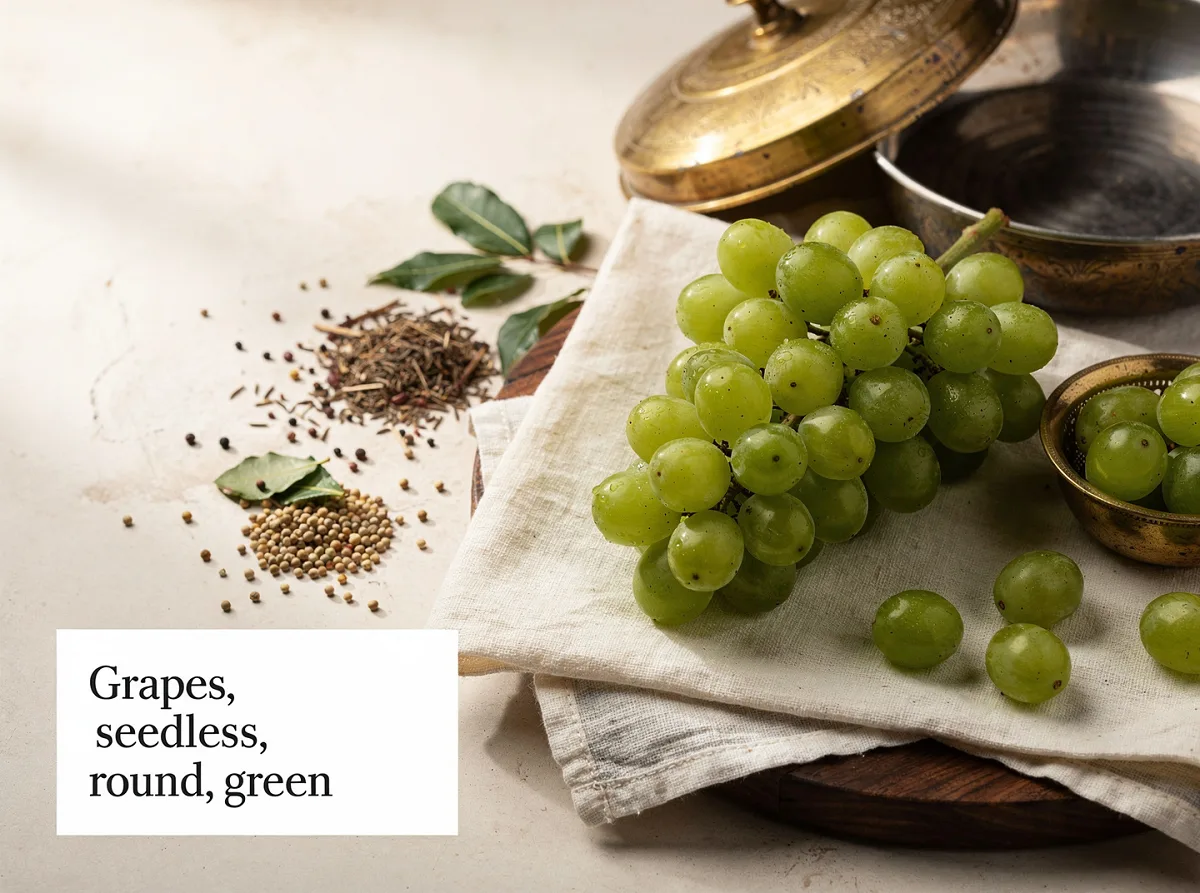
Grapes, seedless, round, green
Vitis vinifera · Also known as Angoor, Draksha, Dach, Soh grape jyrngam, Mundiringa, Draakssaa, Dratchai, Draksha padu.
Green seedless grapes are crisp, sweet fruits commonly enjoyed fresh across Indian households. Rich in natural sugars, water, and antioxidants, they make a refreshing snack and feature in fruit salads, desserts, and traditional beverages. (IFCT 2017, Ref #E026)
Nutrition per 100 g
Mean values ± IFCT published SD (edible portion).
More macros
Classification
About Grapes, seedless, round, green
What it is
Green seedless grapes are small, round berries with thin, edible skin and juicy, sweet flesh. Botanically a berry of the vine Vitis vinifera, they are cultivated widely across India, particularly in Maharashtra, Karnataka, and Himachal Pradesh. Unlike seeded varieties, the absence of seeds makes them convenient for eating whole and popular in modern Indian kitchens. (IFCT 2017, Ref #E026)
Use in Indian Kitchen
Green grapes are eaten fresh as a simple, everyday fruit and feature in fruit chaat, mixed fruit salads, and desserts like kheer and halwa. In North India, they are sometimes added to chutneys and pickles for a touch of sweetness and tartness. South Indian households enjoy them in fruit-based payasam and as a cooling snack during summer. Traditionally, grapes have been valued in Indian wellness practices for their hydrating and cooling properties, especially during hot months. They are also pressed into fresh juice or blended into smoothies with yoghurt and honey for a quick breakfast or post-meal refreshment.
Key Nutrients
Green grapes contain natural sugars (glucose and fructose), dietary fibre, vitamin C, and polyphenolic antioxidants including resveratrol and quercetin. They are also a good source of water, making them hydrating, and provide small amounts of potassium and B vitamins. Exact nutrient composition is documented in IFCT 2017, Ref #E026.
Health Benefits (Evidence-based)
- May support heart health through antioxidants that help reduce oxidative stress and support healthy blood vessel function.
- Linked to improved digestion and gentle bowel regularity due to natural fibre and water content.
- May help maintain hydration and electrolyte balance, particularly valuable in warm Indian climates.
- Antioxidants may support skin health and reduce signs of ageing when consumed regularly as part of a balanced diet.
- May help stabilise blood sugar when eaten in moderation as part of a mixed meal, rather than in isolation.
- Traditionally used in Ayurvedic wellness routines for their cooling (sheet) nature and gentle detoxifying properties.
Culinary Uses (Vegetarian)
- Fresh snacking - eat whole, chilled, or frozen for a refreshing treat.
- Fruit salads and chaat - toss with other seasonal fruits, a squeeze of lemon, and a pinch of chaat masala.
- Desserts - add to kheer, halwa, payasam, or fruit custard.
- Beverages - blend into smoothies with yoghurt, honey, and spices like cardamom; press into fresh juice.
- Chutneys and pickles - use in sweet-sour preserves alongside ginger and spices.
- Garnish - scatter over rice puddings, ice cream, or cheese platters.
Caution
Grapes are naturally high in natural sugars, so those managing blood sugar levels or diabetes should eat them in moderation and preferably with a source of protein or fat (e.g. nuts or curd) to slow sugar absorption. Some people may experience mild digestive discomfort if eaten in very large quantities on an empty stomach. Always wash grapes thoroughly before eating to remove any residual pesticides or dust, especially if not organically grown.
References
- Indian Council of Medical Research - National Institute of Nutrition (ICMR-NIN). Indian Food Composition Tables 2017 (IFCT 2017). Reference #E026 - Grapes, seedless.
- National Institute of Nutrition, ICMR. Dietary Guidelines for Indians - A Manual. Hyderabad: NIN, 2011.
Sourcing & Storage
Storage
Store green grapes in a breathable container or perforated plastic bag in the refrigerator at 2-4°C to maintain freshness and crispness. Keep them away from direct sunlight and moisture. In Indian homes, a cloth-lined basket or open bowl in the coolest part of the fridge works well. Avoid storing near ethylene-producing fruits like apples or bananas, as this speeds ripening and decay. If your kitchen is very warm, transfer grapes to the coldest shelf of the fridge immediately after purchase.
Shelf Life
When stored properly in the refrigerator, fresh green grapes will keep for 1 to 2 weeks. Once removed from the bunch and left at room temperature, they begin to soften and ferment within 2-3 days. For longer storage, you can freeze whole grapes in a single layer on a tray, then transfer to an airtight container or freezer bag for up to 3 months - frozen grapes make a refreshing chilled snack or can be thawed and used in smoothies and desserts.
Check Before You Buy
Choose bunches with plump, firm grapes that feel slightly springy to the touch and have a consistent green colour without brown spots, wrinkles, or soft patches. Avoid grapes that are leaking juice or show signs of mould. The skin should be smooth and waxy, not dull or sticky. If buying from a mandi or kirana shop, ask when the bunch arrived - fresher stock will have better shelf life. For packaged grapes, check the date and ensure the container is not crushed or leaking. A light, sweet aroma indicates ripeness; avoid bunches with a fermented or vinegary smell, which signals spoilage.